
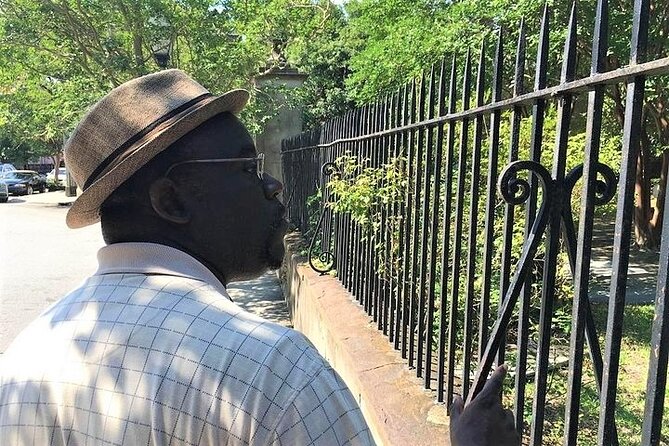
Reviewed · WALKING TOURS
Lost Stories of Black Charleston Walking Tour
What makes the Lost Stories of Black Charleston Walking Tour stand out is that it treats Charleston like a living record, with writer and historian Damon Fordham turning street corners into lessons you can picture. I love the focus on Black Charleston and the way the walk centers the Old Slave Mart Museum. One thing to consider: the tone can be very direct when discussing painful truths, so if you want everything soft and easy, this may not feel that way.
This is a roughly 2-hour walk that starts at 3:30pm at Buxton Books (160 King St). It runs with a small group, max 20, which makes it easier to ask questions instead of just listening.
Key Things That Make This Tour Worth Your Time
- Damon Fordham leads: writer, historian, educator, and licensed tour guide
- City Market to Catfish Row: you connect downtown scenes with Porgy and Bess storytelling
- Old Slave Mart Museum stop: you see the former slave auction galleries and hear what happened there
- Waterfront Park route: the walk explicitly links slavery, Reconstruction, and civil rights through place-based stories
- Mother Emanuel A.M.E. Church stories: the tour includes accounts that can fade from public memory
- A small group size (up to 20): you get a better back-and-forth with the guide
Meeting Damon Fordham: Buxton Books at 3:30pm, Small Group Energy
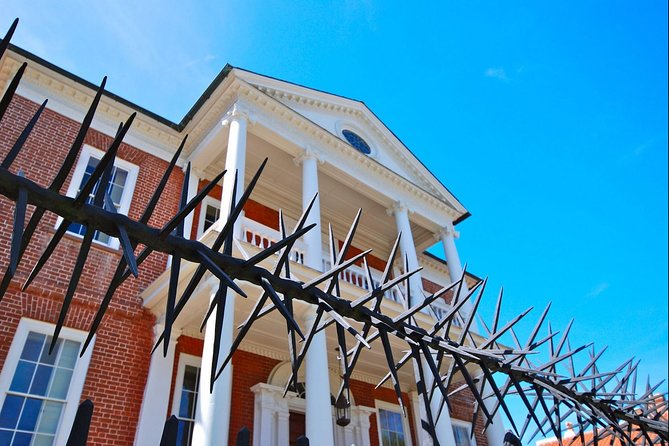
The meeting point is easy to spot and transit-friendly: Buxton Books, 160 King St, where you meet at 3:30pm. The best part of starting downtown is that you begin inside the actual rhythm of Charleston, not at some far-off parking lot. You also get that small-group feel, because the tour caps out at 20 people.
Damon Fordham is the main reason this tour lands. He is a published author, an educator, and a licensed guide, and that shows in how he stitches together details. You hear a mix of historical facts, personal perspective, and storytelling that moves between heartfelt and sharp. Some guides toss dates at you. Damon Fordham tries to make you see the human stakes behind the dates.
And yes, he has a sense of humor. A lot of the positive feedback highlights his wit and entertainment value, plus his willingness to answer questions. He has even been described as using music during the tour, including a melodica. That matters, because it changes the pace of a heavy topic and keeps the group engaged.
More Walking Tours in Charleston
- Historic Charleston Guided Sightseeing Walking Tour
★ 5.0 · 6,216 reviews - Ghosts of Charleston Night-Time Walking Tour with Unitarian Church Graveyard
★ 4.5 · 2,835 reviews - Hidden Alleyways and Historic Sites Small-Group Walking Tour
★ 5.0 · 2,335 reviews
Price and Walking Comfort for a 2-Hour Story Walk
At $39 per person for about 2 hours, this tour is priced like a serious guided experience, not a quick drive-by lesson. The value is not just the sightseeing. You’re paying for a guide who has done the work to connect specific places to Black Charleston stories you might not find in the standard brochures.
One practical note: this is a walking tour. You should come wearing comfortable shoes, and you should be ready to stand in place for extended storytelling moments. The route passes through downtown streets and along the harbor area, so plan for sun and humidity in season.
If you’re the type who likes your history straight and well-supported, you will likely feel rewarded. If you prefer gentle pacing and never getting corrected, keep your expectations flexible. One review described the delivery as sometimes scolding or harsh. That doesn’t mean the information is weak, but it does mean the style may not match every person’s comfort level.
The Route at a Glance: City Market, Catfish Row, and the Harbor
The itinerary keeps moving, but it also slows down when the story needs space. You start at the market area, sweep through key downtown landmarks tied to Charleston’s Black experience, then transition toward the waterfront.
What makes the route feel purposeful is that it covers more than one era. The walk is designed to trace a line from slavery through Reconstruction and into civil rights, while you’re literally moving through the spaces where those stories unfolded.
You also finish back where you started, so you do not end up stranded in a different part of town. That simple “return to the meeting point” plan is useful when you’re juggling dinner reservations or an evening plan on King Street.
Stop-by-Stop: What You’ll See and What Each Moment Is For
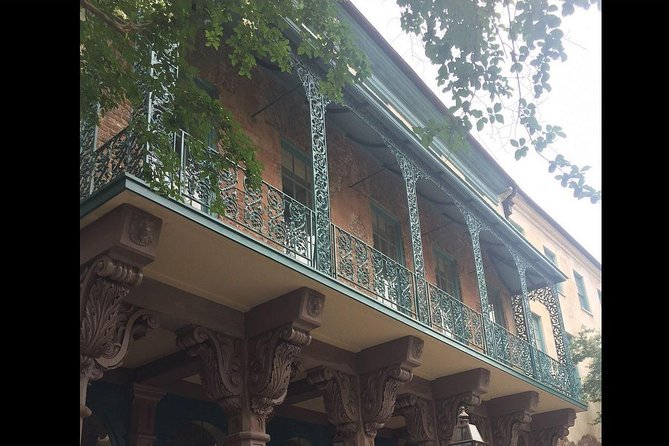
This tour has a strong narrative arc, with stops that function like chapters. Here is how the story unfolds in real time.
Another Charleston day, played differently:
- Charleston’s Old South Carriage Historic Horse & Carriage Tour
★ 5.0 · 10,023 reviews - Haunted Evening Horse and Carriage Tour of Charleston
★ 4.5 · 3,678 reviews - Charleston Horse-Drawn Carriage Tour: Explore Historic Charleston
★ 5.0 · 3,561 reviews - Fort Sumter Admission and Self-Guided Tour with Roundtrip Ferry
★ 4.5 · 3,343 reviews
The opening moment: IF THESE STREETS COULD TALK
Before the route gets rolling, Damon Fordham sets the tone at the start with an opening segment called IF THESE STREETS COULD TALK. This is where you get the framing: you are not walking to collect trivia, you are walking to understand how power, survival, and community shaped Charleston over time.
In practice, this kind of opening matters because it changes how you interpret what comes next. You will likely notice that the guide does not rush past intersections or architectural cues. He treats them as prompts for the stories tied to them.
Stop 1: Charleston City Market, Jehu Jones Hotel site, and Catfish Row
You begin with Charleston City Market, a historic downtown marketplace. The market area is familiar to a lot of visitors, but on this tour it becomes more than a place to browse. You’re guided to see the surrounding history and how Black Charleston stories connect to daily life in the city center.
From there, the walk continues past the Jehu Jones Hotel site and toward Catfish Row, known for its connection to Porgy and Bess. Even if you already know the opera, you’re meant to experience the place differently, with attention to the people and realities behind the artistic memory.
This stop area includes a free admission ticket component in the tour plan, so you’re not paying extra just to start the story.
What to watch for: Catfish Row is famous as a setting, but the tour’s goal is to ground it. If you have only seen Charleston as scenic architecture, this is where the narrative starts pushing back toward lived experience.
Stop 2: Heyward-Washington House (pass by Thomas Heyward Jr.)
Next you pass the Heyward-Washington House, associated with Thomas Heyward Jr., a signer of the Declaration of Independence. This sounds like it belongs to the classic Charleston story. The value here is that the guide uses a famous name-linked site to connect bigger national narratives to what Black residents faced in the same city.
You do not go inside as part of the listed plan here, and the tour notes admission is not included for this stop. Still, it’s a key pivot point because it sets up how “official” history and “forgotten” history overlap on the same streets.
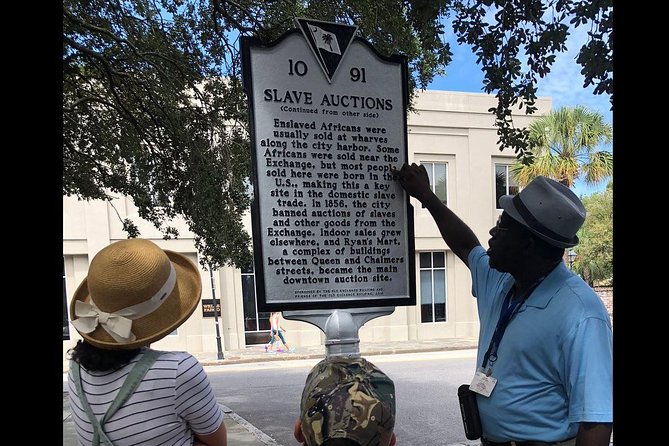
Stop 3: Old Slave Mart Museum, the former slave auction galleries
Then comes the stop that many people remember most clearly: Old Slave Mart Museum. The building once held slave auction galleries, and the tour time is set aside for you to experience that space with context rather than just seeing it as another historic stop.
Admission is not included here in the tour plan, so if you want a fuller inside experience, you may need to budget time and funds for the museum itself.
This is also where the guide’s storytelling style matters. The tour is built to be emotionally direct. One critique you might hear about Damon Fordham is that the delivery can feel abrasive. Another counterpoint is that the honesty is exactly why people call the tour “must do.” In other words, this stop is not here to sanitize anything. It is here to make the location mean something.
If you’re sensitive to heavy topics, mentally prepare yourself before you arrive. You can still do the tour, but give yourself permission to feel what comes up.
Stop 4: Waterfront Park to Charleston Harbor, from slavery to civil rights
The final stretch moves into the open air of Waterfront Park, and the story becomes more forward-looking. The tour is planned to walk the path from slavery through Reconstruction to civil rights, ending with the harbor.
This portion can be refreshing after the more concentrated downtown stops. You get views of the water while the guide keeps tying those views to the history of people who lived, struggled, rebuilt, and organized in Charleston.
The tour plan notes this part as free admission for the activity time, and it ends with a return toward the Charleston Harbor area. If you like having a visual payoff, this is where you get it: the city’s waterfront, plus a guided reminder that the shoreline has always been part of the story of movement, labor, and community.
What Damon Fordham’s Storytelling Adds (Beyond a Standard Tour)
The most praised part of this tour is the way it connects facts to meaning. People highlight that Damon Fordham brings both extensive research and personal ties to the history. He is described as engaging and witty, but also thoughtful and patient about answering questions.
I also like the way the tour avoids only one kind of Charleston narrative. One review summed up the concept as a full-spectrum lens, meaning you are not asked to admire the city and move on. You are asked to sit with the complicated parts, including the ones that often get minimized in typical sightseeing.
A bonus detail: the tour includes Mother Emanuel A.M.E. Church stories that the tour materials describe as having faded from memory over time. That inclusion helps the walk feel current. You’re not only learning old facts. You’re learning how memory, public narrative, and community history can drift or resurface.
If you enjoy history that feels human, this is where it happens.
A Quick Word on Delivery Style: Great Content, Different Tone
This is worth saying plainly. The majority of feedback is strongly positive, with people praising Damon Fordham as a master storyteller, educator, and entertaining guide. But at least one critical note points out an issue with delivery, describing moments that felt harsh or awkward and scolding that made people feel less welcomed.
So here is my practical advice: go in expecting a guide who cares deeply and does not treat the material like a soft museum speech. If that sounds like your kind of history, you’ll likely love it. If you prefer a gentler, more purely conversational tone, you might want to mentally brace for a more no-nonsense approach.
Also, some tours use dramatic voices to add flair. If you like performance elements, you might find it adds power. If you do not, it could feel off. Knowing that this is part of the storytelling style can help you settle into it.
Practical Tips to Get the Most Out of the Walk
Here are a few things that help you enjoy this type of tour without making it harder than it needs to be:
- Bring water and dress for the late-afternoon weather. You’ll be outdoors and you may pause for longer story segments.
- Wear comfortable shoes. This is downtown walking plus waterfront walking.
- Ask questions when you can. The small group size is meant to keep the conversation moving, not just for photo stops.
- Plan your next meal. A guide recommendation from this tour is Hannibal Soul Food Kitchen, which has come up in the feedback as a good place to eat after the walk.
- If you’re into books, ask about them. Damon Fordham has written books, and one review specifically mentioned that if you purchase one, he can autograph it.
Who This Tour Suits Best
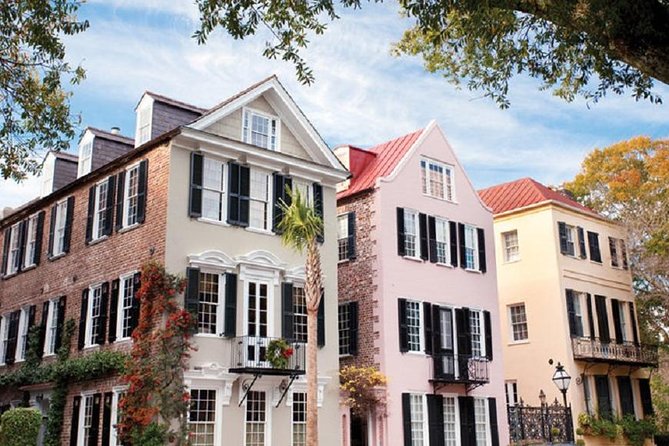
This walking tour is a strong fit if you want Black Charleston history that is place-based, specific, and not limited to the most famous photo spots. I especially think it works for people who like to understand how the past shapes the present city, including how names, buildings, and public memory connect.
It also suits couples and families who can handle a heavier narrative. It is described as appropriate for a range of ages, but remember it includes difficult topics connected to slavery and civil rights.
If you already know Charleston’s big landmarks, this is still useful. It’s designed to add missing chapters, not just to repeat what you might read on a plaque.
Should You Book Lost Stories of Black Charleston?
I think you should book it if you want a guided walk that treats Charleston’s Black history as essential, not optional. For $39 and about two hours, you get a tight route through major downtown anchors plus a harbor ending, and you do it with a guide who brings both scholarship and personal perspective.
I would hesitate only if you strongly prefer gentle, low-intensity storytelling. If you know you want a kinder tone above all else, go in with that awareness. Also note that some stops have admission that is not included, so decide ahead of time whether you plan to enter the museum sites or simply absorb what you can during the scheduled walk time.
Overall, if you want the best version of Charleston that goes past the postcard, this is the kind of tour that can change how you see the city when you’re done.
FAQ
How long is the Lost Stories of Black Charleston Walking Tour?
The tour lasts about 2 hours.
What time and where do I meet the guide?
You meet at 3:30pm at Buxton Books, 160 King St, Charleston, SC 29401.
What does the tour cost?
The price is $39.00 per person.
Is this tour narrated in English, and do I use a mobile ticket?
Yes. The tour is offered in English and includes a mobile ticket.
What are the main stops on the route?
The tour includes Charleston City Market, a stop by the Heyward-Washington House, and a visit connected to the Old Slave Mart Museum. It also includes time along Charleston Waterfront Park and toward the Charleston Harbor.
Is admission included for the Heyward-Washington House and Old Slave Mart Museum?
No. The tour plan lists admission as not included for the Heyward-Washington House and the Old Slave Mart Museum.
What is the maximum group size?
The tour has a maximum of 20 travelers.
Can children participate, and are service animals allowed?
Children must be accompanied by an adult, and service animals are allowed.
What happens if the weather is poor?
This experience requires good weather. If it is canceled due to poor weather, you will be offered a different date or a full refund.
What is the cancellation policy?
You can cancel for a full refund up to 24 hours in advance. If you cancel less than 24 hours before the experience start time, the amount paid will not be refunded.
Reviewed most recently around Charleston
- Charleston in a Nutshell Private Tours★ 5.0 · 375 reviews
- Charleston History Tour /★ 5.0 · 388 reviews
- Private Luxury Yacht Charters, BYOB & Dolphins★ 5.0 · 395 reviews
- Kayak With Dolphins in Historic Shem Creek★ 5.0 · 407 reviews
- Narrated Haunted Ghost Cruise of Charleston Harbor★ 4.5 · 418 reviews
- Charleston’s Best Highlights: History, Culture & Architecture★ 5.0 · 422 reviews
- Boone Hall Plantation Admission & Tour with Transportation from Charleston★ 4.5 · 455 reviews
- Charleston Horse & Carriage Historic Sightseeing Tour★ 4.5 · 460 reviews
Walking Tours, compared.
History and Hauntings of Salem Guided Walking Tour
Read our review →
New Orleans Premier Ghost, Voodoo and Vampire Walking Tour
Read our review →
Freedom Trail History Small Group Walking Tour
Read our review →
Historic Charleston Guided Sightseeing Walking Tour
Read our review →
New Orleans Food Walking Tour of the French Quarter with Small-Group Option
Read our review →
St. Louis Cemetery No. 1 Official Walking Tour
Read our review →Browse the lists this tour appears in