

Reviewed · CHARLESTON TOURS
Charleston in a Nutshell Private Tours
Charleston in a Nutshell Private Tours is a smart way to see the city fast, without stress. You get a private ride with hotel pickup and a guide, Jeff Zimmerman, who connects the dots between streets, buildings, and the bigger story of the peninsula. It is especially useful when you want orientation on day one.
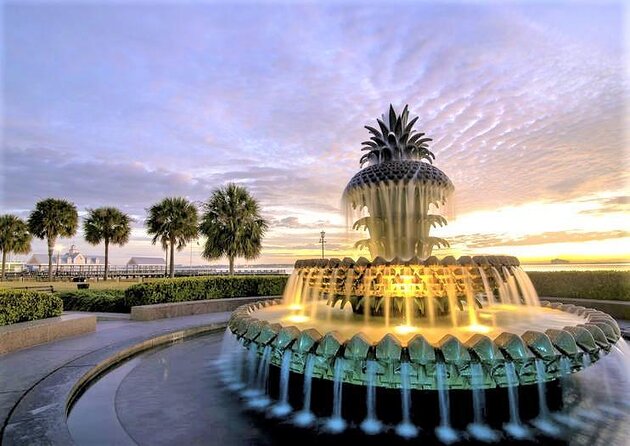
What I like most is how the tour is built around views and walkable highlights. You start with an easy “wow” moment at Waterfront Park, then swing through places like Dock Street Theater and the Battery so you can picture where everything sits.
One possible drawback is time. It is about two hours, so you will drive past a lot even with stops, and you may want extra time later for the spots that really catch your eye.
Key things to know before you go
- Private, just your group: no mixing, no waiting for strangers.
- Local-guided route with an easy pace for first-timers.
- Waterfront Park viewpoints including Ravenel Bridge, USS Yorktown, and Fort Sumter.
- Free admission stops listed for Dock Street Theater and Battery/White Point Gardens.
- Downtown pickup and drop-off included, with clear limits outside the core area.
- English-speaking guide with a comfortable, air-conditioned vehicle noted in the experience.
A quick, private way to get your bearings in Charleston

If Charleston is your first stop on a trip, you will love a guided loop that shows the city’s shape. This tour is designed to help you understand how the peninsula is organized, where the big landmarks are clustered, and what you should come back to when you have more time.
I also like that it is truly private. You can ask questions on the spot, stop for a photo without awkward timing, and keep the pace comfortable for your group.
The vibe is practical, not performative. You get the highlights, plus the “why this matters” behind them, so your later self-guided wandering makes more sense.
Stack these Charleston options against each other
- Charleston’s Old South Carriage Historic Horse & Carriage Tour
★ 5.0 · 10,023 reviews - Historic Charleston Guided Sightseeing Walking Tour
★ 5.0 · 6,216 reviews - Haunted Evening Horse and Carriage Tour of Charleston
★ 4.5 · 3,678 reviews
Hotel pickup, a comfy ride, and why that matters in the heat
Charleston can be hot and sticky, and this is where a car tour earns its keep. You get complimentary pickup and drop-off at downtown Charleston locations, so you skip the scramble of parking, rideshare pinball, and dragging yourselves between distant neighborhoods.
The experience uses a mobile ticket, and the guide is set to meet you at your booked location. Service animals are allowed, and the tour is described as workable for most people.
One more small but real value point: the vehicle gives you a break from sun and walking. In warm months, that alone can make the whole day feel easier.
Waterfront Park: Ravenel Bridge, Fort Sumter, and the harbor picture you need
You will start with a view that helps everything else click. Waterfront Park is a panoramic overlook where you can take in the Ravenel Bridge and the harbor, plus the USS Yorktown at Patriots Point and Fort Sumter in the distance.
This is more than a pretty angle. When you later hear about the fortifications of Charleston or see the waterfront streets, you will already know what you are looking at. It turns the trip from random sightseeing into a map in your head.
If you are the type who likes photos, this is a strong first stop. You can frame the city with the water and key landmarks, then carry that visual memory to the next neighborhoods.
Dock Street Theater: why a 1736 building matters
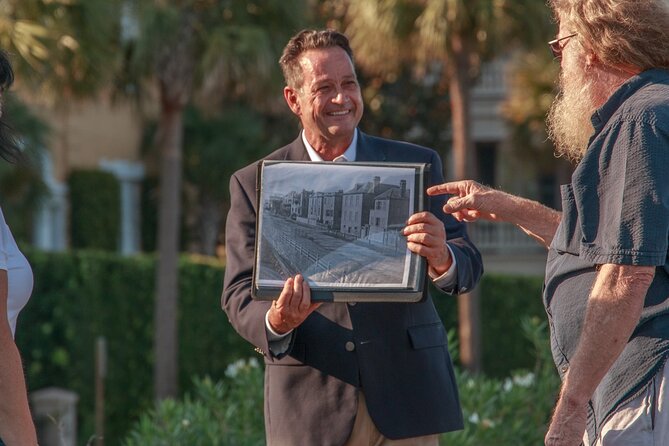
Next up is Dock Street Theater. It opened in 1736, and it is described as the first building in America built exclusively for theatrical performances.
Even if you do not attend the theater, the stop helps you understand Charleston’s early cultural life. People often think of the city as only about mansions and churches, but this adds another side: performance, gathering, and community spaces.
The time at the stop is brief, around 15 minutes, and the admission is listed as free. That makes it an easy add without derailing your two-hour window.
Another Charleston day, played differently:
- Charleston Horse-Drawn Carriage Tour: Explore Historic Charleston
★ 5.0 · 3,561 reviews - Fort Sumter Admission and Self-Guided Tour with Roundtrip Ferry
★ 4.5 · 3,343 reviews - Charleston: Fort Sumter Entry Ticket with Roundtrip Ferry
★ 4.7 · 2,879 reviews - Ghosts of Charleston Night-Time Walking Tour with Unitarian Church Graveyard
★ 4.5 · 2,835 reviews
The Citadel: military college sights, plus a slow drive moment
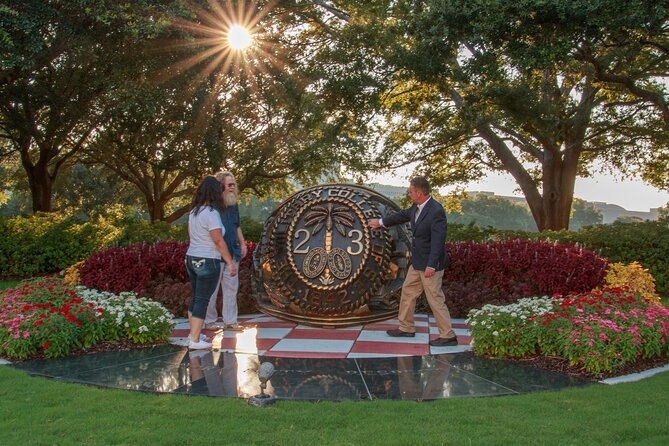
You will also pass the Citadel, founded in 1842. It is one of six senior military colleges, and it sits on about 300 acres along the Ashley River, with more than 2,300 cadets in the South Carolina Corps of Cadets.
What I like about including the Citadel is how it grounds the story of the region. Charleston is full of old architecture, but the city also has an active military presence, and the Citadel helps explain why that part of life is not just a historical footnote.
You may find the route includes a slow drive past the campus approach, which keeps it from feeling like another drive-by. It is a good “big institutions of Charleston” chapter in between the smaller street details.
Rainbow Row: the longest continuous run of Georgian row houses
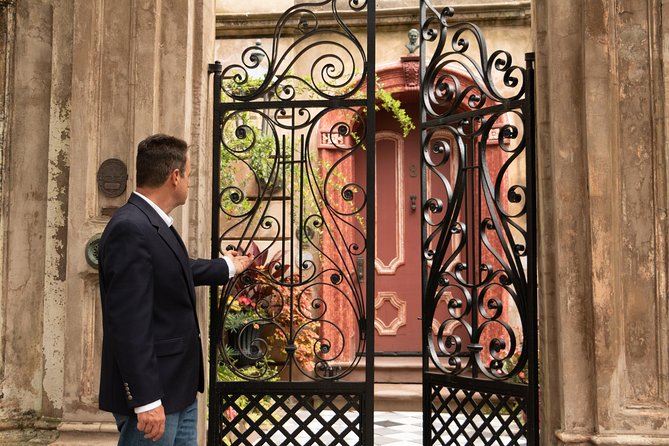
Rainbow Row is one of the most photographed parts of Charleston, and you will see why. It is described as the longest continuous cluster of intact Georgian row houses in America, with pastel colors that keep the street from feeling monotone or tourist-trap flat.
This is where a guide’s storytelling pays off. You will not just look at colorful facades, you will understand the idea of preservation and how Charleston became known for strict architectural control.
It is also a great stop to help you plan. If you love the look of Georgian streets, you will know to spend more time later wandering in that style. If you do not, you at least gain a sense of what makes Charleston’s “signature” look so recognizable.
Battery and White Point Gardens: Oyster Point views and southern mansions
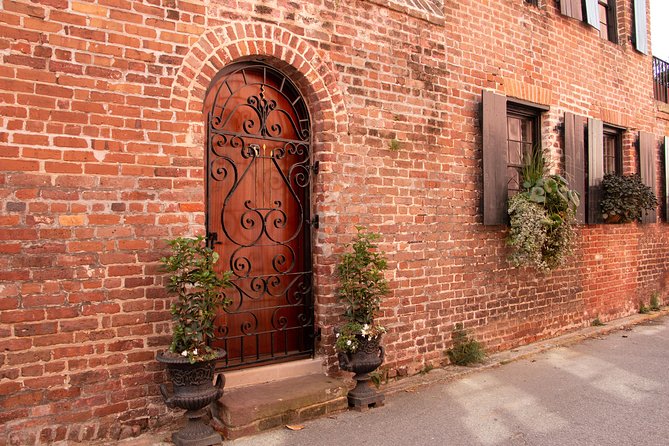
Then you hit the peninsula tip area, known as the tip where the Ashley and Cooper rivers come together and form the Atlantic Ocean. This area is also called Oyster Point, and it is one of the best places for harbor views.
From here, you will see Fort Sumter and the working coastline around Charleston. It is a classic “why the port mattered” spot, because the water is not backdrop, it is the reason the city’s story is so tied to maritime power.
White Point Gardens is included as part of the stop, and the admission is listed as free. The time is about 10 minutes, so it works as a quick photo and viewpoint moment.
If you want to spend more time later, this is a good candidate. The long look toward the harbor tends to make people want a second visit, especially when light changes.
St. Michael’s Church: the oldest downtown churchyard names

St. Michael’s Church, dated around 1761, is the oldest church in downtown Charleston. You will also learn about the churchyard as the resting place of two signers of the U.S. Constitution, John Rutledge and Charles Cotesworth Pinckney.
This stop hits a different register than the row houses. Buildings along Rainbow Row tell you about design and daily street life. The churchyard tells you about founding-era influence and the people tied to the country’s early rules.
Even if you only pause briefly, the names give you something to “carry” as you walk later. It is easier to understand why Charleston reveres certain locations when you connect them to real individuals rather than just dates.
City Hall at the Four Corners of Law: from First Bank to civic rule
At the Four Corners of Law, you will see an Adamesque building built on the site of a colonial marketplace. It initially served as The First Bank of the United States, and in 1818 it became City Hall.
The construction is described as between 1801 and 1804, on a civic square laid out in the Grand Modell, the 17th century plan for the city. This stop is a lesson in how places get reused, not replaced, and how Charleston’s governance story shows up in stone.
I like that it is not just “look at another pretty building.” The architecture style and the changing function help you see Charleston as a working city, not only a museum.
Hampton Park: 60 acres of live oaks and a former race course
Another stop is a larger green space, about 60 acres and the largest park on the peninsula. It used to be the Washington Race Course, and now it is ringed by centuries-old live oaks and southern magnolia trees.
This is a nice shift in pace. After several built landmarks, a park stop gives you breathing room and a different kind of Charleston texture, the shade and the slow rhythm of old trees.
The guide presence still matters here. You will likely hear how older Charleston landscapes were shaped by recreation and public life, not only by fortifications and commerce.
James Hoban’s neoclassical stop and the White House connection
The tour also includes a neoclassical building designed by Irish architect James Hoban. It is noted as likely a model for Hoban’s most famous building, the U.S. White House, and both are modeled after Leinster House in Dublin.
This is the kind of connection that makes a city feel bigger than its borders. You will be standing in Charleston, but the design line runs to Ireland and then to Washington, D.C.
I find this is a good “last third” stop. By then, you have already been trained to notice details like symmetry and style, so you can see the parallels without needing a textbook.
What Jeff Zimmerman does well on this kind of tour
Jeff Zimmerman is the guide most commonly featured with this experience, and the feedback you can rely on is very consistent: he brings clarity to Charleston’s layout and mixes architecture with story.
People often praise his ability to explain what you are seeing at street level, not just list facts. They also mention his speaking style, and the way he pauses so you can actually look and take photos without feeling rushed.
One practical detail I really appreciate, especially if you are traveling with only one phone: Jeff is the type who cares about small things. There is a real example of him returning a left-behind cellphone within a couple of hours, which tells you a lot about how seriously he takes the guest experience.
Who should book this Charleston in a Nutshell tour
This tour fits best when you want:
- A first visit to Charleston and a fast way to learn the city’s layout
- A break from heat and walking while still seeing major sights
- A private format where you can ask questions and get context on the spot
- A route that includes harbor views, key church sites, and architectural landmarks in about two hours
It might be less ideal if you want a slow, step-by-step walking day, or if you are trying to squeeze in a long list of timed museum visits afterward.
Should you book this tour or go on your own?
If your goal is getting your bearings and seeing Charleston’s signature sights in one easy hit, I think this is a strong choice. The value comes from transportation plus a guiding brain, and from making stops that you would otherwise struggle to sequence well on your own.
If you already know Charleston well and you only want niche neighborhoods, you might feel it is too highlight-heavy. But for most first-time plans, this kind of compact, private loop is exactly how you set up the rest of your trip.
If you book, do this: pick one or two places that you want to revisit after the tour. Then use the drive to learn where those places are and what you want to photograph or study more on day two.
FAQ
How long is the Charleston in a Nutshell Private Tours experience?
It runs for about 2 hours.
Is this tour private or shared with other people?
It is a private tour/activity, meaning only your group participates.
Do you offer hotel pickup and drop-off?
Yes, complimentary pickup and drop-off are offered at downtown Charleston locations.
Where do you not pick up or drop off?
Pickup or drop-off is not offered at Charleston International Airport, North Charleston, Summerville, Folly Beach, Isle of Palms, Sullivan’s Island, Daniel Island, John’s Island, Goose Creek, or Kiawah Island.
What language is the tour offered in?
The tour is offered in English.
Do I need a paper ticket?
No, you get a mobile ticket.
Are there any stops with free admission?
Yes. Dock Street Theater is listed as free, and Battery & White Point Gardens is also listed as free.
Is the tour suitable for most travelers?
Most travelers can participate.
What happens if weather is poor or if I cancel?
The experience requires good weather. If it is canceled due to poor weather, you will be offered a different date or a full refund. Free cancellation is available, with a full refund if you cancel at least 24 hours in advance.
Reviewed most recently around Charleston
- Charleston History Tour /★ 5.0 · 388 reviews
- Private Luxury Yacht Charters, BYOB & Dolphins★ 5.0 · 395 reviews
- Kayak With Dolphins in Historic Shem Creek★ 5.0 · 407 reviews
- Lost Stories of Black Charleston Walking Tour★ 5.0 · 412 reviews
- Narrated Haunted Ghost Cruise of Charleston Harbor★ 4.5 · 418 reviews
- Charleston’s Best Highlights: History, Culture & Architecture★ 5.0 · 422 reviews
- Boone Hall Plantation Admission & Tour with Transportation from Charleston★ 4.5 · 455 reviews
- Charleston Horse & Carriage Historic Sightseeing Tour★ 4.5 · 460 reviews
Charleston Tours, compared.

Charleston’s Old South Carriage Historic Horse & Carriage Tour
Read our review →
Historic Charleston Guided Sightseeing Walking Tour
Read our review →
Haunted Evening Horse and Carriage Tour of Charleston
Read our review →
Charleston Horse-Drawn Carriage Tour: Explore Historic Charleston
Read our review →
Fort Sumter Admission and Self-Guided Tour with Roundtrip Ferry
Read our review →
Fort Sumter Entry Ticket with Roundtrip Ferry
Read our review →
Ghosts of Charleston Night-Time Walking Tour with Unitarian Church Graveyard
Read our review →
Hidden Alleyways and Historic Sites Small-Group Walking Tour
Read our review →Browse the lists this tour appears in