
Reviewed · ARCHITECTURE TOURS
Charleston’s Best Highlights: History, Culture & Architecture
Charleston’s core is packed tight, and this walk makes it feel human. You get an organized route through the city’s most recognizable streets, with a licensed guide turning stone and street corners into clear stories. You’ll quickly see how Charleston’s architecture and events connect into one big timeline.
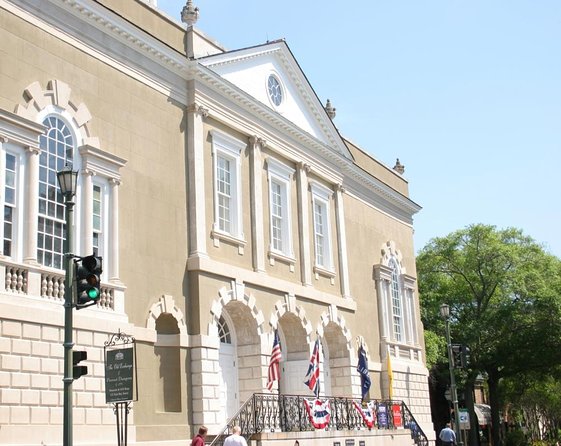
I especially love two stops. First, Old Exchange & Provost Dungeon, because it’s the kind of building where major dates stack up fast, from the Declaration of Independence in 1776 to later Revolutionary War use and the Constitution being ratified in South Carolina in 1788. Second, Rainbow Row, where you can understand how the 1930s preservation effort shaped what you see today, including that bright Caribbean color scheme.
One thing to plan for: this is a good-weather walking tour, and a few entrances depend on timing and availability. Also, some buildings have admission tickets that are not included, so you may want to decide ahead of time what’s worth paying to step inside.
Key Highlights You’ll Feel On This Walk
- A compact downtown route that hits the biggest landmarks efficiently in about 2 hours
- History told by a licensed guide, with real storytelling focus on people and events
- Rainbow Row’s preservation story, including the 1930s color choices
- Big, meaningful stops like Old Exchange and the Old Slave Mart area, handled with care
- Multiple free viewpoint and exterior moments, with optional paid admissions for a few sites
- Small group size (max 20), which makes it easier to ask questions and adjust the pace
Why This 2-Hour History Walk Works So Well In Downtown Charleston
Charleston can feel like you’re wandering in circles if you don’t have a route. This tour solves that. In about two hours, you cover a strong slice of downtown, so you come away with names, dates, and visual landmarks you can place on a map later.
I like that it’s not just random sightseeing. The guide connects architecture, civic buildings, churches, and merchants to the bigger national story, then brings it back to what you’re seeing right now on the street. If this is your first day in town, it’s a great way to get your bearings fast.
One practical upside: you move in short segments. Many stops are brief, then you get a quick reset before you’re sent off again. That keeps the pace friendly, even for people who do not want an all-day walk.
More Historical Tours in Charleston
- Charleston’s Old South Carriage Historic Horse & Carriage Tour
★ 5.0 · 10,023 reviews - Historic Charleston Guided Sightseeing Walking Tour
★ 5.0 · 6,216 reviews - Charleston Horse-Drawn Carriage Tour: Explore Historic Charleston
★ 5.0 · 3,561 reviews
Starting On E Bay Street, Then Getting Oriented Quickly
You meet at 122 E Bay St in downtown Charleston. From the start, the tour is designed to get you oriented fast, so the city stops feeling like a blur of historic facades. The route threads between major sites rather than forcing long detours.
The group stays small, with a maximum of 20 travelers. That matters because it makes it easier to hear the guide, and it’s also why the experience can feel more like a guided conversation than a lecture you’re trying to survive.
Tours run in English, and you’ll get a mobile ticket. Service animals are allowed, and you’re near public transportation, which is handy if you’re mixing this with other plans later.
Old Exchange & Provost Dungeon: From Revolutionary Dates To Prison Walls
Your first stop is Old Exchange & Provost Dungeon, a standout building dating to around 1771. This is the kind of place where history is not an abstract concept. It’s tied to specific moments, and the building itself helps you visualize what happened here.
You’ll hear about the Declaration of Independence being read here in 1776. You’ll also get context about the building serving as a British prison during roughly two years in the American Revolution. Later, the US Constitution was ratified in South Carolina in 1788, and you’ll learn that George Washington was entertained during his week-long visit in May 1791.
Then comes the detail that I think makes this stop especially powerful: you’re not just seeing a landmark. You’re getting a framework for understanding Charleston’s role in the founding era. The guide ties it to the city’s later political and cultural shifts, so it does not feel like a museum stop that ends when you walk outside.
Admissions note: the admission ticket for this stop is not included. If you want to spend time inside, you may need to pay separately. If you prefer exterior context and storytelling, the tour still gives you enough to make the stop worthwhile.
Rainbow Row: The Longest Row Of Georgian Row Houses And The Color Story
Next up is Rainbow Row, one of Charleston’s most photographed spots. The reason it’s famous is simple: it’s the longest row of attached Georgian row houses in the country.
But what I like about this stop is the lesson about preservation. These were mariner’s stores in the 18th and 19th centuries. Then, during Charleston’s preservation efforts in the 1930s, the row was restored with that bright Caribbean color scheme you see today.
That little history turn matters because it changes how you look at the buildings. You start noticing details instead of treating the row like a postcard background. You can actually see the logic of the design and imagine how the buildings fit into trade along the waterfront.
Admissions note: this is a free stop, so you can enjoy it without planning around extra ticket costs. It’s also short, which helps you stay on schedule and still get something memorable.
More Architecture Tours in Charleston:
- Charleston: History and Architecture Guided Walking Tour
★ 4.8 · 349 reviews - Chicago Architecture River Cruise
★ 5.0 · 15,756 reviews - Chicago River 90-Minute Architecture Tour
★ 4.5 · 9,629 reviews - Chicago River: 1.5-Hour Guided Architecture Cruise
★ 4.8 · 8,046 reviews
Old Slave Mart Museum Stop: Learning Without Going Inside

This is the most emotionally heavy portion of the walk. The tour stops at the Old Slave Mart Museum area, known as Ryan’s Slave Mart in the 1850s. This site functioned as an auction point of the interstate slave trade.
You’ll learn about Charleston’s role in the slave trade, and the guide frames it as a part of how the United States built wealth and power. It can be uncomfortable, but that’s also why it’s an important stop if you want a fuller understanding of Charleston beyond the pastel streets and tall steeples.
Important detail: you do not enter the Old Slave Mart Museum building during this tour. That means you’ll still get the key story, but you are not required to walk through the interior exhibits as part of this specific experience.
If you want more time inside later, you can plan that on your own. For the walking tour, the value is that you get context without it becoming a long standalone museum detour in the middle of your day.
French Huguenot Church: Gothic Revival And Faith That Kept Going
The French Huguenot Church is a quick but beautiful stop. It’s a Gothic Revival building from 1845, and it houses one of the only practicing Huguenot congregations in the country.
What you’ll take away here is how different faith communities shaped Charleston’s development. This is not just about religion as belief. It’s about community life, how people settled, and what they built around shared language and worship.
Admissions note: this is free to view on the tour, which makes it a great addition if you want variety without extra costs. Even in a short stop, the building’s style helps you shift gears from civic and civic-era stories into everyday lived culture.
Dock Street Theater And Charleston City Hall: Arts, Governance, And Design
Dock Street Theater is next, and whether you can enter depends on availability. The building sits on the site of the first theater in the British colonies, and it has a layered origin. It was built around 1809 as the Planter’s Hotel, then restored and used as a theater later.
The tour also connects the building to Charleston’s ongoing arts scene. The Charleston Stage company operates as the largest professional theater company in South Carolina, with roughly 120 performances each year.
Then you’ll reach Charleston City Hall, a building tied to the city’s civic identity. You’re also told about the Four Corners of Law concept, named by Robert Ripley. Built in 1801 as a bank, it became City Hall in 1818 and is one of the oldest continuously run city halls in the country.
On weekdays, visitors can enter the council chamber and see the collection there complimentary. That’s a rare chance to step from the outside architecture into the working public space without feeling like you need a ticketed attraction.
If your main interest is historic architecture, this segment gives you both style and function. It shows you that Charleston’s past is not only grand houses and churches. It’s also government buildings and public gathering places that kept running through time.
St. Michael’s Church: Original Woodwork And The Constitution Signers’ Grave Site
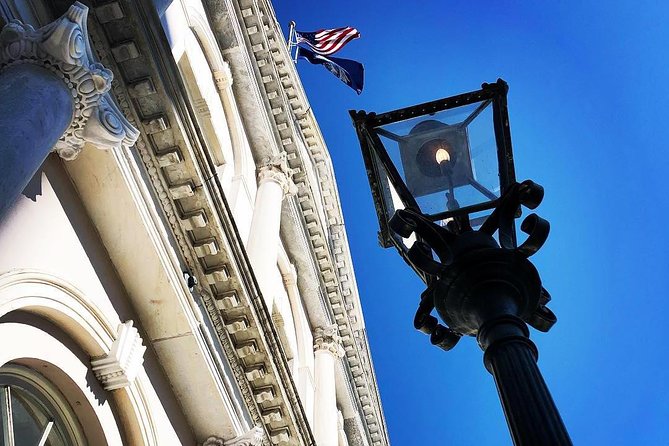
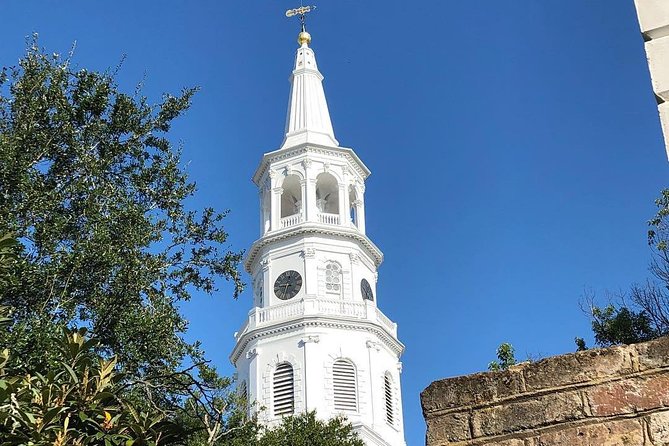
St. Michael’s Church is an important spiritual anchor in the city. The tour stop highlights it as the oldest house of worship in Charleston, dating to around 1761.
Entrance depends on availability, but even from outside you’ll learn why the church matters historically. You’ll hear about Charleston’s religious history and the mix of old and present-day traditions.
Inside features you’ll point out when you can enter include original woodwork and Tiffany stained glass windows. The churchyard also holds burials of US Constitution signers John Rutledge and Charles Cotesworth Pinckney.
This stop works best if you’re the kind of person who notices details like craftsmanship and symbolism. The guide’s explanations help you see why those features were created and how they connect to the people connected to Charleston’s early leadership.
Nathaniel Russell House Garden: A Federal-Style Merchant Courtyard Moment
Next is the Nathaniel Russell House. You enter the garden of this Federal-style townhouse, built around 1808 and owned by merchant Nathaniel Russell.
The story includes his Rhode Island roots and his role in shipping, which helps the architecture make sense. Instead of the house being treated like a perfect object behind a fence, it becomes part of an economic story: who had the money, how trade worked, and why waterfront ties mattered.
This stop is not about rushing through a house interior. It’s more about getting one good visual slice of how wealth looked in the early 1800s, with the garden space giving you a different feel than the street.
Admissions note: the admission ticket for this stop is not included. Still, the exterior and garden access on the tour route can be satisfying if you’re aiming for the historical context more than a full self-guided museum experience.
High Battery Wall And Waterfront Mansions: Watching Fort Sumter’s Shadow Get Closer
The tour then shifts to a view moment on the High Battery wall. You’ll look toward the waterfront mansions and talk about what the start of the Civil War changed for Charleston.
From here, Fort Sumter is in view. You’ll learn that the Edmonston-Alston House has been in the family since 1838 and that it was a site where General Beauregard watched the bombardment of Fort Sumter with other onlookers.
This segment is short, but it gives you something that many walking tours miss: a sense of military distance and stakes. You’re not only learning about history. You’re seeing the geography that shaped what happened next.
Admissions note: the Edmondston-Alston House ticket is not included. Even so, the view from the wall is the key payoff, and it helps you imagine how quickly events escalated.
What The Guide Actually Does: Turning Architecture Into Stories You Can Use
The best part of this experience is how the guide teaches. Some guides you might get, like Brian or Fin, have a real teaching style that stays clear and organized. Fin in particular is described as a former history teacher, and that background shows in the way he answers questions.
Here’s what I think makes the tour work for real people: the guide connects the important people from different parts of the early United States back to South Carolina. That connection makes Charleston feel less like a separate world and more like part of the national story you already know.
You’ll also find the guides are open to questions. Several people report the tour running longer than the posted time because of that back-and-forth. That tells me the pacing is flexible, not rushed, and the guide wants you to understand the why, not only the what.
Practical Stuff You’ll Want To Know Before You Go
This is a walking tour in downtown Charleston, so wear shoes you feel good in. The route is designed for short stops, but it still adds up.
Timing: the duration is listed at about two hours. In practice, you might see longer tours when you ask questions and the group moves at a steady, relaxed pace.
Group size: maximum 20 travelers keeps it manageable and makes hearing the guide easier.
Language: English.
Tickets: some stops require paid admission tickets that are not included, including Old Exchange & Provost Dungeon, Old Slave Mart Museum, Nathaniel Russell House, and Edmondston-Alston House. Several other stops are free, including Rainbow Row, French Huguenot Church, and City Hall (with specific access on weekdays), plus St. Michael’s Church and Dock Street Theater if entrance is available.
Entrances that depend on availability: Dock Street Theater and St. Michael’s Church. If you can enter, you’ll get more detail in the moment. If not, the guide will still give you the core story so you are not left with just a street view.
Weather: this tour requires good weather. If it’s canceled due to poor conditions, you’ll be offered a different date or a full refund.
Should You Book This Charleston Highlights Walking Tour?
Yes, if you want a structured hit of Charleston’s key historic sites without spending half your day bouncing between ticket lines and self-guided guesswork. This tour gives you names, connections, and architectural context quickly, which makes the rest of your trip easier to enjoy.
Book it early in your visit if you can. Getting your bearings on Old Exchange, Rainbow Row, the churches, and the waterfront view gives you a mental map for where everything fits.
Skip it only if you dislike walking in city heat and crowds, or if you strongly prefer deep time inside museums and historic house interiors. Since some admissions are not included, you may want a separate ticketed stop later for any building that really hooks you.
FAQ
How long is the tour?
It lasts about 2 hours.
What group size should I expect?
This tour has a maximum of 20 travelers.
Is the tour offered in English?
Yes, it is offered in English.
Do I need admission tickets for everything we see?
No. Some stops have admission tickets not included, while several other stops are free. Also, a couple of entrances depend on availability.
Will we enter the Old Slave Mart Museum?
No. The tour speaks about the site, but you do not enter the building.
What if Dock Street Theater or St. Michael’s Church are not accessible?
Entrance depends on availability for both. You’ll still get the guided context as part of the stop.
Where does the tour start?
The meeting point is 122 E Bay St, Charleston, SC 29401. The activity ends back at the meeting point.
Reviewed most recently around Charleston
- Charleston in a Nutshell Private Tours★ 5.0 · 375 reviews
- Charleston History Tour /★ 5.0 · 388 reviews
- Private Luxury Yacht Charters, BYOB & Dolphins★ 5.0 · 395 reviews
- Kayak With Dolphins in Historic Shem Creek★ 5.0 · 407 reviews
- Lost Stories of Black Charleston Walking Tour★ 5.0 · 412 reviews
- Narrated Haunted Ghost Cruise of Charleston Harbor★ 4.5 · 418 reviews
- Boone Hall Plantation Admission & Tour with Transportation from Charleston★ 4.5 · 455 reviews
- Charleston Horse & Carriage Historic Sightseeing Tour★ 4.5 · 460 reviews
Architecture Tours, compared.


Chicago River: 1.5-Hour Guided Architecture Cruise
Read our review →
Chicago Architecture Center River Cruise aboard First Lady
Read our review →
Architecture River Cruise Skip-the-Ticket Line
Read our review →
Chicago River 45-Minute Architecture Tour from Magnificent Mile
Read our review →

45-Minute Family-Friendly Architecture River Cruise
Read our review →Browse the lists this tour appears in