
Reviewed · ARCHITECTURE TOURS
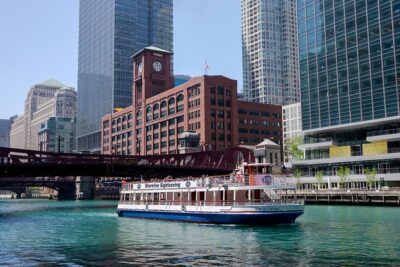
Chicago Architecture Center River Cruise aboard First Lady
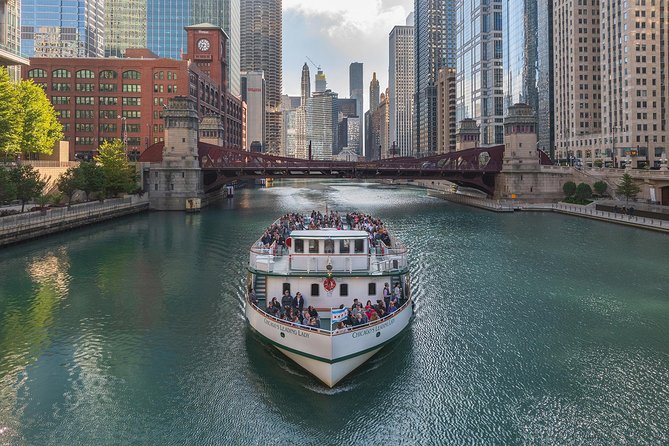
A Chicago River architecture cruise aboard the First Lady is interesting because you see the skyline change as the river curves, so Chicago’s design logic clicks fast. I love the way docents like Cynthia connect each building to the river’s story, and I love spotting Willis Tower and Marina City from the water, where you grasp scale you just do not get from street level. The main catch is practical, not scenic: seating is first come, first served, and the dock has no elevator access, so you will want to arrive early.
What makes this one easy is the setup. You board right from the Chicago Riverwalk near downtown, and you can pick from multiple start times to fit a tight sightseeing schedule. Plus, you get a climate controlled lower level with big windows, so rain and wind are less of a problem.
My other note is about comfort and cold. Even with the enclosed deck, the experience still benefits from being layered and ready for breezes, especially if you spend time on the open air top deck. If you want a warm break, there is a full bar onboard, and hot drinks like hot chocolate show up as a popular comfort choice.
Quick highlights worth planning around
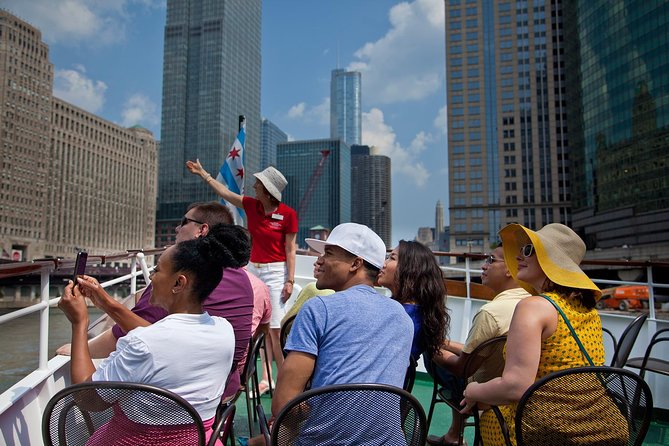
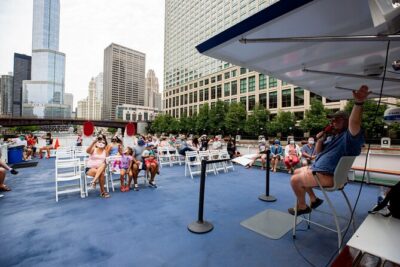
- Docents from the Chicago Architecture Foundation tell the story behind what you see, bridge by bridge
- First Lady departures give you skyline views that feel more three-dimensional than photos
- Two-deck comfort includes an enclosed, climate controlled lower level plus an open-air top deck
- Big landmarks in 90 minutes like Willis Tower, Marina City, Navy Pier, and the Chicago Mercantile Exchange
- Onboard bar and restroom access so you can stay out on the water without breaking the flow
- Arrive early for first come seating, especially because there is no elevator access to the dock
Why the Chicago River is the perfect architecture classroom
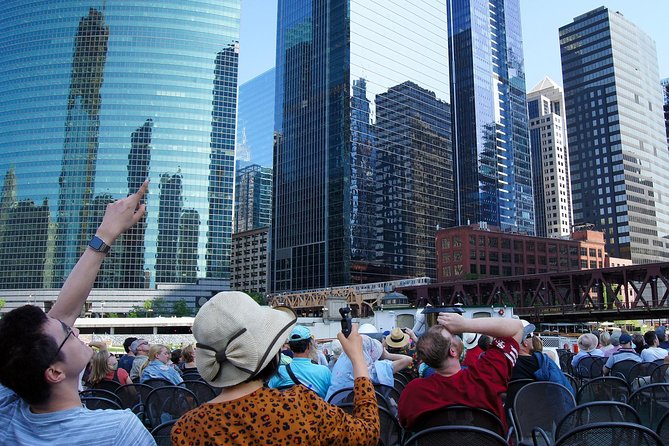
The Chicago River is not just scenery. It is the reason the city grew into what it is. Industry, shipping, neighborhood reinvention, and recreation all pushed and pulled on how Chicago built along the water.
That matters on this cruise because you get the context out loud, in real time. Instead of reading a plaque and moving on, you hear why a specific building is where it is, how it relates to the river corridor, and what the architects were trying to do. When the docent ties design choices to the river’s changing role, the skyline stops feeling random.
You also get a rare advantage: scale. Many of the famous towers look similar from across town. From the river, their height, massing, and relationship to bridges make instant sense.
More Boat Trips in Chicago
- Chicago Architecture River Cruise
★ 5.0 · 15,756 reviews - Chicago River: 1.5-Hour Guided Architecture Cruise
★ 4.8 · 8,046 reviews - Chicago: Architecture River Cruise Skip-the-Ticket Line
★ 4.8 · 4,325 reviews
Boarding at 112 E Wacker Dr, how to make it smooth
Your meeting point is 112 E Wacker Dr, right by the Riverwalk. This is one of the best parts of downtown Chicago sightseeing, because you are not hauling yourself across the city to find the boat.
I’d treat this like a timed event. Arrive about 30 minutes early so you can handle check-in and boarding without stress. One practical point that keeps trips easy: there is no elevator access to the boat dock, so plan on stairs at the dock area.
Parking is not free, but it is convenient if you drive. The nearest option listed is LAZ Parking Garage at 111 E Wacker Dr, directly across from the stairway to the dock and next door to the Chicago Architecture Center.
Also, show up with the right expectations. Seating is general admission, not assigned, and boarding is first come, first served. That is why early matters more than people think.
First Lady cruise comfort: decks, climate control, and the bar
The First Lady has two levels, and you should use them like a strategy.
- The lower deck is enclosed and climate controlled, with large windows for views.
- The top deck is open air, which is great for photos, but you will feel wind and shade.
There are restrooms onboard, and they close about 15 minutes before the end of the tour. So if you want to avoid rushing near the finish, plan bathroom breaks earlier in the cruise.
You also get a bar onboard, which is a genuine upgrade on a cold day. Some rides feel like a field trip, others feel like a relaxed evening outing. The bar helps tilt it toward the second option, especially if you want a beer or a warm drink while you watch the river buildings roll by.
A small heads-up that can save you annoyance: there is no WiFi onboard, and drinks and snacks are not included, so bring cash or a card if you plan to buy anything.
The river route: from Chicago River changes to Freedom Center views
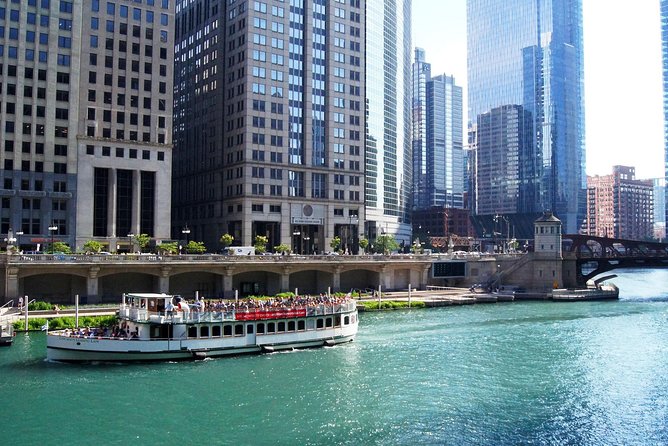
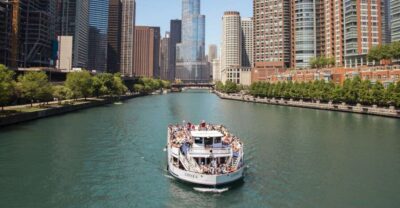
This is about 90 minutes of sailing, with a guided loop along the Chicago River corridor. Routes and schedules can shift, but the landmarks and the story arc you hear are the point.
One drawback to know up front: this is not a full day river tour that covers every corner of the city. You are getting a focused hits package. If you are hoping for a long, far-away expedition, you may feel the ride is shorter than you imagined.
More Architecture Tours in Chicago:
- Chicago River 90-Minute Architecture Tour
★ 4.5 · 9,629 reviews - Chicago River 45-Minute Architecture Tour from Magnificent Mile
★ 4.5 · 2,924 reviews - Chicago Lake and River Architecture Tour
★ 4.5 · 2,308 reviews - Chicago: 45-Minute Family-Friendly Architecture River Cruise
★ 4.7 · 2,304 reviews
The Chicago River, a waterway that keeps changing
The story of the Chicago River is ongoing, not finished. You hear how the river shaped transportation and industry, then how the city turned the corridor toward revitalization and recreation.
This is where the docent sets up how to look at everything next. Bridges are not just crossings. Towers are not just trophies. On this cruise, the river is treated like a moving timeline.
Navy Pier, adaptive reuse in action
Navy Pier is Chicago’s hallmark of adaptive reuse. The key idea is simple but powerful: spaces evolve. What once served one purpose can become an entertainment and visitor destination.
From the river, you get an angle that makes the Pier feel less like a distant postcard and more like part of the waterfront system. You will also get the sense of how people flow around it, which makes the architecture feel lived in, not just dramatic.
Marina City and Bertrand Goldberg’s urban experiment
Marina City is an urban experiment you can see immediately. When architect Bertrand Goldberg envisioned it, the goal was to draw middle-class Chicagoans back to the city after more than a decade of suburban migration.
From the water, you can see the complex as more than a set of towers. The layout reads like a whole idea about living downtown, not just building height. It is the kind of architecture that becomes more meaningful the longer you watch it from moving water.
Trump International Hotel and Tower, glass with a context lesson
The docent explanation goes beyond shiny exterior details. You learn how the Trump International Hotel & Tower is meant to reflect and respond to what surrounds it.
That is the value here. You do not just hear what a building looks like. You hear how it is trying to work with its neighbors along the river corridor.
The Mies van der Rohe Modernist structure on the river
You also pass one of the last American projects by Ludwig Mies van der Rohe. It is described as a powerful Modernist structure that occupies a prominent place on the Chicago River.
Modernism can be hard to read when you only see a building at an angle from the sidewalk. On the cruise, you get a rolling perspective, so you can track the lines and see how the design language repeats across the facade.
150 North Riverside, gravity-defying engineering
Next up is 150 North Riverside, described as gravity-defying. That phrase is more than hype once you see it from the river level, where the structure looks like it is negotiating space rather than simply occupying it.
This is a good moment to watch how the building aligns with the river corridor and adjacent structures. The docent’s engineering talk helps you notice details you would skip otherwise.
Boeing International Headquarters, a major corporate anchor
You pass Boeing International Headquarters at 100 N Riverside Plaza. Corporate buildings can feel generic from far away, but from the river you get a clearer sense of massing and how the building fronts the water.
Even if you are not a building nerd, you can appreciate the practical point: this is the kind of institution that anchors business along the river edge, not just in the skyline behind it.
Willis Tower, once Sears Tower and once the tallest
Willis Tower is a standout for a reason: for nearly 25 years after completion, it was the tallest building in the world, formerly known as the Sears Tower.
From this angle, you get more than height recognition. You see how the tower dominates the river view corridor, and how that dominance shaped what people expected Chicago to be.
1930 size matters, Marshall Field’s wholesale warehouse
This part turns a skyline sighting into a story about why Chicago built big. Upon its completion in 1930, the building described as the largest building in the world served as Marshall Field’s wholesale warehouse, where retailers could buy stock.
The lesson for you is that size was not only about bragging rights. It was about logistics, distribution, and power in the supply chain. Hearing that while you are literally sailing past helps the architecture feel economic, not just aesthetic.
Chicago Mercantile Exchange building at 20 S Wacker Dr
You also see the Chicago Mercantile Exchange Building at 20 S Wacker Drive. Trading institutions often get reduced to logos in photos, but on the river you see the building as part of a wider civic and financial cluster.
The docent approach here is helpful: it links the tower to the river’s commercial identity, so the building feels like a chapter in the city’s money story.
Chicago Tribune Freedom Center
Near the end, you pass the Chicago Tribune Freedom Center. It is a reminder that architecture along the river is not only about finance and living. It is also about media, public voice, and the institutions that shape daily life.
If you like tying buildings to real-world roles, this stop lands well because it connects a landmark to a civic function, not just to a style.
Price and value: $57 for 90 minutes of real orientation
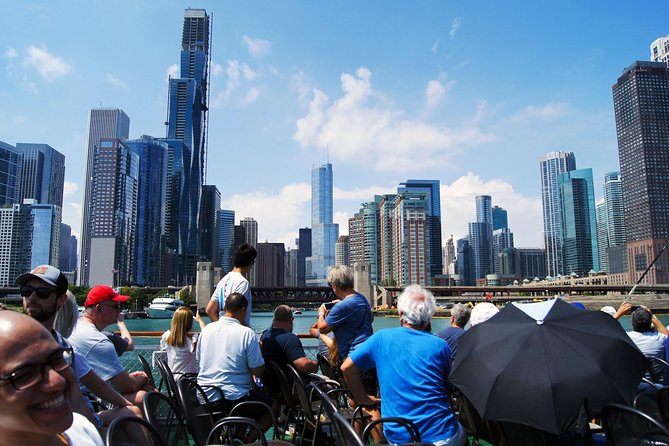
At $57 per person for about 90 minutes, the key question is what you actually buy. In this case, you are paying for three things you cannot easily replicate on your own:
- Docent-led interpretation that turns views into meaning
- A guided route that bundles major landmarks without you playing map Tetris
- Onboard comfort, including restrooms and a climate controlled lower deck
If you are visiting with limited time, this is the type of experience that can pay you back later. You get a mental framework for what you see around the city, so your walking days make more sense.
There is also a neat extra value angle. The Chicago Architecture Center is directly across Wacker Drive from the First Lady docks, and discounted admission of $5 per person is available if you show your river cruise ticket. If you plan to visit the center anyway, the cruise can help you justify both stops.
When to go and how to dress so you enjoy every minute
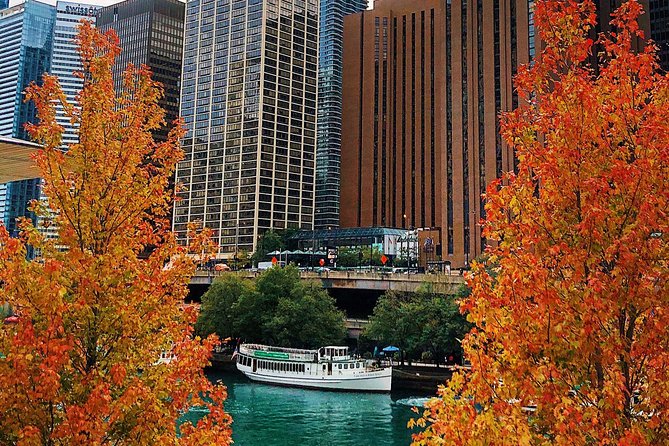
This cruise runs in all weather conditions. You do not need perfect skies, but you do need good layering habits.
If you want the best balance, aim for a day when you can spend time on both decks. The open-air top deck is where you get that wide, photo-friendly feeling. The enclosed lower deck is your backup when wind or cold becomes annoying.
Bring sunglasses and a cap or visor, because the sun can interfere with your view of buildings. If you ride in the colder months, expect shade to feel cooler, even if you spend time inside between photo stops.
And check your timing habits. Boarding is first come, first served, so if you want better pick of seats, you will want to be near the front of the line.
Who should book this cruise, and who should choose something else
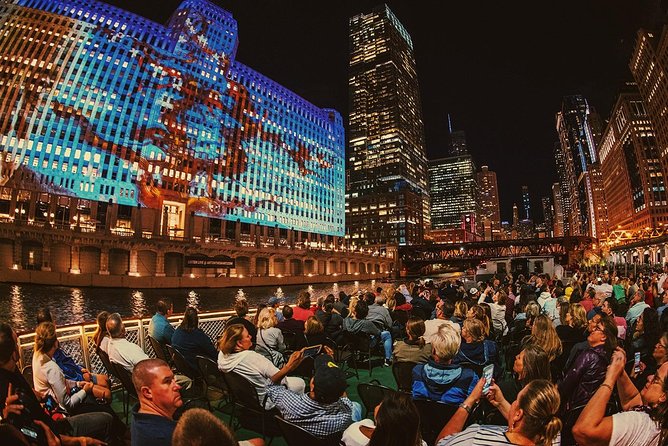
This is a great fit for you if:
- You want a fast, structured introduction to Chicago architecture
- You like learning the why behind the what
- You want iconic landmarks like Willis Tower and Marina City without building a complex day plan
- You prefer a guided experience with live commentary rather than just looking at photos
It is less ideal if:
- You are expecting a long-distance excursion across multiple neighborhoods
- You need accessible dock access with an elevator, since there is no elevator access to the boat dock
- You travel with pets, since pets are not allowed
- You are bringing a child under 12, since it is not recommended for children younger than 12 years
- You need to bring luggage, because luggage cannot be stored or brought on board for security reasons
Strollers are allowed, but children must be removed from strollers before boarding. Strollers will be folded and stored in the salon during the cruise.
The decision: should you book the Chicago Architecture Center River Cruise on the First Lady?
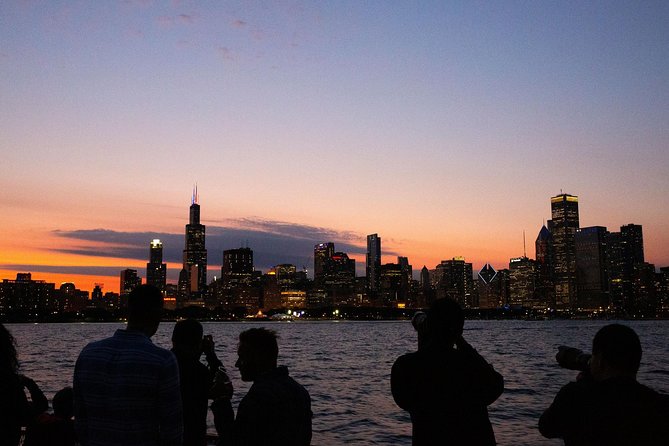
If you have limited time in Chicago, this is one of the smartest value choices. Ninety minutes, major river landmarks, and live docent interpretation is a strong recipe for getting oriented quickly.
I would book it if you want context, not just skyline selfies. The cruise is also a good start on day one, because it helps you connect buildings you will later see on your own.
Skip it only if your priority is maximum distance and coverage, or if the lack of elevator access at the dock is a deal-breaker for you. Otherwise, bring layers, arrive early, and enjoy the river view as the city teaches itself.
FAQ
Where does the Chicago Architecture Center River Cruise aboard First Lady depart?
The cruise departs from the First Lady docks along Chicago’s Riverwalk at 112 E Wacker Dr, near the Riverwalk entrance on the northeast corner of Michigan Ave. and Wacker Dr.
How long is the cruise?
It runs about 1 hour 30 minutes.
How early should I arrive before departure?
Please arrive 30 minutes prior to your cruise departure time.
Are seats assigned?
No. Seating is general admission, and boarding is first come, first served.
Does the tour run in bad weather?
Yes. It operates in all weather conditions. The boat has an open-air top deck and an enclosed, climate controlled lower deck with large windows.
Are restrooms available onboard?
Yes. Restrooms are onboard, and they close about 15 minutes before the end of the tour.
Can I bring luggage, pets, or a stroller?
Luggage cannot be brought on board and there is no storage dockside, so you should leave luggage at your hotel. Pets are not allowed. Strollers are allowed, but children must be removed from strollers before boarding, and strollers are folded and stored in the salon during the cruise. Service animals are allowed.
Are tickets refundable or transferable to another departure?
No. Tickets are not refundable or transferrable to other departures, and the amount paid is not refunded if you cancel or request a change.
Reviewed most recently around Chicago
- Bikes, Bites & Views: Chicago’s Signature Dishes Bike Tour-Adults★ 5.0 · 732 reviews
- Chicago Architectural River Cruise★ 4.5 · 804 reviews
- Chicago River Architecture Tour with Small Boat Upgrade Option★ 5.0 · 818 reviews
- Chicago Loop District Food Tour with Deep Dish & Beef Sandwich★ 5.0 · 870 reviews
- Medieval Torture Museum Ticket with Audio Guide and Ghost Hunting★ 5.0 · 962 reviews
- Chicago in a Day: Food, History & Architecture Walking Tour★ 5.0 · 1,153 reviews
- 360 CHICAGO Observation Deck Admission★ 4.0 · 1,206 reviews
- Delicious Donuts & City Sights: Chicago’s Original Donut Tour★ 5.0 · 1,389 reviews
Architecture Tours, compared.
Chicago River: 1.5-Hour Guided Architecture Cruise
Read our review →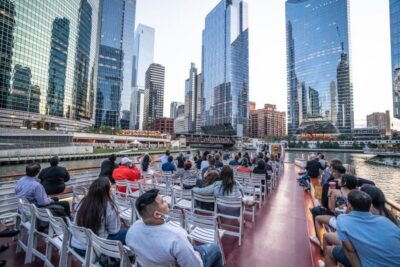
Architecture River Cruise Skip-the-Ticket Line
Read our review →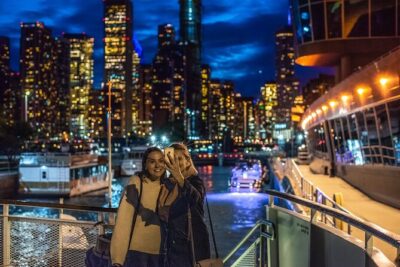
Chicago River 45-Minute Architecture Tour from Magnificent Mile
Read our review →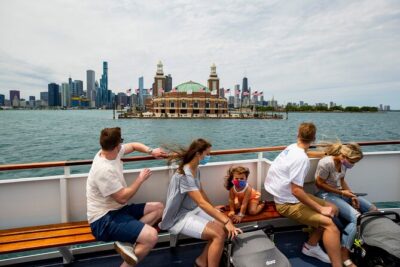
45-Minute Family-Friendly Architecture River Cruise
Read our review →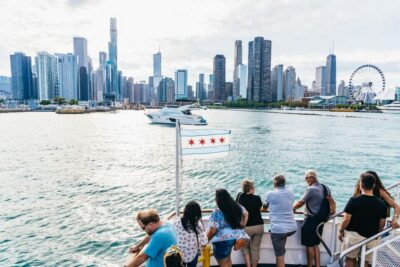
Browse the lists this tour appears in