
Reviewed · FREEDOM TRAIL TOURS
Boston: Freedom Trail History Small Group Walking Tour
Boston’s Freedom Trail is interesting because it turns a walk into a time machine. You’re following the same streets that once carried tense debates over loyalty, protest, and who got to decide the future. I especially like how the tour keeps it human, with a guide who can connect dates to faces, and how you get the full Freedom Trail set of 16 landmarks without feeling swallowed by crowds.
Two things I really like: the pace stays readable in a small group of up to 15 and the stories focus on why ordinary people had hard choices during that 15-year stretch toward the Revolution. One thing to consider is the tradeoff for that intimacy and walking, you cover about 2.0 miles on foot and the tour listing notes it is not suitable for people with mobility impairments or low fitness.
If you care about early American history, the best part is how your guide can make the scene click. Names that show up in recent guide praise include Mark, Toby, Eric, Amir, Alejandro, Nick, Maura, Zoe, and Cyrus, and the common thread is how they keep the facts clear while still letting you think about the complicated parts.
Key Things to Know Before You Walk the Freedom Trail
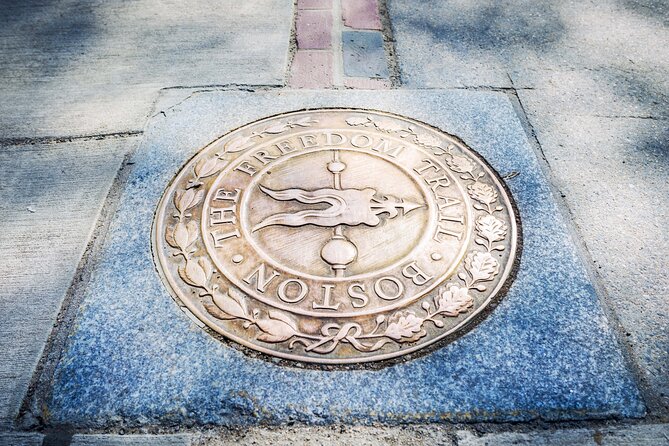
Sixteen official Freedom Trail stops, stitched into one continuous story across Boston’s most important Revolutionary sites.
Small-group format (15 guests max), so you can actually hear the guide instead of craning your neck.
Guides tend to bring context, myths, and nuance, not just dates and plaques.
A practical break at Quincy Market gives you a pause for water and a restroom stop.
Finish in the North End at Copps Hill Terrace, with views toward USS Constitution and Bunker Hill.
Comfortable shoes matter, because this is a true walking tour, about 2.0 miles total.
Freedom Trail in 150 Minutes, The Good Parts and The Tradeoff
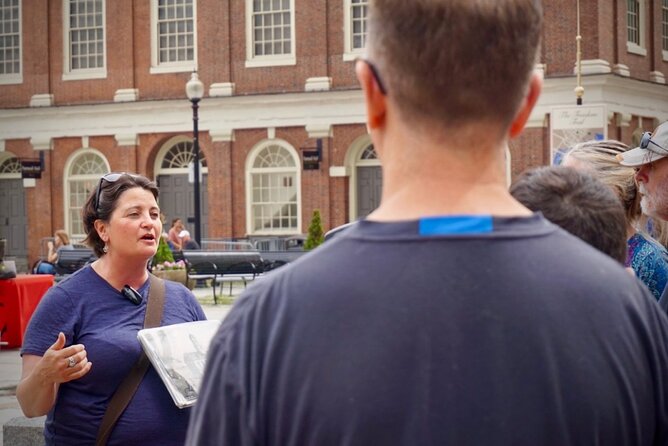
For me, the Freedom Trail works best when it is paced like a story, not a checklist. This tour fits that sweet spot. It’s long enough to connect events across Boston, but short enough that you’re not fried by the time you reach the North End.
You’re paying about $35 per person, which is reasonable for a guided route that covers all 16 official landmarks. The key value is not just the sites, it’s how a strong guide explains what was at stake when tempers flared and people chose rebellion over loyalty.
The tradeoff is physical and practical. You are walking downtown Boston, with a total route of about 2.0 miles, and the tour is listed as not suitable for people with mobility impairments and low fitness. If you’re fine on your feet, it’s a very doable half-day.
More Historical Tours in Boston
- Boston: Freedom Trail History Small Group Walking Tour
★ 5.0 · 6,450 reviews - Tour of Historic Fenway Park, America’s Most Beloved Ballpark
★ 4.5 · 3,013 reviews - Boston Food & History: Pizza, North End & Freedom Trail
★ 5.0 · 1,772 reviews
Where You Start: Boston Common and The Boston Foundation Monument
You begin at the Boston Foundation Monument on the northern edge of Boston Common, opposite 50 Beacon Street. The granite memorial has a bronze relief showing two men shaking hands, a visual reminder of what early settlers were doing when they arrived in 1630.
This is a great start point because Boston Common is big and open. You can orient fast, and the tour gives you a clean “from here to there” path along the Freedom Trail.
You’ll want to dress for real outdoor weather. Even in calm days, the route moves through areas where wind can cut across streets, especially as you near the waterfront neighborhoods.
Boston Common to The State House: Setting the Stage Without a Lecture Hall
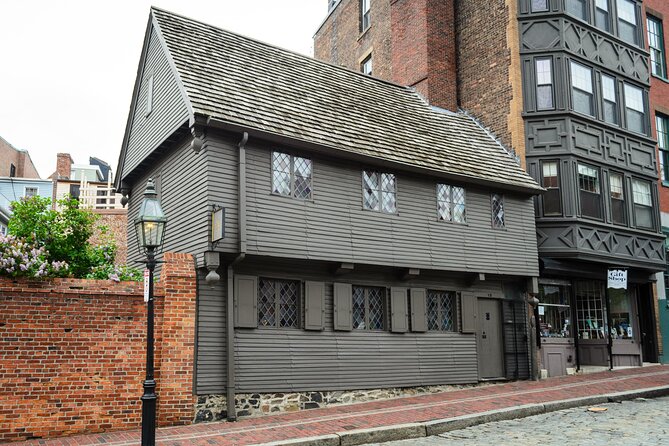
From Boston Common, you work toward the Massachusetts State House. This early stretch is where the guide can give you the broad idea of how power and politics played out in colonial Boston.
You also pass Park Street Church and get a guided stop there. Even if you don’t care about architecture, churches and civic buildings matter because they were part of the public square long before hashtags and press conferences.
Then you reach the Massachusetts State House for a guided look. The value here is perspective. You start to see the Revolution not as one dramatic moment, but as a slow grind where laws, protests, and public opinion all collided.
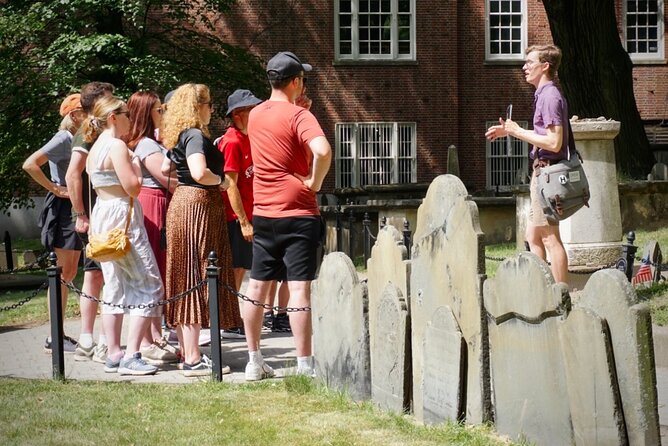
Granary Burying Ground: The Cemetery Stop That Feels Like a Classroom
Next up is Granary Burying Ground. This is not a random detour. It is one of those places where the names turn into context fast, because it connects to key figures in the lead-up to the Revolution.
You’ll get time here, about 25 minutes, which is plenty for a guide to explain why these burials mattered. Cemeteries can be surprisingly political in any city, and this one is especially tied to Revolutionary memory.
A practical note: expect it to feel colder or darker than nearby streets in winter or shoulder seasons because of how open space works. Plan your comfort around that.
More Walking Tours in Boston
- Cambridge: Harvard University Student-Guided Walking Tour
★ 4.6 · 3,931 reviews - Harvard University Campus Guided Walking Tour
★ 4.5 · 3,632 reviews - Boston Freedom Trail Walking Tour with Costumed Guide
★ 4.5 · 2,531 reviews - The Full Revolutionary Story Epic Small Group Boston Walking Tour
★ 5.0 · 2,356 reviews
King’s Chapel, Benjamin Franklin, and Old City Hall: Learning How Boston Built Its Public Life
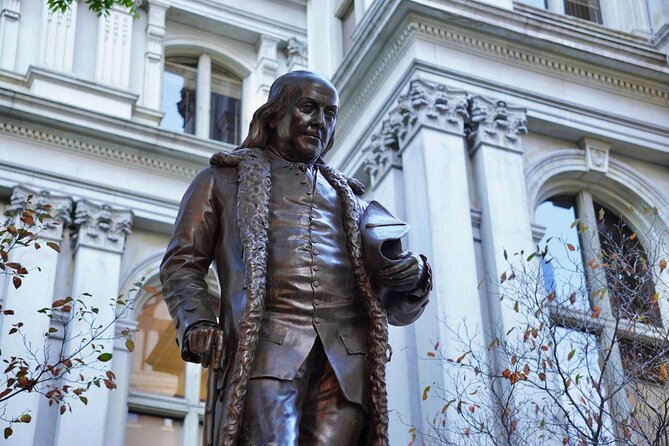
After Granary Burying Ground, the tour includes King’s Chapel and a quick look at Boston Latin School and the Benjamin Franklin statue. The school stop is especially useful because it shows how ideas, education, and civic identity grew alongside political tension.
Then you move to Old City Hall Boston. These buildings help you understand something simple: Boston’s public life was concentrated. People gathered, argued, printed pamphlets, and shaped policy in a tight geographic area.
This matters for first-time visitors. Without context, you might just see “old buildings.” With context, you see the machinery of daily politics.
Old Corner Book Store and Old South Meeting House: Where Discontent Found Its Voice
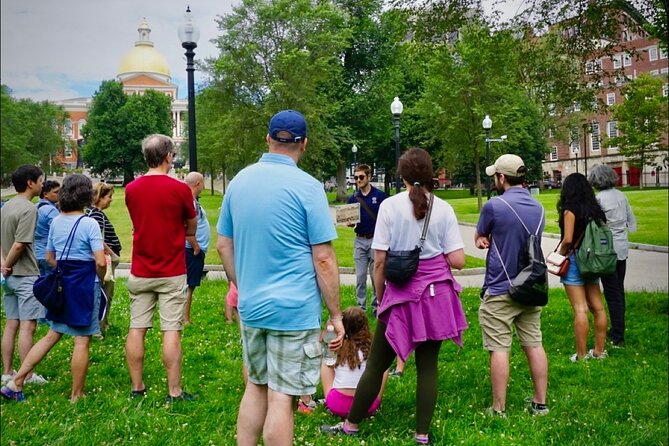
Two stops that tend to make people pay attention are Old Corner Book Store and Old South Meeting House.
At Old Corner Book Store, you get a guided explanation that links commerce and communication. In a city where information moved fast, shops and publishing spaces played a role in how ideas spread.
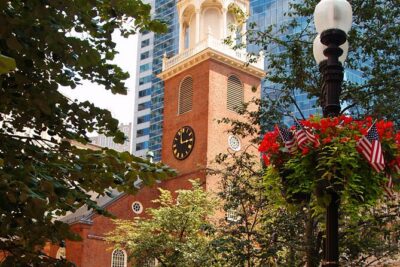
Then the tour goes to Old South Meeting House for a guided look. This is one of those iconic Revolution locations because it connects public assembly to the growing pushback against British authority. You’ll typically get a shorter guided segment here, around 10 minutes, but it is focused.
If you like knowing what happened where, these two stops do a good job of making Boston feel practical, not museum-like.
The Boston Massacre Site and Old State House: Tragedy, Tension, and Blurred Lines
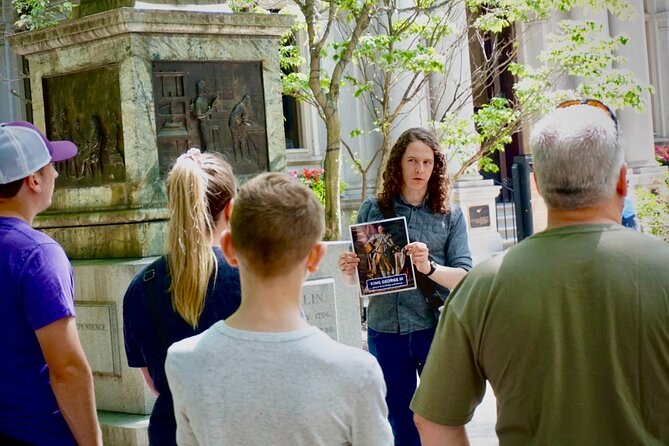
Next comes the Boston Massacre Site for about 15 minutes of guidance, followed by Old State House.
These stops are important because they show how quickly a crowd can become a crisis. The guide’s job is not to turn this into a single-lane story. Several guides praised the approach of presenting facts clearly and putting events into context, including pointing out that the situation was complicated and not simply one clean story.
Old State House is a standout because you can connect it directly to the idea of law, authority, and what colonists believed they were owed. If you like learning how different interpretations of the same event survive over time, you’ll find plenty to think about here.
Faneuil Hall to Quincy Market: A Quick Stop That Keeps the Energy Up
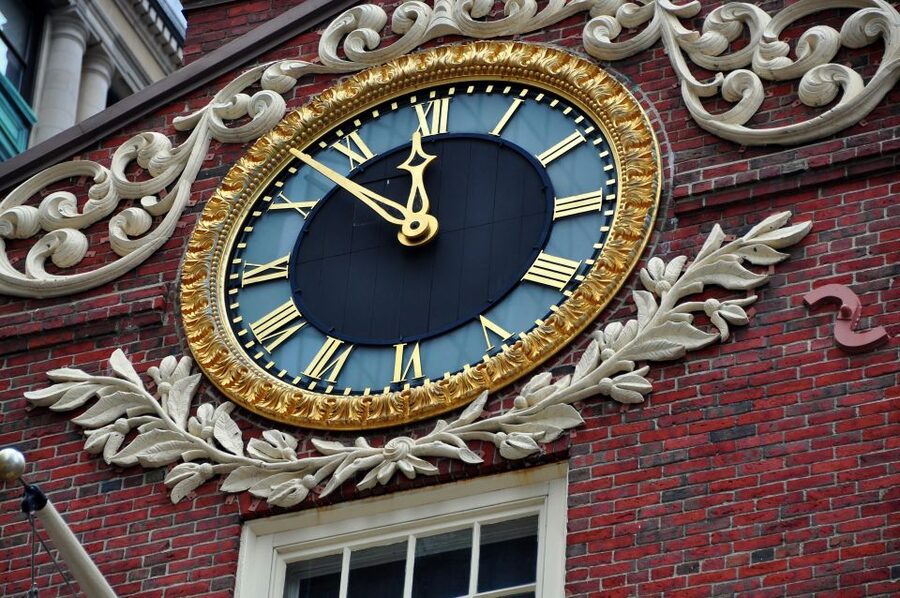
You hit Faneuil Hall with a guided segment around 5 minutes. It’s short, so treat it as a “focus cue” rather than a full deep reading.
Then you get a 10-minute break at Quincy Market. This is genuinely useful. It’s your chance to refill water, use restrooms if needed, and grab something quick so you don’t start wobbling before the North End climb to the views.
A small group also helps here. You’re not losing half your time to crowd congestion or trying to hear over a bus line.
Paul Revere House, Hanover Street, and Paul Revere Statue: The Name People Know, The Story Behind It
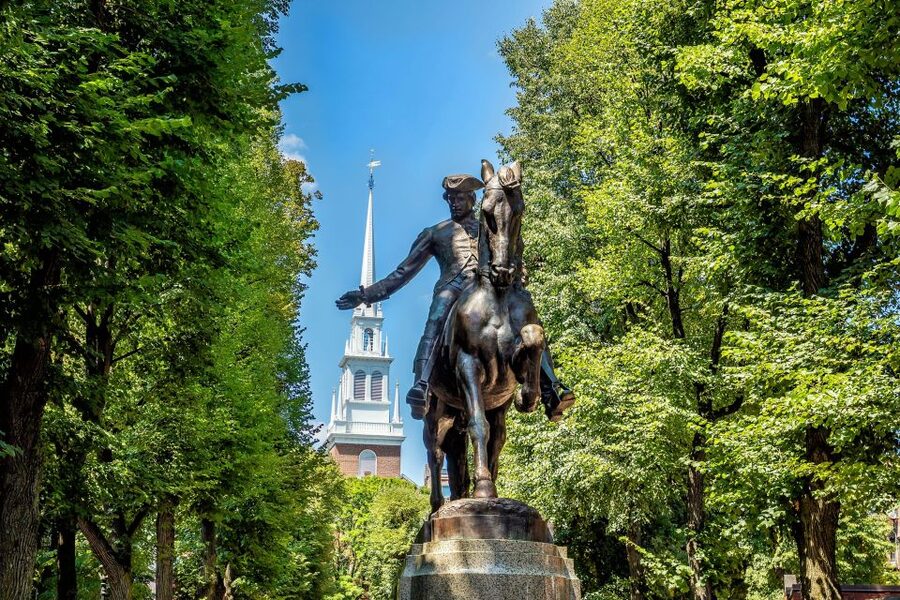
After the break, the tour shifts toward the Paul Revere side of the trail, with Paul Revere House for a guided stop of about 15 minutes. This is where a guided walk helps most. The house makes the name personal.
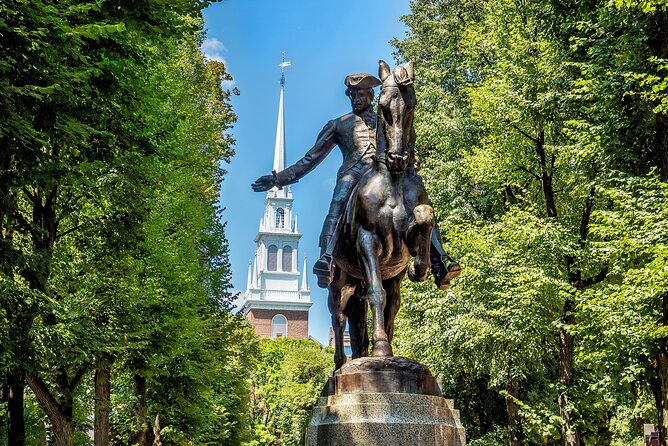
Then you’ll stroll through Hanover Street and visit the Paul Revere Statue. The stop at the statue is brief, about 10 minutes, and works as a visual anchor as you walk toward the final historic cluster.
If you enjoy “how the story got told,” these parts can also help you separate the headline version from the reality on the ground. That nuance is often exactly what people remember a week later.
Old North Church and Copps Hill: Closing with Views and Final Names
You finish the historic story on the edge of Boston’s North End at Copps Hill Terrace, a spot right by Old North Church. Along the way, you’ll get time at Old North Church for about 10 minutes, plus a guided stop at Copps Hill Burying Ground.
Copps Hill Burying Ground is a meaningful capstone because it connects names to legacy, and it ties directly into the tour highlight of visiting the final resting places of Paul Revere, Samuel Adams, and others.
Then you get the scenic payoff. The tour includes views on the way to the USS Constitution and the Bunker Hill Monument in Charlestown. You’re not doing a whole Charlestown neighborhood tour here, but the viewpoint helps you understand why the skyline and river edge matter to the Revolution story.
It’s a strong finish because you end with both history and a sense of place, and you’re basically steps from North End food afterward.
What the Route Covers, in Plain English
This tour is designed to cover the Freedom Trail as a coherent arc. You start at Boston Common, move through the civic and public assembly points, then shift into the Revere and North End area where you close the loop on Revolutionary memory.
The route includes all 16 official landmarks, plus the scenic Constitution and Bunker Hill views en route. Total time is listed at 150 minutes, and the walking route is about 2.0 miles overall.
That length is also why the guide can keep you moving. It’s enough to stay engaged, and short enough that you’re not stuck listening for hours while your feet protest.
Group Size, Guide Style, and Why You’ll Actually Learn Something
The small group is a big deal here. With 15 guests max, you’re more likely to hear the story clearly and ask questions. In recent experiences, guides like Mark, Toby, Eric, Amir, Alejandro, Nick, Maura, Zoe, and Cyrus were praised for making the tour fun and clear.
A pattern that stood out is the balance approach. Some guides were described as focusing on context and encouraging listeners to think for themselves, not just recite the approved version of events. If you love history, that keeps the tour from turning into a memory test.
Also, the tour tends to handle questions well, and that’s useful on the Freedom Trail because people often arrive with assumptions. A good guide helps you sort what you know from what you thought you knew.
Price and Value: What $35 Buys You on This Walk
For $35 per person, you’re buying a guided, small-group route that hits all 16 official stops and covers a lot of ground in about 2.5 to 3 hours.
Here’s the value math that matters:
- Self-guiding the Freedom Trail can be fine, but you miss the “why this matters” thread.
- A guide saves you from reading every plaque like it’s homework.
- The small group cuts down on crowd frustration, especially at busy sites like Faneuil Hall and around Quincy Market.
If you want the fastest way to get oriented on Revolutionary Boston, this is one of the more cost-effective ways to do it without feeling rushed.
Practical Notes So Your Walk Goes Smoothly
Wear comfortable shoes. You’re on pavement and sidewalks for a couple hours, and the stops are spread out through central Boston.
Pack weather-appropriate clothing. Even when it’s not extreme, Boston wind can turn a short walk into a long one.
The tour also notes:
- Wheelchair accessible is listed, but it also says it’s not suitable for people with mobility impairments, so you should consider your own comfort and ask the provider if you fall into that category.
- Not allowed: luggage or large bags, and no video recording.
- Start time may vary, and the route lasts up to about 3 hours.
Also keep your expectations realistic for kids. It’s listed as not suitable for children under 6.
Who This Tour Fits Best
This tour is a great match if you:
- Are seeing Boston for the first time and want the Freedom Trail in one organized hit
- Like American Revolution stories tied to specific locations
- Prefer a small-group experience over sidewalk crowds
- Want a walk that ends near the North End so you can keep the day going
If you’re looking for a quiet, sit-down lecture, you might feel impatient. This is a walking tour with multiple stops and a guide who keeps you moving.
Should You Book the Boston Freedom Trail History Small Group Walking Tour?
I’d book it if you want a guided way to see the Freedom Trail’s key locations without turning your trip into a scavenger hunt. The small-group size, the full set of 16 landmarks, and the North End finish at Copps Hill Terrace make it a smart value for a first pass through Revolutionary Boston.
I would skip it if walking 2.0 miles through downtown at a steady pace is not your kind of day, or if you need a more flexible route due to mobility limits.
If your goal is to leave with a clearer, connected picture of how Boston moved from grievance to rebellion, this one delivers.
FAQ
Where does the tour start?
It starts at the Boston Common at the Boston Foundation Monument on the northern boundary of the park, opposite 50 Beacon Street (02108).
How long is the tour?
The duration is listed as 150 minutes, and the tour varies but will not be more than 3.0 hours.
How far do you walk?
The accessible route travels approximately 2.0 miles (3.2 km).
How many people are in the group?
The tour is a small-group experience with 15 guests max.
Which Freedom Trail stops are included?
It includes the full set of 16 official Freedom Trail landmarks, covering stops such as Granary Burying Ground, Old South Meeting House, the Boston Massacre Site, Old State House, Faneuil Hall, Paul Revere House, Old North Church, and Copps Hill Burying Ground.
Where does the tour end?
The tour concludes at Copps Hill Terrace near Old North Church, with a final viewpoint that includes views toward USS Constitution and Bunker Hill Monument.
Is there a break during the tour?
Yes. There is a break time listed at Quincy Market.
Is the tour suitable for families with young kids?
It is not suitable for children under 6.
What should I bring?
Bring comfortable shoes and weather-appropriate clothing.
What is not allowed during the tour?
Luggage or large bags are not allowed, and video recording is not allowed.
Is the tour wheelchair accessible?
Wheelchair accessibility is listed, but the activity is also listed as not suitable for people with mobility impairments, so it is worth assessing your needs against that note before booking.
More of the Freedom Trail
- Boston’s Freedom Trail: A Revolutionary Walking Tour
★ 4.9 · 1,748 reviews - Boston’s Freedom Trail: A Revolutionary Walking Tour
★ 5.0 · 1,343 reviews - Freedom Trail Walking Tour 250
★ 4.5 · 1,118 reviews - Boston Freedom Trail History Pub Crawl Small-Group Tour
★ 5.0 · 996 reviews
Reviewed most recently around Boston
- City Cruises Salem High Speed Ferry to/from Boston★ 4.5 · 727 reviews
- Entire Freedom Trail Walking Tour: Includes Bunker Hill and USS Constitution★ 5.0 · 732 reviews
- Boston Freedom Trail History Pub Crawl Small-Group Tour★ 5.0 · 996 reviews
- Delicious Donuts of Boston: A Sweet History Walking Tour★ 5.0 · 1,038 reviews
- Boston Pizza Lovers Food and History Walking Food Tour★ 4.5 · 1,082 reviews
- Freedom Trail Walking Tour 250★ 4.5 · 1,118 reviews
- Boston’s North End Food Tour: Italian Flavors & Heritage Walk★ 5.0 · 1,322 reviews
- Boston’s Freedom Trail: A Revolutionary Walking Tour★ 5.0 · 1,343 reviews
Freedom Trail Tours, compared.
Freedom Trail History Small Group Walking Tour
Read our review →
Boston Freedom Trail Walking Tour with Costumed Guide
Read our review →
Boston Food & History: Pizza, North End & Freedom Trail
Read our review →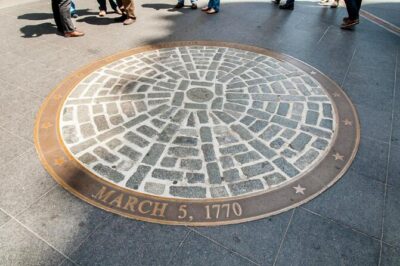
Boston’s Freedom Trail: A Revolutionary Walking Tour
Read our review →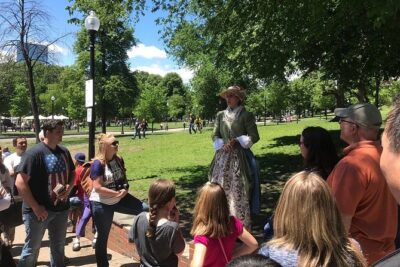

Boston Freedom Trail History Pub Crawl Small-Group Tour
Read our review →
Entire Freedom Trail Walking Tour: Includes Bunker Hill and USS Constitution
Read our review →Browse the lists this tour appears in