
Reviewed · WALKING TOURS
The Full Revolutionary Story Epic Small Group Boston Walking Tour
Boston’s revolutionary era can feel like a list of names. This tour makes it a moving timeline on foot, with a guide who explains what happened, then points to where it happened. I like the Freedom Trail in chronological order, not just marching along bricks, and I also like the small-group feel, with guides who use hands-on visual props like Lego-style soldiers to make battles stick.
The main consideration is simple: this is 3 to 3.5 hours of outdoor walking, and the route includes many stops with limited lingering time. If you hate long walks or you get chilly fast, plan for layers and good shoes.
6 key reasons people love this tour
- Freedom Trail in the right order so the American Revolution story clicks together.
- Off-the-Trail detours to see extra sites tied to the same events.
- Interactive teaching tools seen in the wild, including Lego-style props and maps.
- Old meets new Boston with downtown squares, parks, and modern viewpoints.
- Expert-style guiding from historians you may meet by name, including Tyler, Mike, Chris, and Tom.
- A North End harbor finish with a surprise tea moment on the water.
How the Revolutionary Story Tour Turns Boston into a Timeline
What makes this walking tour stand out is the way it organizes the Revolution. Most Boston history walks follow the Freedom Trail like a straight line. Here, you follow the events in the sequence they unfolded, so the politics, protests, and violence stop feeling random.
You also get two types of context as you walk. First, the obvious stuff, the famous buildings, burying grounds, and meetinghouses. Second, the less obvious stuff, like nearby corners that help you understand how Boston worked day to day, including places tied to religion, public speech, and publishing. That matters because the Revolution was not only battles. It was arguments, organizing, and pressure that built over time.
And because the group stays small (up to 15), you are not just listening into the void. You can ask questions and get answers that connect the story to what you are seeing in front of you. I especially like that guides do more than recite facts. They translate ideas into images you can picture, like props used for the Battle of Bunker Hill and visual aids that help you track the route and the people.
More Walking Tours in Boston
- Boston: Freedom Trail History Small Group Walking Tour
★ 5.0 · 6,450 reviews - Cambridge: Harvard University Student-Guided Walking Tour
★ 4.6 · 3,931 reviews - Harvard University Campus Guided Walking Tour
★ 4.5 · 3,632 reviews
City Hall Plaza Start: Easy to Find, Built for Your First Big Photo
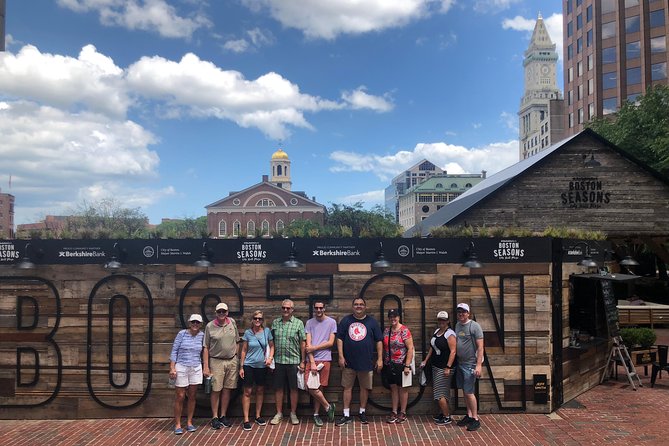
You begin at City Hall Plaza, a pedestrian-only space with excellent sightlines toward Faneuil Hall. The meeting spot is between Five Iron Golf and Boston City Hall, in front of a seasonal beer garden, beside a large Boston sign with Faneuil Hall in the background. It is a practical way to start, because you get your bearings fast and you have a photo moment right away.
From the first steps, the tour’s tone is clear. You are not doing a slow museum loop. You are walking a story with a beginning. The first stop pulls you into early Massachusetts Bay, so the Revolution does not appear out of nowhere. It starts with the people who shaped the colony long before speeches and sea battles.
That structure is one reason this works well for couples and first-time Boston visitors. You can see major landmarks and still come away with a coherent understanding of how Boston became the center of resistance. If you are traveling with kids, it can also work for school-age attention spans, but it is not a kids-only script.
Puritans, Public Speech, and Revolutionary Names at Key Cemeteries
A major early anchor is King’s Chapel Burying Ground. This is where the tour shifts from the Revolution label to the real foundation beneath it: who first settled Massachusetts Bay and why their beliefs and choices mattered. Even if you think you know the Puritans, this stop tends to add weird, human details that make the period feel less like a textbook.
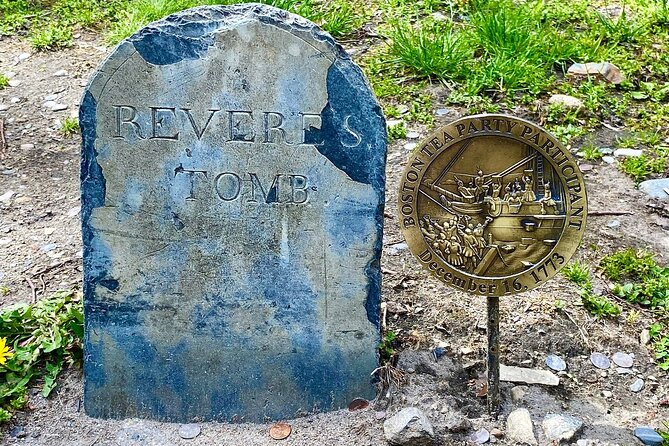
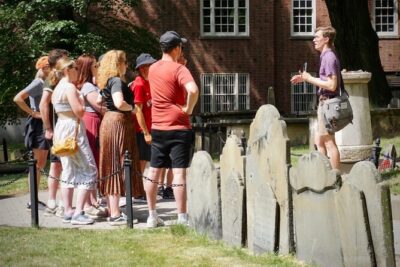
Next comes Granary Burying Ground, one of the places where the Revolution starts to feel personal. Here you learn about the Sons of Liberty and visit the tombs of Paul Revere, John Hancock, and Sam Adams. Seeing these names in a real burial ground changes the tone. You start to think of them as people with networks, reputations, and stakes, not just historical icons.
One practical perk of doing these stops early is pacing. Cemeteries can feel like they take forever on guided tours. Here, you get enough time to absorb the key stories, then the group keeps moving. It keeps the tour from turning into a long lecture without structure.
Freedom Trail in Chronological Order, plus Church, Speech, and Political Friction
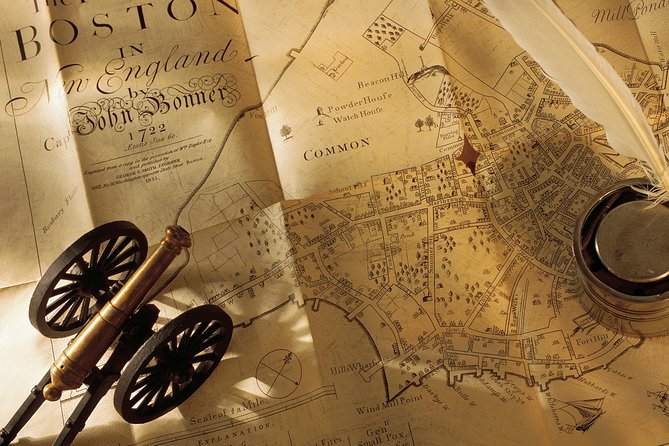
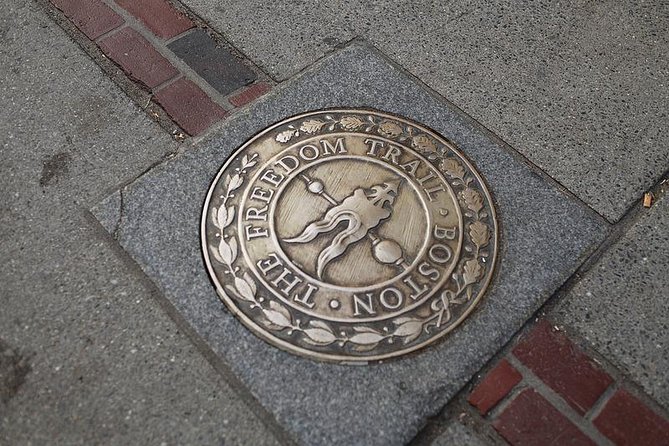
Yes, you walk part of the Freedom Trail. But the real win is how you use it. Instead of blindly following the bricks from one end to the other, you weave around Boston so the sights match the timeline. That means you revisit ideas from different angles and you can see how one event set up the next.
The tour also detours away from the Freedom Trail to cover essential background that many basic walks skip. You pass the first Anglican church in Boston, then you hit a location tied to fiery public sermons at Brimstone Corner. One detail I like here is that you connect public speech to moral conflict. That helps explain how debates over freedom were not only political. They were also religious and social.
Then you move into the political engine room of downtown Boston. You see the Old City Hall and talk through how democracy struggled in real time. After that comes the Statue of Benjamin Franklin, a stop that uses Franklin’s legacy as a bridge into early public education and the kind of civic thinking that shaped the era.
Old State House is next, and it is a strong stop for understanding power. It was the nerve center of Massachusetts politics, so the guide’s explanation of tensions between British authority and American rights makes you feel the stakes rather than just memorize them. Right after that, you reach the Boston Massacre site, where the story shifts from debate to violence. You hear how soldiers, citizens, loyalists, and patriot leaders were pulled into an explosion of tension.
Another Boston day, played differently:
- Boston Duck Boat Sightseeing City Tour with Cruise Along Charles River
★ 4.5 · 9,378 reviews - Boston Hop-On Hop-Off Trolley Tour with 13 Stops
★ 4.5 · 5,576 reviews - Boston Duck Tour: The Original and World-Famous
★ 4.6 · 3,935 reviews - Boston: City Cruises Whale Watching Cruise
★ 4.5 · 3,646 reviews
Tea Party Lead-Up, Faneuil Hall, and How Modern Boston Grew Over the Past
A turning point on the route is Old South Meeting House, tied directly to the Boston Tea Party. The guide frames it as a point of no return, and you feel that logic as the walking segments pull you toward Faneuil Hall and the wider public protest culture.
You also stop at Post Office Square, which is a useful reminder that the Revolution did not happen in a historical bubble. The road to revolution ran through the heart of downtown Boston, and now you are standing in the middle of an active business and civic district. This is one of those moments where the tour makes you look up from the sidewalk and notice the contrast: then and now, in the same few blocks.
The Financial District segment also fits this theme. It is not only about war planning. It is about the kinds of systems that supported the colony and the people debating what should change.
Then you reach Faneuil Hall Marketplace, often called the cradle of liberty for a reason you can feel when you stand there. The guide explains how protest became revolution, and the stop works because the building is designed for public gathering and public voice.
After Faneuil Hall, you will pass through Quincy Market. The tour does not pretend it is an off-the-radar moment. You get warned about tourist traps, which I appreciate. If you want a snack, it is a convenient place. If you hate crowds, keep your time brief and use it for orientation or a quick bite.
Finally, you move through green space like the Rose Fitzgerald Kennedy Greenway and a couple of small squares and parks, including North Square Park. These pauses are not random. They help you reset your brain between heavy political stops and keep the tour from feeling like nonstop history facts.
From Paul Revere House to Old North, Bunker Hill, USS Constitution, and the Harbor Finish
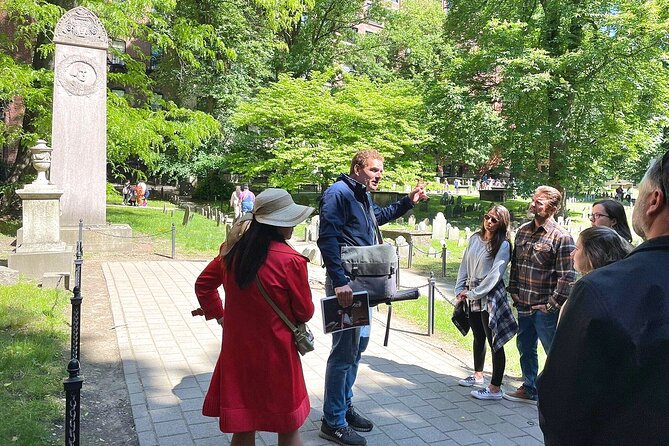
The route keeps tightening toward the fighting. You visit the Paul Revere House and its surrounding area, then you step into North Square Park, the oldest residential square in America. The point is not only scenery. It shows how closely Revolutionary figures lived to the spaces where they later acted.
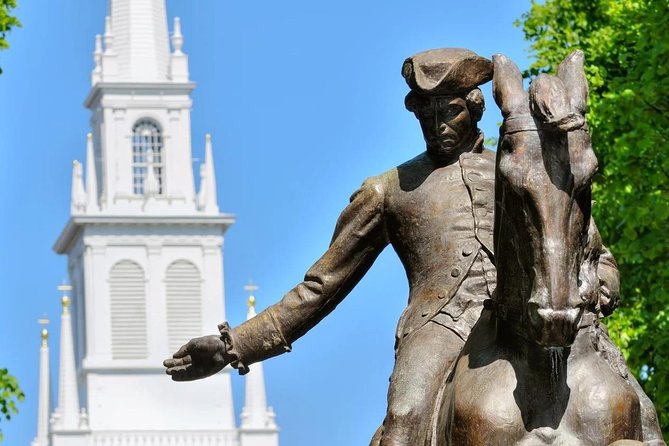
After a quick photo stop by the Paul Revere statue, the tour reaches Old North Church and the historic site connected to Revere’s midnight ride. The classic warning story is part of this stop, and the guide brings it forward into the wider outbreak of conflict, linking to Lexington and Concord and the chaotic shift from rumor and signaling to real battle.
One of the later story beats is a climb-free but viewpoint-heavy segment at a second-oldest burial ground in Boston. You do not go inside much here, but you get spectacular terrace views across toward Charlestown and Boston Harbor. That is a clever choice on a walking tour, because you get a big visual payoff without adding another building stop.
Then you do Bunker Hill Monument, where the guide gives a complete recreation of the battle of Bunker Hill. This is a highlight section for a reason. Reviews repeatedly mention guides using visual aids like Lego-style soldier illustrations to help the battle feel clear and trackable. If you like battles explained as movements and choices rather than just dates, this is where you will probably pay the closest attention.
You also get a look toward Old Ironsides, the USS Constitution. It is the oldest commissioned naval vessel in the world, and the tour explains how the ship’s story connects to the broader maritime confidence of the period. You only see it from the Boston Harbor side, and the tour is honest about that it was not part of the American Revolution itself. Still, the overview helps you understand why naval power mattered in the larger era.
The tour ends in the North End with a harbor walk. You finish along the Harbor Walk for city views and ocean breezes, then around Christopher Columbus Park before landing at Lewis Wharf in the Little Italy area. The finish location is practical: public restrooms nearby and a short walk back to transit. You also get a surprise tea party on Boston Harbor, which is a fun bookend for a tour that starts with politics and ends with a calm waterfront moment.
Price, Pace, and Whether $55 Feels Fair

At $55 per person, you are paying for a focused, story-based walking experience with a small group cap of 15. This is not a museum ticket price. It is closer to what you pay for expert guiding plus the labor of building an efficient route with meaningful stops.
The value comes from three places:
- You get Freedom Trail coverage plus detours, so you are not locked into the same standard list.
- You get a chronological story flow that helps you remember what matters and why.
- You get guides who bring active teaching tools and clear explanations, with examples seen from Tyler, Mike, Chris, and Tom in past groups.
The pacing is real. Expect a lot of walking in about 3 to 3.5 hours. If your ideal travel day is short distances with frequent breaks, this may feel like too much. If you like moving through a city and learning as you walk, it is a strong fit.
Good weather matters here. The experience requires good conditions, and that is fair for a tour that is mostly outdoors. Bring layers even in cooler months, and wear shoes you do not mind getting tired in.
Should You Book This Boston Revolutionary Tour?
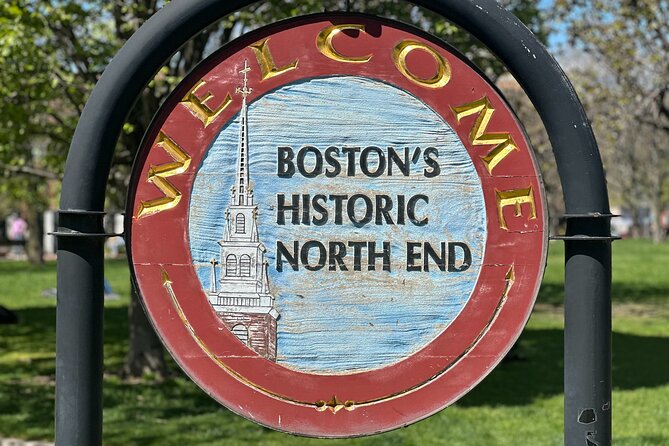
Book it if you want a Boston Freedom Trail walking tour that actually explains the Revolution as a sequence, not a set of landmarks. I think it is a great first or second Boston history day because it mixes the big names with the spots that connect to real speech, public debate, and early politics.
Skip it if you need minimal walking or you strongly prefer quiet, indoor learning. This route is built for movement, and the story happens on streets, in squares, and in outdoor memorial spaces.
If you show up ready to walk, listen, and look closely, you will come away with a clearer picture of Boston’s role in independence, plus a satisfying ending with harbor views and that surprise tea on the waterfront.
FAQ
How long is the Full Revolutionary Story Epic Small Group Boston Walking Tour?
It runs about 3 hours to 3 hours 30 minutes.
How much does the tour cost?
The price is $55 per person.
Where does the tour start and end?
It starts at City Hall Plaza in Boston and ends at Lewis Wharf in the North End area.
How big is the group?
The tour has a maximum of 15 travelers.
Is the tour offered in English?
Yes, it is offered in English.
Does it include the Freedom Trail?
Yes. You walk parts of the Freedom Trail, and the route is planned to follow the Revolution in chronological order.
Do you enter museums during the tour?
Museum entry is not included, other than stops that involve Faneuil Hall and Quincy Market.
Is the tour a reenactment in costumes?
No. It is not in costumes and it is not a reenactment. It is presented as scholarly storytelling.
Is it suitable for children?
The tour is appropriate for all ages, but it is not a kids version of events. Children must be accompanied by an adult.
What if the weather is bad?
The tour requires good weather. If it is canceled due to poor weather, you will be offered a different date or a full refund.
Reviewed most recently around Boston
- City Cruises Salem High Speed Ferry to/from Boston★ 4.5 · 727 reviews
- Entire Freedom Trail Walking Tour: Includes Bunker Hill and USS Constitution★ 5.0 · 732 reviews
- Boston Freedom Trail History Pub Crawl Small-Group Tour★ 5.0 · 996 reviews
- Delicious Donuts of Boston: A Sweet History Walking Tour★ 5.0 · 1,038 reviews
- Boston Pizza Lovers Food and History Walking Food Tour★ 4.5 · 1,082 reviews
- Freedom Trail Walking Tour 250★ 4.5 · 1,118 reviews
- Boston’s North End Food Tour: Italian Flavors & Heritage Walk★ 5.0 · 1,322 reviews
- Boston’s Freedom Trail: A Revolutionary Walking Tour★ 5.0 · 1,343 reviews
Walking Tours, compared.
History and Hauntings of Salem Guided Walking Tour
Read our review →
New Orleans Premier Ghost, Voodoo and Vampire Walking Tour
Read our review →
Freedom Trail History Small Group Walking Tour
Read our review →
Historic Charleston Guided Sightseeing Walking Tour
Read our review →
New Orleans Food Walking Tour of the French Quarter with Small-Group Option
Read our review →
St. Louis Cemetery No. 1 Official Walking Tour
Read our review →Browse the lists this tour appears in