
Reviewed · FREEDOM TRAIL TOURS
Boston’s Freedom Trail: A Revolutionary Walking Tour
Boston’s Freedom Trail is interesting because it turns a list of sites into a moving story of power, protest, and everyday people. I like that this tour checks off 16 official sites in one go, and I especially like the way the guide links the Revolution era to later Boston themes like abolition and women’s rights. One thing to consider: the route is a lot of walking in 2.5 hours, so cemeteries and narrow spots can feel fast if you need extra time.
If you want history without feeling stuck in a museum, this works. You start at The Embrace by Boston Common, then step through major landmarks like the Massachusetts State House and Boston Tea Party start point, all the way to Copp’s Hill Terrace with views toward Bunker Hill and USS Constitution. It is also good value for the price, since you get a guided sweep instead of bouncing around on your own.
Finally, it is built for real groups, with a cap of 25 travelers and a guide who keeps you moving site to site. Just know that hearing can be an issue if you are not facing the guide, so pick a spot where you can see and listen easily.
Key highlights to look for
- All 16 official Freedom Trail sites in one tour, timed for a 2.5-hour walk
- A guided narrative that connects rebellion, religion, and political change across centuries
- Strong start point at The Embrace, which sets a wider Boston story than 1775 alone
- Churches and burial grounds included, so you get the mood of the era, not just street names
- End near Copp’s Hill Terrace with a view toward Bunker Hill and USS Constitution
- Maximum group size 25, helping the walk stay personal rather than chaotic
What you get in 2.5 hours on Boston’s Freedom Trail

This is a guided walking tour built for first-time visitors and history lovers who want their bearings fast. Instead of picking and choosing stops, you follow a clear route that hits the main points of the Freedom Trail and fills in what happened there and why it mattered.
You should expect a pace that covers downtown Boston thoroughly. At each stop, the guide focuses on story and context, from political flashpoints to the people who made them happen. That matters because the Freedom Trail can feel like a lot of markers on your own. With a guide, you connect the dots, including how Boston’s leadership stretched beyond the Revolution into later social change themes like abolition and immigration.
The big question for you is fit. If you enjoy walking and you do not mind moving between stops on a schedule, this tour is a high-return way to do Boston. If you want a relaxed stroll with lots of free time at each building, this is not that kind of tour. It is designed to be efficient, so the reward comes from the sweep, not lingering.
More Walking Tours in Boston
- Boston: Freedom Trail History Small Group Walking Tour
★ 5.0 · 6,450 reviews - Cambridge: Harvard University Student-Guided Walking Tour
★ 4.6 · 3,931 reviews - Harvard University Campus Guided Walking Tour
★ 4.5 · 3,632 reviews
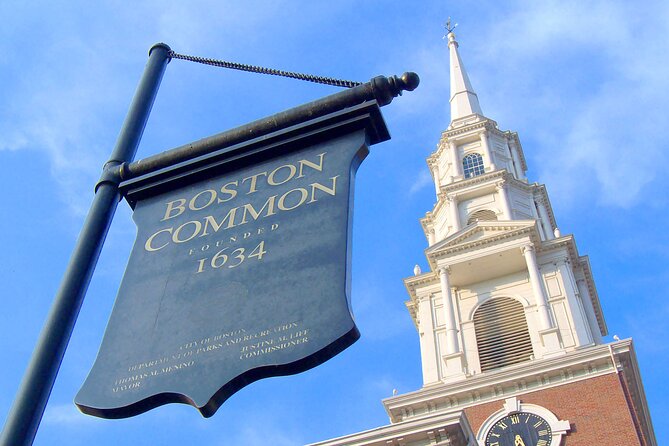
Starting at The Embrace, then stepping into Boston Common’s power stories
You begin at The Embrace (139 Tremont Street), right beside the Boston Common Visitor Information Center. It is a modern, human start, a statue honoring Martin Luther King Jr. and Coretta Scott King. Even if your main interest is the Revolution, I like how this first stop frames the idea that Boston’s history is not just old wars and old flags. It also signals that movements and rights matter across time.
From there, the tour moves quickly into the seat of Massachusetts state government with the Massachusetts State House and its golden dome. You’ll hear how Samuel Adams laid the cornerstone in 1795. That detail gives the building a backstory, not just a postcard view.
What I like about this opening sequence is that it quickly anchors you in the theme of governance and public life. Boston is not just a pretty city with historic buildings. It is a place where people argued, organized, and pushed the system.
Practical tip: The Embrace is right where you can find your footing before the long walk starts. If you know you’ll need a break later, this is a good place to pause and get oriented.
From abolitionist meetings to Patriots’ graves: the route gets personal fast
After the State House, you’ll walk to a red brick church built in 1809 that hosted a congregation of abolitionists. This is one of those stops where the guide’s storytelling really changes the feel of the tour. You’ll hear about fiery anti-slavery speeches delivered inside, some of the first of their kind in America. The point is not just that abolition happened. It’s that communities in Boston argued publicly, with emotion and risk.
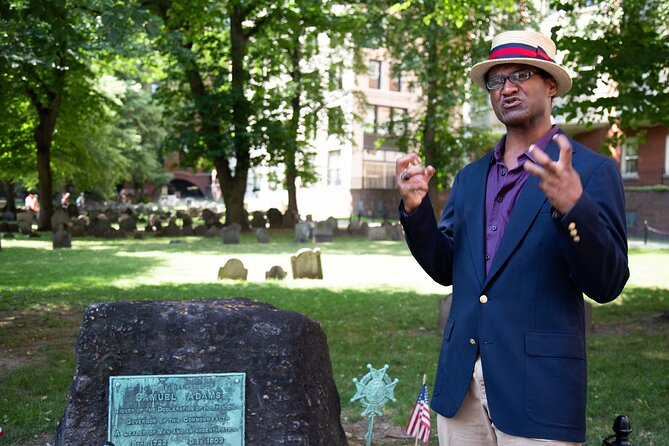
Next comes a graveyard dating to 1660, with the final resting places of Patriots like John Hancock, Paul Revere, and Samuel Adams. This is a quieter stop, and it gives the “why” behind the loud speeches you’ll hear at other sites. Standing near the people named in Boston’s Revolution story makes the names feel less like a textbook list.
Then the tour heads to a stone church built in 1754, described as the first Anglican Church in Boston. You’ll hear about its construction, plus the burying ground next to it and crypts beneath. Even if you are not a church person, I find that these details help you picture how the city worked, including where people were laid to rest and how religious power showed up in architecture.
After that, you visit a Puritan meeting house built in 1729, noted as the place where the famous Boston Tea Party began. This is a classic “how civil disobedience starts” stop, and it helps connect the idea of protest with the spaces where it happened.
Tea Party to the press: Faneuil Hall, Old State House, and Ticknor & Fields
Boston’s revolution is not only about mobs and muskets. It’s also about speech, publishing, and political pressure. This tour leans into that.
You’ll see a brick building from 1718 that once served as a colonial apothecary, then later housed the 19th century publishing house Ticknor & Fields. The guide ties this site to the literary giants published there. If you like the way ideas spread through books and print, this is a fun pivot away from only military history.
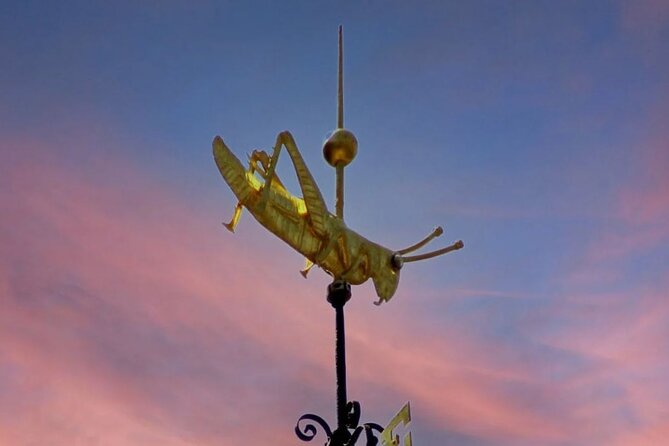
Then the tour reaches Faneuil Hall, constructed in 1743 as a common marketplace, but later more famous for speeches. You’ll hear about the incendiary addresses delivered there from the second-floor meeting hall, nicknamed the Cradle of Liberty. Even if you have heard of Faneuil Hall before, the guide’s focus makes it feel like a stage, with people arguing in public and trying to move a crowd.
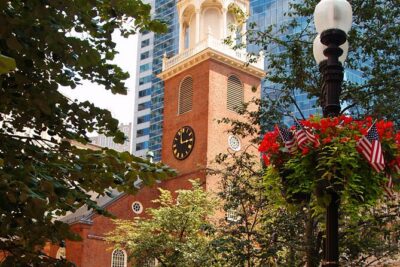
After Faneuil Hall, you visit the Old State House, built in 1713 and adorned with symbols of Great Britain, including the Lion and Unicorn. This stop is framed as once being the center of British Government in Massachusetts. You’ll get stories of fiery speeches and pitched confrontations inside. The takeaway is that the argument about independence did not appear out of nowhere. It grew inside official spaces as tensions built.
More of the Freedom Trail:
- Boston Freedom Trail Walking Tour with Costumed Guide
★ 4.5 · 2,531 reviews - Boston Food & History: Pizza, North End & Freedom Trail
★ 5.0 · 1,772 reviews - Boston’s Freedom Trail: A Revolutionary Walking Tour
★ 4.9 · 1,748 reviews - Freedom Trail Walking Tour 250
★ 4.5 · 1,118 reviews
Bloody Massacre and Old North: the night Revolution got real

Two of the most dramatic moments on the Freedom Trail are handled with care on this tour.
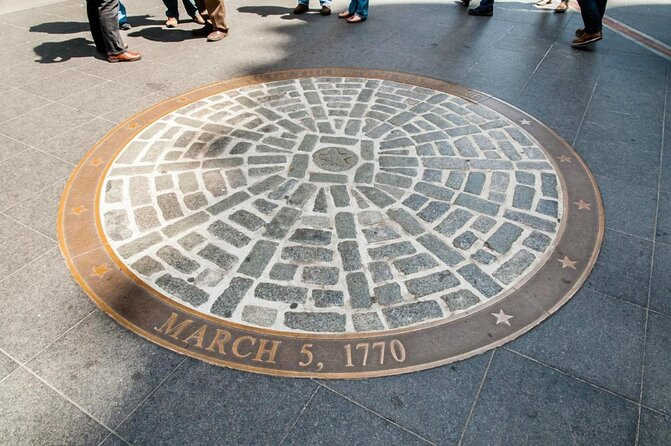
First, you’ll stand at a circle of stones marking the official site of the Bloody Massacre of 1770. The guide provides a moment-by-moment account of the night when redcoat musket fire left five colonists dead. It is intense history, but the framing helps you understand why this event became fuel for rebellion.
Then you move to Paul Revere’s story, including his old home. You’ll see the wooden house dating to 1680, described as the oldest building in Boston, and home of the Revere family. Here, the tour shifts from national events to the life of one man moving through everyday spaces. You’ll hear how Paul Revere’s life with his family connected to key events in American history.
After that, you visit Old North Church, built in 1723. This is where the famous signal happens on April 18, 1775: One if by land, two if by sea. You’ll hear how two lanterns shone from the steeple and why the signal was important on the eve of the Revolution, including how it was arranged.
I like this section because it gives you both sides of the Revolutionary story. One part is violence and anger. The other is planning, coordination, and signals carried by ordinary people doing urgent work.
Bunker Hill edge at Copp’s Hill Terrace, plus USS Constitution views
The tour finishes with the feel of the battle landscape. You’ll visit a burying ground dating to 1660 that served as the site of British cannon emplacements during the Battle of Bunker Hill. You’ll learn about the battle and the notable Bostonians interred there.
Then you reach Copp’s Hill Terrace, where you’ll view a 221-foot obelisk. This monument marks the spot where colonial militia defended hastily made earthworks and repelled two redcoat charges before retreating. Even if you do not love battle history, I find that hearing about the quick defense helps you picture the chaos and urgency in real time.
The finale is the view. From Copp’s Hill Terrace, you can see the masts and rigging of Old Ironsides, USS Constitution, described as a victor of pitched battles in the War of 1812 and the oldest warship afloat anywhere. Ending here is smart. It pulls the story past the Revolution and into the early national era without adding extra walking miles.
Pacing, comfort, and how to make the 2.5-hour walk work for you
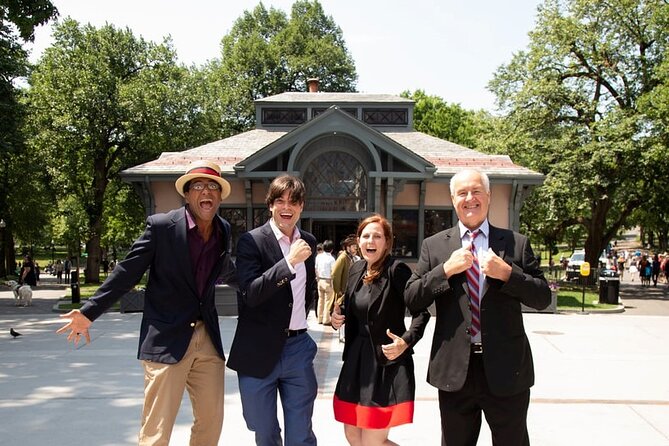
This tour lasts about 2 hours 30 minutes, and it covers all 16 sites. That means there is little time for long breaks, and the guide keeps you moving between stops. That can be great if you want value and momentum. It can be frustrating if you need a slower rhythm, especially around cemeteries where people naturally pause.
Wear comfortable shoes. You will be on historic surfaces and you’ll be shifting positions to hear the guide. A few guides have been singled out for keeping attention even with teenagers, and others for clear speaking and managing big groups. Still, you should pick a spot where you can see the guide, especially if the group is larger that day.
This also helps to set expectations about sound. If you are toward the side of the group, you might miss parts of the explanation. If you care about every detail, stay closer to the front and do not be shy about adjusting.
On the physical side, the tour requests moderate physical fitness. The route includes a lot of walking, and some stops involve time outdoors in places where you cannot exactly “speed up” while everyone else listens.
Price and value: is $31 a good deal for 16 sites?
At $31 per person, this tour is priced like a straightforward guided city walk, not a premium long-distance tour. The value comes from the combination of things you would otherwise have to piece together yourself: the full set of official Freedom Trail sites plus a guide who explains what happened there and how it connects.
If you are a first-time visitor, this is one of the best ways to avoid the common problem of seeing a bunch of markers and remembering almost none of them. You pay for storytelling, timing, and interpretation. The tour’s structure also helps you prioritize, because you do not have to decide which stops to cut.
Also, this tour includes a mobile ticket, and you can go in English. That makes it easier to manage day-of logistics, since you are not juggling printed documents. And with a cap of 25, you are usually not stuck in a huge crowd where questions disappear.
The main “value risk” is pacing. If you cannot keep up with a brisk 2.5 hours, then you might feel like you spent money but did not catch everything. If you can handle walking, it is a strong deal.
Should you book this Boston Freedom Trail tour?
Book it if you want one guided walk that covers the full Freedom Trail lineup, with clear context for big moments like the tea protests, the Bloody Massacre, the Old North lantern signal, and the battle edge at Bunker Hill. It is also a good choice if you like seeing how Boston history goes beyond 1775 into later themes like abolition and broader civic change.
Skip it if you want a slow, flexible day where you linger at each stop. This is efficient by design. You’ll get the big picture and many of the details, but you give up time for wandering.
If you choose to go, do this: show up with comfortable shoes, position yourself to hear the guide well, and go in ready to connect names and places. This tour works best when you treat it like a story you follow step by step.
FAQ
How long is the Freedom Trail walking tour?
It runs about 2 hours 30 minutes.
How many Freedom Trail sites do I see?
You visit all 16 official sites of Boston’s Freedom Trail in one walking tour.
Where does the tour start and where does it end?
The tour starts at The Embrace, 139 Tremont St, Boston. It ends at Copp’s Hill Terrace in the North End area.
What is the price per person?
The price is $31.00 per person.
Is the tour offered in English?
Yes, the tour is offered in English.
Do I get a mobile ticket?
Yes, it includes a mobile ticket.
How big is the group?
The maximum group size is 25 travelers.
Are service animals allowed?
Yes, service animals are allowed.
Do I need moderate physical fitness?
The tour is suited for travelers with a moderate physical fitness level because it involves a lot of walking.
What if the weather is poor or I need to cancel?
The tour requires good weather. If it is canceled due to poor weather, you’ll be offered a different date or a full refund. There is free cancellation up to 24 hours in advance for a full refund.
Reviewed most recently around Boston
- City Cruises Salem High Speed Ferry to/from Boston★ 4.5 · 727 reviews
- Entire Freedom Trail Walking Tour: Includes Bunker Hill and USS Constitution★ 5.0 · 732 reviews
- Boston Freedom Trail History Pub Crawl Small-Group Tour★ 5.0 · 996 reviews
- Delicious Donuts of Boston: A Sweet History Walking Tour★ 5.0 · 1,038 reviews
- Boston Pizza Lovers Food and History Walking Food Tour★ 4.5 · 1,082 reviews
- Freedom Trail Walking Tour 250★ 4.5 · 1,118 reviews
- Boston’s North End Food Tour: Italian Flavors & Heritage Walk★ 5.0 · 1,322 reviews
- Boston North End Food Tour of 6+ Tastings, Cannoli, Lobster Roll★ 5.0 · 1,404 reviews
Freedom Trail Tours, compared.
Freedom Trail History Small Group Walking Tour
Read our review →
Boston Freedom Trail Walking Tour with Costumed Guide
Read our review →
Boston Food & History: Pizza, North End & Freedom Trail
Read our review →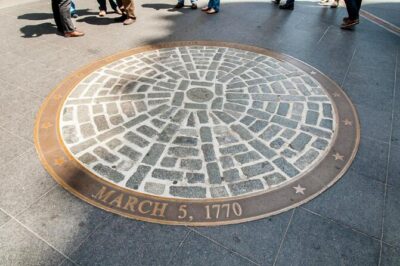
Boston’s Freedom Trail: A Revolutionary Walking Tour
Read our review →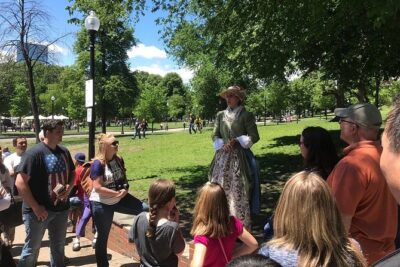

Boston Freedom Trail History Pub Crawl Small-Group Tour
Read our review →
Entire Freedom Trail Walking Tour: Includes Bunker Hill and USS Constitution
Read our review →Browse the lists this tour appears in