
Reviewed · FREEDOM TRAIL TOURS
Boston: Freedom Trail History Small Group Walking Tour
What makes this Freedom Trail walk so interesting is how it turns Boston’s landmark-to-landmark route into a single, human story about loyalty versus rebellion. You cover about 2.0 miles on foot, but it feels more like following a chain of big decisions.
I love that this tour keeps things intimate with a 16-guest max, so your guide can actually steer the conversation. I also like that you see all 16 Freedom Trail landmarks, not just the easiest highlights.
One consideration: it’s still a walking tour. At 2.0 miles, it is not positioned as a good fit for people with low fitness, and the tour notes restrictions for mobility needs even though it lists a wheelchair accessible route.
Key things that make this Freedom Trail tour work
- Small group size up to 16 means you get a more personal pace and room for questions
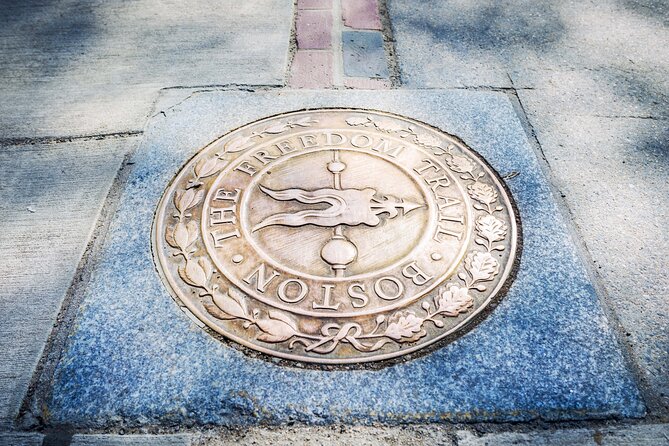
- All 16 official landmarks get folded into one connected Revolutionary Boston storyline
- Down-to-the-street storytelling focuses on the loyalty or rebellion question people faced
- Short stops inside major sites break the walk into manageable chunks, plus you get a Quincy Market break
- Finish at Copp’s Hill Terrace for views toward Charlestown, plus quick access to the North End
Why this Freedom Trail feels like a story, not a checklist
The Freedom Trail can turn into a line of famous stops if you do it on your own. This tour is different because the guide stitches the sites together around one core theme: a tumultuous stretch of time that ends in the American Revolution. Instead of treating each location like a photo op, you hear how people in Colonial Boston wrestled with loyalty to crown and country.
I like that the tour’s structure is built for attention. You’re not just walking past doors and grave markers, you’re getting the “why” that makes each place click. And since it’s a small group, the guide can keep the flow tight and answer questions without the whole experience turning into a bottleneck.
More Historical Tours in Boston
- Boston: Freedom Trail History Small Group Walking Tour
★ 5.0 · 6,450 reviews - Tour of Historic Fenway Park, America’s Most Beloved Ballpark
★ 4.5 · 3,013 reviews - Boston Food & History: Pizza, North End & Freedom Trail
★ 5.0 · 1,772 reviews
The small-group format: your best shortcut through Boston Common
You start at the Boston Foundation Monument inside Boston Common, near the northern boundary of the park, opposite 50 Beacon Street. It is the granite memorial with a bronze relief showing two men shaking hands when the Puritans arrived in 1630. That opening image sets the tone right away: Boston as a place of agreements, power, and changing loyalties.
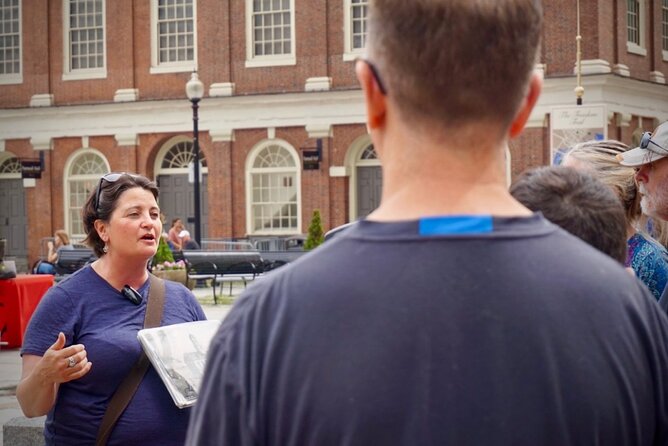
The group stays small, capped at 16 guests. That matters because the Freedom Trail is in the middle of real city life. Busy sidewalks can force you to rush or fall behind when you are doing this solo, and you lose the details. Here, the guide keeps everyone together and keeps you listening.
Also, this is a 2.5 hour walk with a route of about 2.0 miles. You’re not hiking, but you do need comfortable shoes. The pace feels designed for steady movement with short guided breaks, not a slow parade.
Boston Common, the State House, and the big idea of power
From the foundation monument, you move to Boston Common and then toward the Massachusetts State House. These early stops matter because they put you in the center of how governance and public life shaped the Revolution. You get a sense that the conflict was not just about battles, it was about arguments over what people believed was right.
You also visit Park Street Church. Stops like this help you understand how speeches, gatherings, and public opinions became part of everyday life. This tour leans into that, with stories that connect Revolutionary events to places you can still see and walk through.
A short guided moment here is a smart way to reset your brain. After that, you’re ready for the more emotional parts of the trail, where the consequences of decisions become harder to ignore.
Granary Burying Ground and King’s Chapel: where the Revolution gets personal
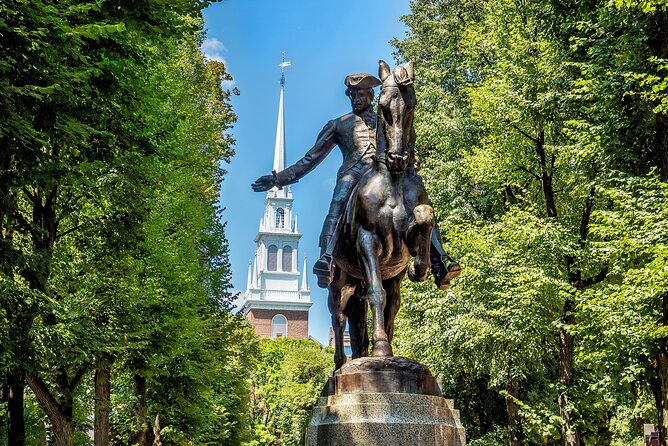
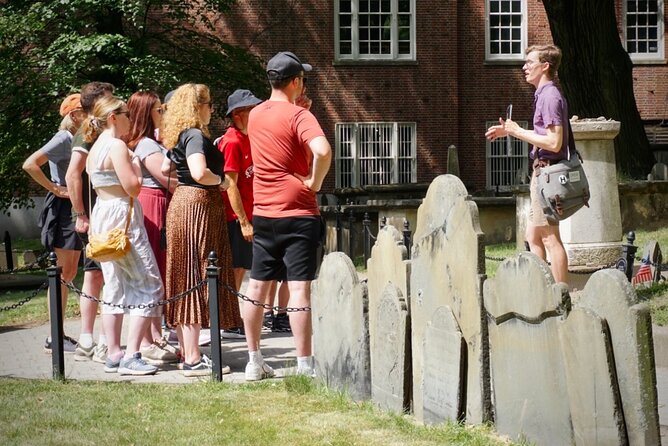
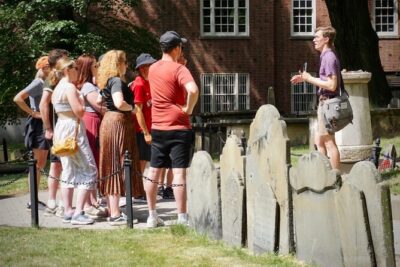
Granary Burying Ground is one of those stops that can feel distant if you just skim. Here, it is treated as part of the narrative, including the final resting places of Paul Revere, Samuel Adams, and others. That detail alone changes the tone of the walk, because you are no longer just reading about history, you are standing in the place where people were laid to rest.
Next is King’s Chapel. Even without museum-style pacing, a church stop works well on this route because it gives you a setting for community and belief. The guide’s job is to explain why these kinds of locations were not separate from politics. In a time of unrest, public identity and public order were tangled together.
If you enjoy guides who turn sites into a live story, you’ll probably feel like you are watching the conflict build. The best moments tend to be when the guide connects emotional stakes to physical space, like how a graveyard or meeting room becomes part of a broader argument.
More Walking Tours in Boston
- Cambridge: Harvard University Student-Guided Walking Tour
★ 4.6 · 3,931 reviews - Harvard University Campus Guided Walking Tour
★ 4.5 · 3,632 reviews - Boston Freedom Trail Walking Tour with Costumed Guide
★ 4.5 · 2,531 reviews - The Full Revolutionary Story Epic Small Group Boston Walking Tour
★ 5.0 · 2,356 reviews
Boston Latin School, Old City Hall, and Old Corner Book Store: education and opinion
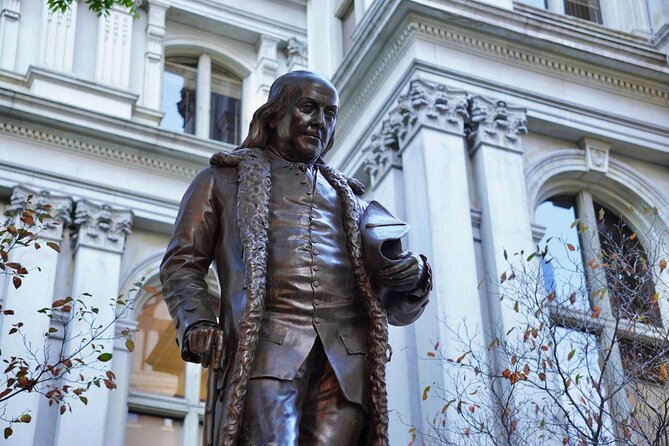
You then move through a stretch of major downtown stops, including Boston Latin School and a Benjamin Franklin statue. This part of the walk is short, but it adds an important angle. The Revolution was not only about soldiers, it was also about ideas, debate, and the people shaping civic life.
After that, you visit Old City Hall Boston and the Old Corner Book Store. Bookstores and civic buildings can seem like background elements if you do not get context. This tour uses them to show how information spread and how public opinion could harden into action.
You’ll also notice how the guide manages time here. You do not spend forever at any single point, which keeps the energy up. At the same time, the guide’s stories are detailed enough that you leave with a sense of connection between stops, not a stack of unrelated facts.
Old South Meeting House, Old State House, and the Boston Massacre Site
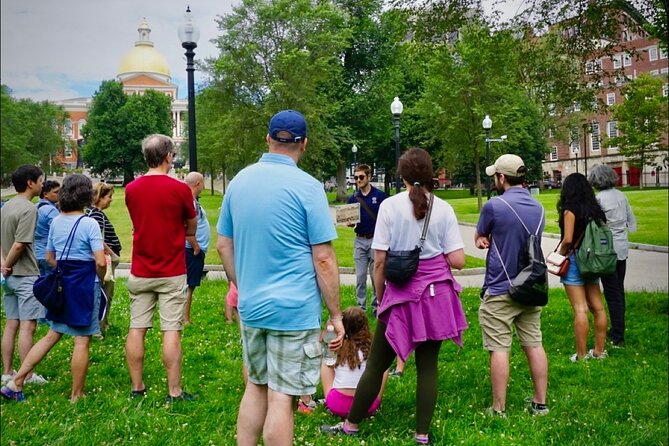
This is where the walking tour starts to feel intense in the best way. You visit Old South Meeting House, Old State House, and the Boston Massacre Site, with guided time built into each stop.
Old South Meeting House is the kind of place that makes you think about gathering and persuasion. The guide’s theme, loyalty versus rebellion, fits perfectly here because the Revolution was fueled by what people said in public and what they decided to do next.
Then Old State House and the Boston Massacre Site bring the consequences into focus. The Boston Massacre Site stop is especially important because it is one of the clearest examples on the route of how conflict can escalate. Standing in the exact location helps the story stop being abstract.
You can treat these stops like three chapters. One for organized public pressure, one for authority and governance, and one for how violence and fear can change the direction of events.
Faneuil Hall and the Quincy Market break: keep your energy up
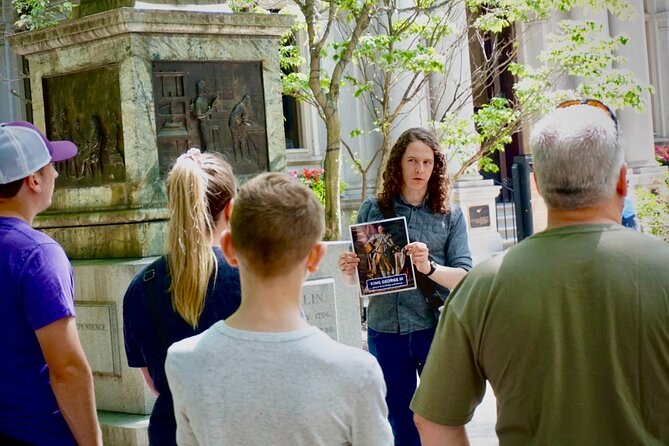
After the more serious stops, you get a breather around Faneuil Hall. This location is guided for a short time, which works because you are probably ready to move and stretch your legs.
Then comes Quincy Market for a break. It’s not a long stop, but it gives you the practical reset you need on a 2.5 hour walk. If you plan to snack, this is where you do it. After that, the route continues toward Paul Revere and the North End, and you’ll want steady energy.
I like breaks like this because they make a history tour feel like a day out, not a test of endurance.
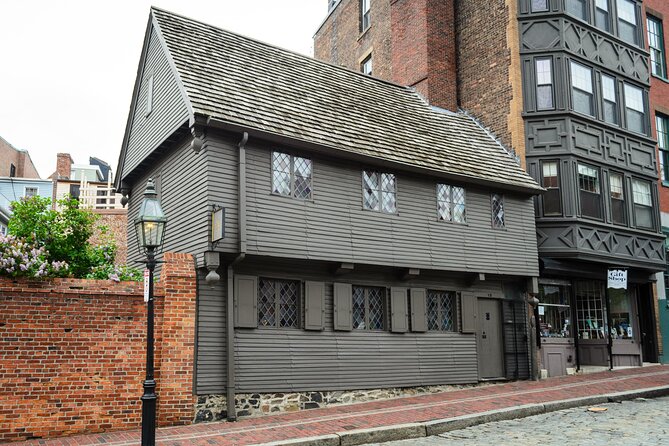
Paul Revere House, Hanover Street, and the Paul Revere Statue

When the walk turns toward Paul Revere, the story shifts from public argument to the urgency of action. You visit the Paul Revere House and you also see the Paul Revere Statue, plus a stop on Hanover Street.
Even if you already know the basics of Revere’s role, this part of the walk tends to sharpen the timeline. The guide frames Revere as part of a wider political atmosphere, not as a lone character. That is what keeps it from feeling like a simple biographical stop.
It also helps that the tour keeps the pacing efficient. You get guided time at the key places without losing the momentum of the overall story. If you are the type who likes to ask questions, this portion is a good time to do it, because the guide’s Revolution narrative is already front and center.
Old North Church and Copps Hill Burying Ground: the North End ending gets emotional
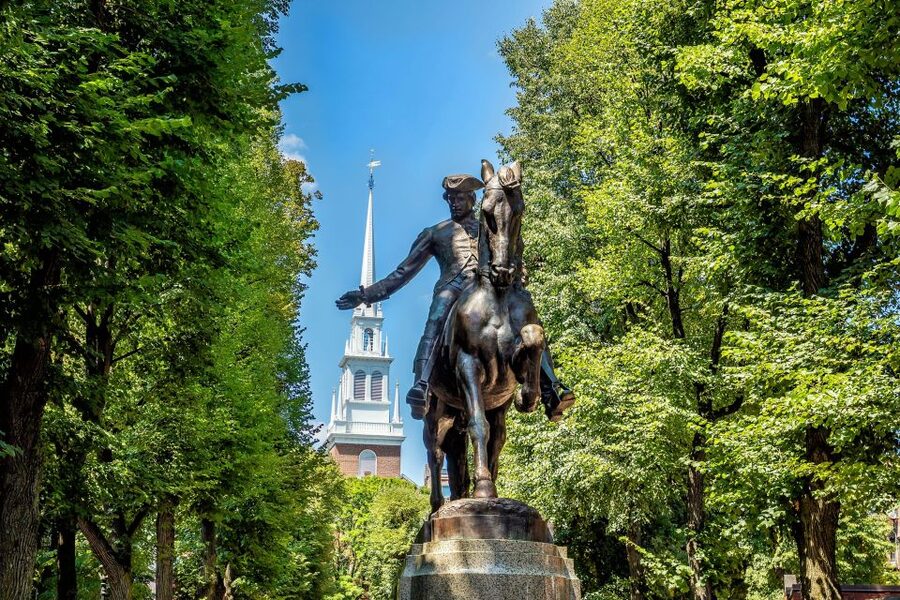
You finish the trail portion near Old North Church and move through Copps Hill Burying Ground. These stops are memorable for a simple reason: the Revolution keeps echoing, and the setting does not let you ignore it.
Old North Church is guided for a short time, but it is a turning point. The guide’s focus stays on how the events of the period shifted ordinary life, and how loyalty and rebellion played out in real places.
Then you reach Copps Hill Burying Ground. This stop adds weight because it connects the story to the people who lived through the conflict. Even if you do not spend ages here, the tone lingers as you look for the next viewpoint.
Copp’s Hill Terrace views toward USS Constitution and Bunker Hill Monument
The last stretch is where you get perspective. Your tour concludes at Copps Hill Terrace, steps from Old North Church and close to the North End’s Italian restaurants. It’s a smart finish, because it gives you an immediate reward and a place to regroup after 2.0 miles of walking.
From this final viewpoint, you can see the U.S.S. Constitution and Bunker Hill Monument over in Charlestown. The guide uses this to help you understand that the Freedom Trail story is not trapped in downtown streets. It extends outward, and you can visually place major Revolutionary symbols in your mental map.
This is also a great spot to take a slower look. The walking portion ends, but the city view gives you a chance to reflect on what you just heard.
Guide quality is the real value of this tour
At $39 per person, you are paying for more than route coverage. You’re paying for a guide who turns the trail into a coherent narrative about the Revolution and why people chose loyalty or rebellion. That is the difference between collecting landmarks and actually understanding a turning point in American history.
The guide style is consistently praised in practical ways. People highlight that guides bring the story to life with humor, keep the group engaged, and answer questions clearly. Names that have led tours include Cyprus, Josh, Cal, Nick, Mark, Miles, Lin, Eric, and others, and the common thread is that they use enthusiasm and storytelling, not just facts.
I also like that the tour is set up so you can hear what matters. Small groups and planned short guided moments reduce the usual problem of missing the explanation because you’re stuck behind someone taking photos.
What you should bring, and what will slow you down
Bring comfortable shoes. You are on your feet for about 2.5 hours on a route of about 2.0 miles. Weather can change quickly in Boston, so pack weather-appropriate clothing for the day you pick.
Two rules matter for comfort and pacing: luggage or large bags are not allowed, and video recording is not allowed. If you are traveling light, this is easy. If you have bulky items, you may want to plan to store them before you arrive so the walk stays smooth.
One more practical note: admission inside museums is not included. This tour focuses on exterior sites and guided stops, but if a stop has anything that requires separate entry, you should expect to cover it yourself.
Who should book this Freedom Trail small-group walk
This is a good fit if you want to see the big Freedom Trail landmarks without getting stuck in a crowd or a messy self-guided route. The small-group size helps, especially if you care about hearing the story instead of only taking photos.
It also works well if you like your history with context. The tour’s emphasis on the loyalty or rebellion question makes it feel more like human drama than a list of dates. If you enjoy guides who use humor and keep people interested, you’ll probably have a great time with the storytelling approach.
It may not be the best choice if you have low fitness or mobility limits. The tour lists a wheelchair accessible route, but it also states it is not suitable for people with mobility impairments. If that applies to you, I’d treat it as a flag to check in before booking so you do not get surprised on the day.
Should you book the Boston Freedom Trail History small-group tour?
Yes, if you want the most value out of a short time in Boston. For $39, you get a tight 2.5 hour walk, a small group capped at 16, and guided access to all 16 Freedom Trail landmarks with a storyline that connects them through the Revolution.
Book it if you like your sightseeing explained, and you’d rather walk with a guide than chase context on your own. Skip it only if you are very sensitive to walking time or mobility constraints, or if you are hoping for heavy museum time, since admissions are not included.
FAQ
How long is the Boston Freedom Trail small-group walking tour?
The tour lasts about 2.5 hours. It can vary, but it will not be more than 3.0 hours.
How many people are in the small group?
The group size is capped at 16 guests max.
Where does the tour start and end?
It starts inside Boston Common at the Boston Foundation Monument. The tour finishes at Copps Hill Terrace.
Does this tour cover all of the Freedom Trail landmarks?
Yes. The experience includes the Freedom Trail and covers all 16 official landmarks.
Is museum admission included?
No. Admission inside museums is not included.
Are video recordings or large bags allowed?
No video recording is allowed, and luggage or large bags are not allowed.
Is this tour suitable for kids and people with mobility needs?
Children under 6 years old are not suitable. The tour lists a wheelchair accessible route, but it also states it is not suitable for people with mobility impairments and people with low level of fitness.
More of the Freedom Trail
- Boston’s Freedom Trail: A Revolutionary Walking Tour
★ 4.9 · 1,748 reviews - Boston’s Freedom Trail: A Revolutionary Walking Tour
★ 5.0 · 1,343 reviews - Freedom Trail Walking Tour 250
★ 4.5 · 1,118 reviews - Boston Freedom Trail History Pub Crawl Small-Group Tour
★ 5.0 · 996 reviews
Reviewed most recently around Boston
- City Cruises Salem High Speed Ferry to/from Boston★ 4.5 · 727 reviews
- Entire Freedom Trail Walking Tour: Includes Bunker Hill and USS Constitution★ 5.0 · 732 reviews
- Boston Freedom Trail History Pub Crawl Small-Group Tour★ 5.0 · 996 reviews
- Delicious Donuts of Boston: A Sweet History Walking Tour★ 5.0 · 1,038 reviews
- Boston Pizza Lovers Food and History Walking Food Tour★ 4.5 · 1,082 reviews
- Freedom Trail Walking Tour 250★ 4.5 · 1,118 reviews
- Boston’s North End Food Tour: Italian Flavors & Heritage Walk★ 5.0 · 1,322 reviews
- Boston’s Freedom Trail: A Revolutionary Walking Tour★ 5.0 · 1,343 reviews
Freedom Trail Tours, compared.
Freedom Trail History Small Group Walking Tour
Read our review →
Boston Freedom Trail Walking Tour with Costumed Guide
Read our review →
Boston Food & History: Pizza, North End & Freedom Trail
Read our review →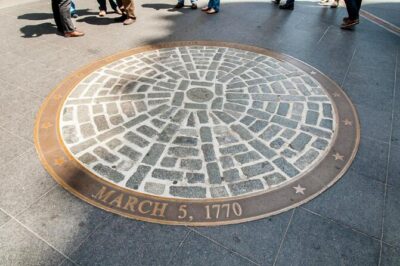
Boston’s Freedom Trail: A Revolutionary Walking Tour
Read our review →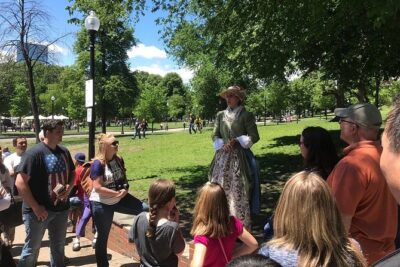

Boston Freedom Trail History Pub Crawl Small-Group Tour
Read our review →
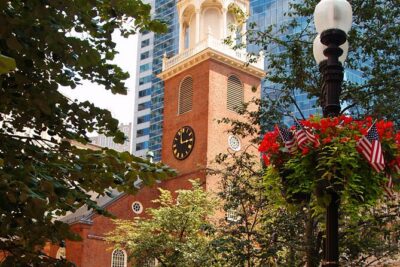
Entire Freedom Trail Walking Tour: Includes Bunker Hill and USS Constitution
Read our review →Browse the lists this tour appears in