
Reviewed · CITY TOURS
Salt Lake City Guided Bus Tour
Salt Lake City can feel oddly spread out, so what makes this tour interesting is the way it gives you a tight downtown loop with live onboard commentary and a driver who handles the turns. You are not hunting parking lots or timing lights, you are just watching, listening, and stepping off for a few quick photo breaks.
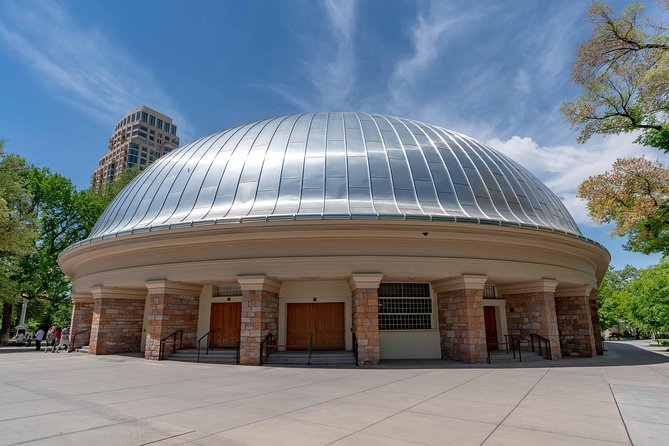
I love two things most: first, the Temple Square cluster, where you get context for the Temple exterior, the gardens, and the Tabernacle buildings. Second, the finale is the Tabernacle organ recitals, a standout cultural moment that you can hear and feel in a seriously well-designed room.
One thing to plan for: the stops are short, so this is mostly about seeing, walking a bit, and soaking up stories, not doing long museum-style visits. Also, some major sites are exterior-focused or have access limits, like the Salt Lake Temple interior.
Key highlights you will notice fast
- Live narration from your guide while you ride so you learn more than the skyline.
- Temple Square plus Tabernacle organ recital, a strong pairing of faith and architecture.
- Easy orientation in 2.5 hours with a long list of downtown landmarks.
- Frequent step-off stops so you get photos and perspective without driving.
- 2002 Winter Olympics landmarks like the Olympic Cauldron and parts of the venues.
- Small-group feel with a maximum of 29 people, plus guided Q and A at stops.
A 2.5-hour loop that gets you oriented, fast
This is built for the reality that most people do not have a full day for Salt Lake City. With an approximate 2 hours 30 minutes on the clock, you cover the downtown essentials and a lot of University and Civic Hill area sights without needing a car.
The pace is brisk but not frantic. You get narration from the bus, then short step-offs where your guide talks details at street level, which is what helps the city make sense later when you are on your own.
The group size also helps. With a maximum of 29 travelers, you are not stuck in a huge crowd, and it is easier to hear the guide and to ask questions at stops.
Stack these Salt Lake City options against each other
- History and Hauntings of Salem Guided Walking Tour
★ 5.0 · 14,564 reviews
Meeting at Radisson, choosing a morning or afternoon
You meet at the Radisson Hotel Salt Lake City Downtown at 215 W S Temple St. The tour ends back at the meeting point, so you are not figuring out a one-way puzzle at the end of your sightseeing.
You can pick a morning or afternoon time, which matters if you are also doing day trips or trying to work around church or event schedules. On planning days, I like having that choice because it helps me match the tour to the rest of my itinerary instead of forcing everything around one fixed departure.
Temple Square and the Tabernacle: your best photo and story combo
If you want one area that ties Salt Lake City together, it is Temple Square. You start with the Salt Lake Utah Temple exterior, which is where your camera will instantly point. The exterior story is the point here, because the interior is reserved for Church members, while the guide explains the Temple construction timeline, the symbolism, and the landmark details like the six spires and the Angel Moroni statue.
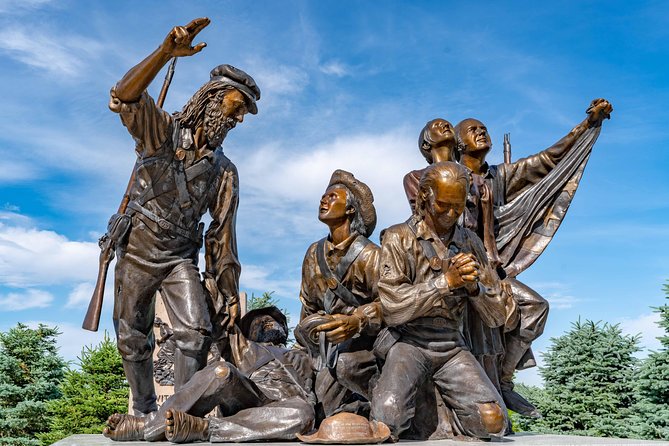
Next comes Temple Square itself, spanning landscaped downtown grounds with historic buildings and pioneer memorials. This is a good stop for your first look at the Tabernacle buildings from multiple angles. You also get time to walk the gardens and take in the way the complex sits right in the heart of the city.
Then you step into the Tabernacle world in a very literal way, with organ recitals and access to the Salt Lake Tabernacle building. The organ recitals are often the emotional high point because you are not just being told about the acoustics, you are hearing them. The Tabernacle is famous for its sound design, and the pipe organ inside is one of the largest in the world, with over 11,000 pipes. Even if you are not a big classical music person, I think you will still get why people pause here.
A practical note: this is a lot of sacred architecture in a short window. Keep your expectations simple. Think of it as a guided orientation and a cultural moment, not a slow spiritual retreat.
Utah State Capitol and the Conference Center on Capitol Hill
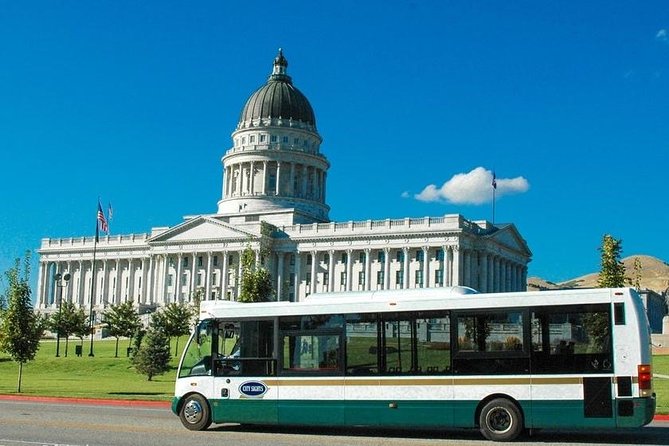
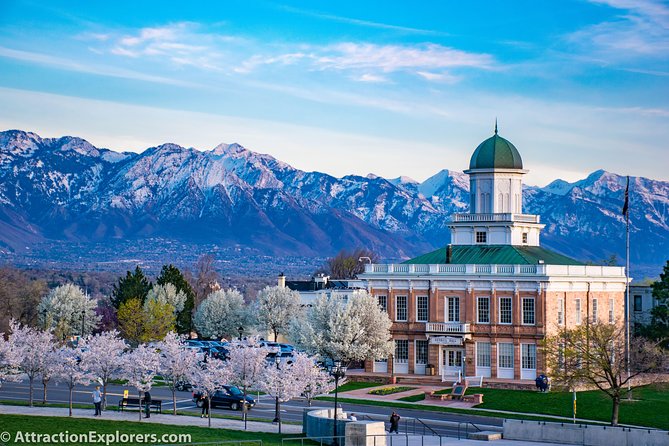
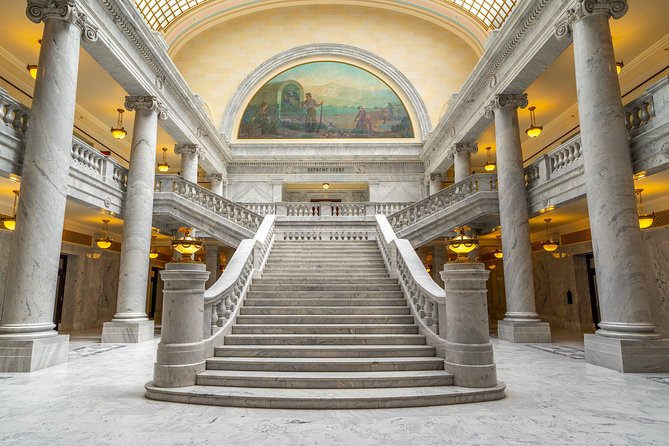
After Temple Square, you move into civic Utah with a stop at the Utah State Capitol. You get the classic Neoclassical look, including the copper dome and big civic scale. Your guide also ties it to Utah statehood and restoration stories, then points out the rotunda artwork and gives you time for panoramic photos from Capitol Hill with the Wasatch Mountains in view.
A short ride away is the Conference Center of the Church of Jesus Christ of Latter-day Saints. This is the modern counterpart to the historic Tabernacle idea, and the scale difference is the first surprise. The auditorium seats 21,000 people, and during summer months there are performances by the Tabernacle Choir. Even when you are just seeing it from a distance, your guide explains the advanced acoustics and highlights features like the rooftop garden.
Civic buildings and faith landmarks you can spot in minutes
One reason people love this tour is that it trains your eye. You learn what to look for on quick stops, so when you walk later, you notice the details.
At the City and County Building, you see Romanesque Revival architecture and a tall clock tower. Your guide connects it to civic pride and explains how it was preserved, including its restoration and how it nearly faced demolition before recognition as an important landmark. Next, Washington Square makes that civic cluster feel like a real gathering space, not just a photo background.
If you want religious architecture outside the LDS core, the Cathedral of the Madeleine is a standout. It is the only Catholic cathedral in Utah, and the Gothic Revival style and stained glass are the big visual cues. Your guide shares the construction story in a city where Latter-day Saints were the dominant local faith, and it also highlights the 1990s restoration.
Back closer to Temple Square, the Assembly Hall is a gentler-looking building made from leftover granite from the Temple project. It is also a place with music and community use, so it adds texture to the more famous Tabernacle buildings.
Where the city started: Pioneer markers, gates, and log homes
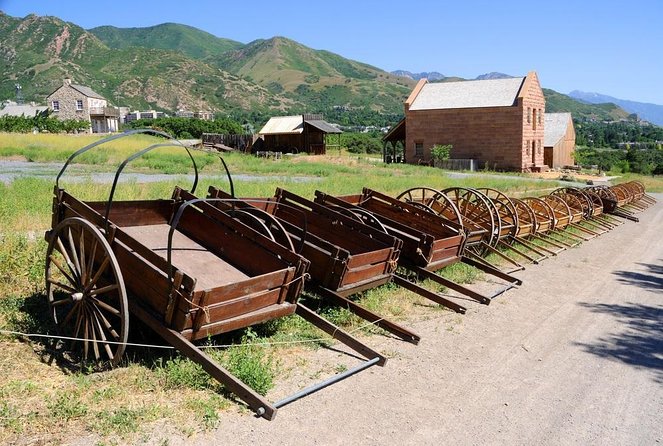
Salt Lake City has a strong “beginning here” feel, and this tour points you to the markers that make that real.
At This Is the Place Heritage Park, you are at the moment when Brigham Young announced that this is the right place, ending the long 1,300-mile trek. You also get an elevated view that mirrors what early arrivals would have seen across the valley and toward the Great Salt Lake distance. If you like history that links directly to geography, this is a smart stop.
Right after, you visit a section of the Mormon Pioneer National Historic Trail. Here the guide focuses on the scale of voluntary migration and the everyday hardships like weather, supplies, rivers, and mountain crossings. It is the kind of context that turns trail names into something you can picture.
Your guide also points out downtown landmarks like the Brigham Young Monument and the Meridian Marker, which ties the city’s growth to land surveys. Then you get Eagle Gate, a pioneer entrance landmark that eventually became an enduring symbol as the city grew around it. Even if you only walk through the view window, you will understand why it matters.
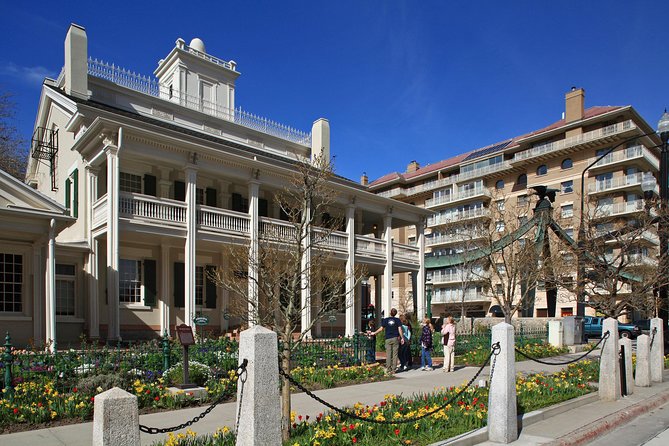
For a humbler contrast, the Deuel Pioneer Log Home gives you a look at early settlement life. Seeing a hand-hewn cabin placed near Temple Square gives you a better sense of how the area evolved from a frontier outpost to the grand buildings you are seeing now.
Olympics legacy: Cauldron, venues, and the Gateway
Salt Lake City has one of the most visible Olympic afterlives in the US, and this tour uses that to vary the tone from pioneer faith and civic buildings.
You start with Olympic Cauldron Park, with the cauldron’s glass and steel silhouette rising above the area. Your guide connects it to the Games and explains the city’s path to hosting athletes from dozens of nations. This stop works well if you like a mix of sports memory and modern architecture.
Then the route continues to the Delta Center, home of the Utah Jazz. Even from outside, it is an energy marker for the city, and your guide connects it to major events and the Olympics era era connection.
Later you will see Rice-Eccles Stadium, tied to the University of Utah Utes and also the Olympic Opening and Closing Ceremonies. Again, you mostly see it as a landmark, but your guide gives you the why behind the upgrades and why it remains a unifying place for local pride.
Finally, The Gateway gives you a look at downtown redevelopment. It was built as a central gathering place for the Winter Olympics, and it now mixes art, dining, and public space. Your guide ties it back to the city’s transformation, including the idea of using a former industrial stretch for a more visitor-friendly core.
Mansions, theaters, and university culture stops
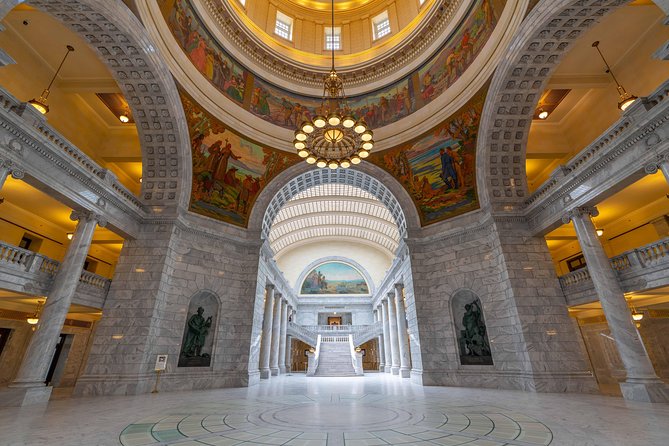
The route does not just stick to monuments. You also get a feel for Salt Lake City’s growth into a cultured, civic-minded capital.
You can glance at the McCune Mansion, built for a railroad magnate and known for its impressive materials and craftsmanship. It is a quick but useful contrast: it shows how quickly the city moved from frontier hardships into wealth, ambition, and European-style details.
You also pass University of Utah landmarks like Abravanel Hall, the home of the Utah Symphony. Even though you do not enter, your guide connects the design intent to acoustics and explains the story behind its creation and the role of major supporters.
Kingsbury Hall is another University stop that adds a performing arts angle. Your guide frames it as a cultural investment by the community and ties it to generations of performances and events.
If you like a bit of civic texture, you may also see older Fort Douglas sites. The Fort Douglas Military Museum area points out the 1862 era context and the complicated relationship between early Mormon settlers and the US Army. Your guide also touches on how mining discoveries near the fort shifted the local economy.
What your guide does that makes this tour worth it
This tour is not just about driving past famous buildings. The best part is the human layer, the guide who translates stone, spires, and civic facades into understandable stories.
I especially like the way guides manage questions. Many guides, including Ann, Todd, Grant, Kristen, Mark, Kevin, and Matthew, are mentioned for staying friendly, answering on the spot, and keeping the mood light while still sharing exact details. If you have curiosity, you will probably get satisfaction here instead of a scripted lecture.
There is also a tech touch that makes sense. In many departures, you can use a front screen with digital visuals that show interior views for buildings you cannot enter. That helps if you care about architecture and want to connect the exterior you are seeing with what is inside on the rare occasions access is limited.
Finally, watch your seat choice. In winter, the tour may run with a smaller minibus instead of a larger coach, which can affect viewing angles. If you care about seeing the buildings clearly, I suggest arriving a few minutes early and asking for a window seat.
Price and value: what $69 buys you in real time
At $69 per person for about 2 hours 30 minutes, you are paying for three things: transportation, a tight route with minimal waiting, and a live guide who explains what you are seeing while you are moving.
A big value boost is that many stops list admission ticket free on the tour plan. That matters because you are not stacking extra entry fees on top of a bus price. The organ recital stop also gives you a high-impact experience that is hard to replicate on your own without timing everything carefully.
I also like the “planning tool” angle. If you only have a few days in Salt Lake City, this tour can act like a map you can feel in your feet. After you see Temple Square, Capitol Hill, and the Olympics landmarks once with stories attached, it becomes easier to choose what to revisit on a later, slower walk.
One more thing: this is popular. It is booked around 17 days in advance on average, so if your dates are set, booking early is smart.
Should you book this Salt Lake City guided bus tour?
Yes, if you want the strongest fast start to Salt Lake City. This is a good pick for first-time visitors, anyone short on time, and people who like architecture, civic stories, and the city’s Mormon pioneer and Olympics layers.
Skip it if you hate short stops and prefer slow, deep museum time. Also skip it if you need lots of interior access at every stop, because parts of the route are exterior-focused and some spaces have access limits.
If your goal is clear, take the tour: you will leave with a working sense of where everything is, why it matters, and what you actually want to see again once you are done riding.
FAQ
How long is the Salt Lake City Guided Bus Tour?
The tour runs about 2 hours 30 minutes.
How much does the tour cost?
It is $69.00 per person.
Is the tour in English?
Yes, the tour is offered in English.
What is the group size?
The tour has a maximum of 29 travelers.
Where do I meet, and where does the tour end?
You meet at the Radisson Hotel Salt Lake City Downtown at 215 W S Temple St, and the tour ends back at the meeting point.
Does the tour include the Tabernacle organ recital?
Yes. There is a stop for organ recitals in the Tabernacle.
Can I choose a morning or afternoon departure?
Yes. You can choose from morning or afternoon tour times.
Is there free cancellation?
Yes. Free cancellation is available if you cancel up to 24 hours in advance for a full refund.
Reviewed most recently around Salt Lake City
- 45 Minute Great Salt Lake Boat Tour★ 4.5 · 829 reviews
City Tours, compared.

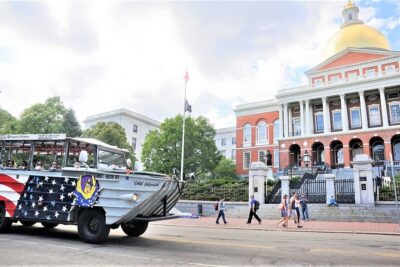
Boston Duck Boat Sightseeing City Tour with Cruise Along Charles River
Read our review →

New Orleans City Sightseeing Hop-On Hop-Off Bus Tour
Read our review →
Pearl Harbor, USS Arizona Memorial & Honolulu City Tour
Read our review →Browse the lists this tour appears in