
Reviewed · PLANTATION TOURS
Laura Creole Plantation Guided Tour
Laura Plantation is interesting because it lets you walk through a preserved Creole estate about an hour from New Orleans and see how a French-descended family lived alongside the enslaved labor that powered its sugar economy (four generations of stories).
I love the way the tour uses surviving records and a fourth-generation memoir to connect the family history to real places and real people. I also like the small group feel, and guides like Amelia, Cameron, and Joseph can answer your questions as you move through the house and original 1840s cabins.
One possible drawback is time. The guided portion runs about 1 hour 10 minutes, so if you want extra day-to-day detail about enslaved life, you’ll want to ask questions early and then use the on-site spaces for more reading afterward.
Quick Key Points Before You Go
- Maison Principale plus original 1840s slave cabins for a rare full estate view
- Creole culture across French colonial and American Louisiana through the end of the 19th century
- Family-written memories and archival records help make the story feel grounded
- A guide-led route through furnished rooms, gardens, and sugar fields
- Outdoor walking time plus only the main house ground floor being ADA accessible
- A Great River Road outing you can pair with other plantation stops
Laura Plantation Outside New Orleans: The Value of a Real Estate, Not Just a Hallway Tour
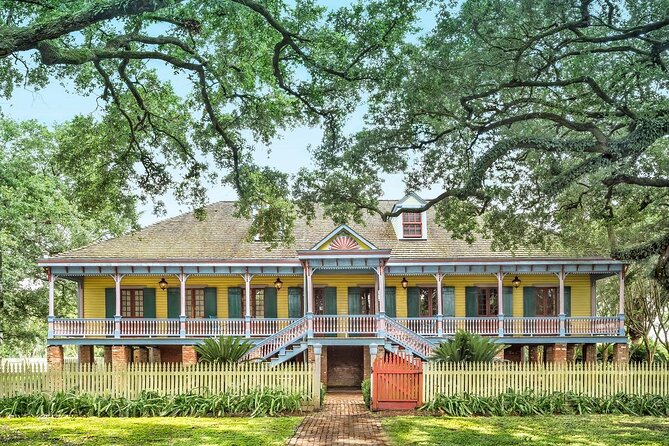
If you’re coming from New Orleans, Laura Plantation is a smart detour because it is not just a single building or a quick museum stop. You are seeing an estate shaped by Creole families, sugar production, and enslaved communities, all in one place. The drive is easy enough that you can still plan a full day without rushing.
What you get for the time is a guided route that connects the architecture, the grounds, and the people. The main house is about 24,000 square feet, and the tour format is designed to help you understand how life worked in different zones of the property, not just what the family owned. It is also on recognized historic routes and trails, including the National Register of Historic Places and the Louisiana African American Heritage Trail.
Other plantation-history visits:
- Swamp Boat Ride and Oak Alley Plantation Tour from New Orleans
★ 5.0 · 3,303 reviews - Oak Alley Plantation Tour with Transportation from New Orleans
★ 4.5 · 1,747 reviews - Whitney Plantation Tour with Transportation from New Orleans
★ 4.5 · 1,351 reviews
Price, Timing, and What the $32.06 Covers (And What It Does Not)
The tour price is $32.06 per person for a guided experience lasting about 1 hour 10 minutes. That cost is mainly about the guide and the structured visit through the main house and key areas of the grounds. You will also want to budget for any snacks and drinks, since those are available for purchase rather than included.
The one cost that can surprise people is transportation. Laura Plantation does not provide hotel pickup or drop-off, and if you do not self-drive you’ll need to use a partner transportation operator, where pricing can vary. A practical move is to get clear on your total “door to door” cost before you commit.
The Route You’ll Actually Walk: Main House, Cabins, Gardens, and Sugar Fields
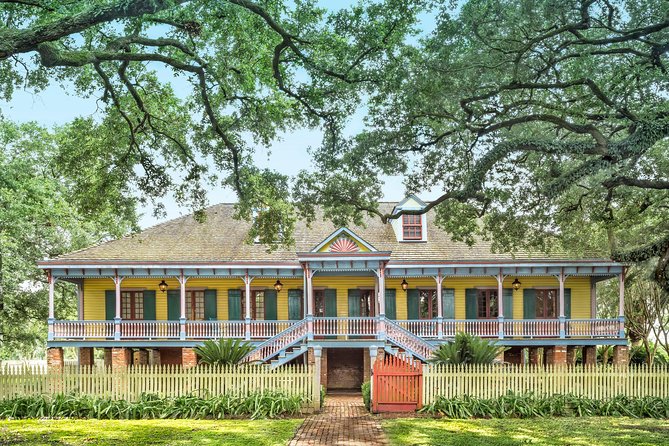
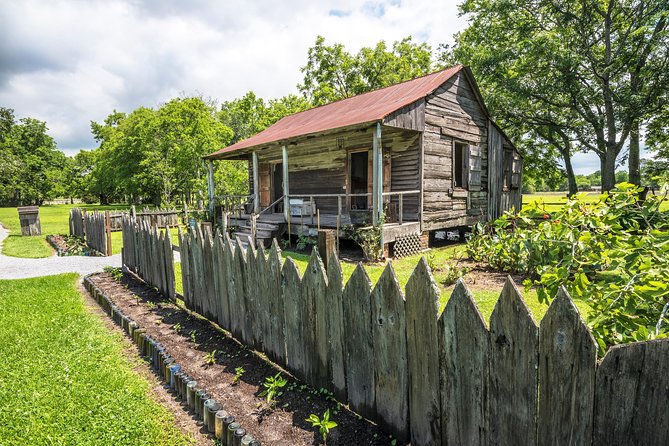
Plan on a guided walk that starts with the heart of the estate, the furnished Maison Principale. The tour includes the main house along with the gardens and the original slave cabins on the property. You also get time to absorb the spatial story, how rooms, work areas, and housing connected in everyday life.
You’ll notice the pace is designed for learning, not for wandering. One helpful review-style tip, written in plain terms, is to look closely as you go through the house and corridors because you won’t have time to return for an extra close-up later. If you care about details like architecture or room layouts, slow your own pace slightly and take in what your guide is pointing out.
Outdoor time is part of the experience. The tour operates in all weather conditions, so dress for heat, sun, humidity, and also for rain if it comes through. Good walking shoes matter, since you’ll be moving between the main areas of the property.
Entering the Creole Story: Four Generations, the Duparc Family, and Laura Locoul’s Memoir
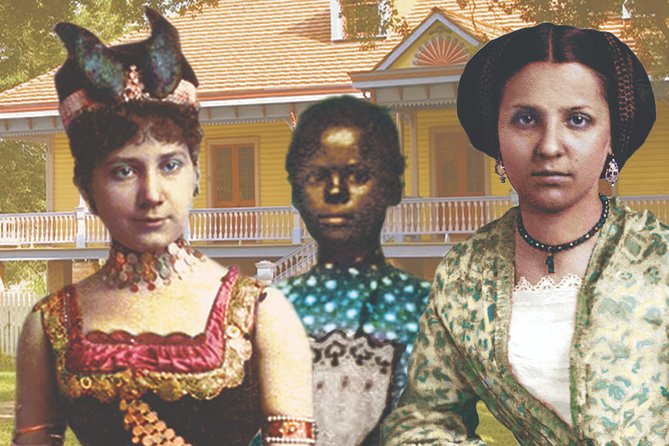
A big reason this tour earns strong marks is that it is not built as vague “plantation history.” It ties the story to specific family lines and records kept across generations. The Duparc family, French-descended, is tied to the plantation’s founding in 1804, and the tour helps you trace how that family’s decisions interacted with the lives of the people forced to labor there.
Much of what is known is connected to a fourth-generation family member, Laura Locoul, through a memoir, plus records found in the French National Archives. That matters because it turns the visit from generic talking points into a place-based narrative. You can see how the home and outbuildings relate to the family’s world, and also how enslaved communities existed within that same physical space.
Stack these New Orleans options against each other
- New Orleans Premier Ghost, Voodoo and Vampire Walking Tour
★ 4.5 · 12,856 reviews - New Orleans Steamboat Natchez Jazz Cruise with Dinner Option
★ 4.0 · 7,533 reviews - Adults-Only New Orleans Ghost, Crime, Voodoo, and Vampire Tour
★ 5.0 · 6,545 reviews - New Orleans Food Walking Tour of the French Quarter with Small-Group Option
★ 5.0 · 6,118 reviews
The Tour’s Honest Tone on Slavery: Balanced Storytelling You Should Expect
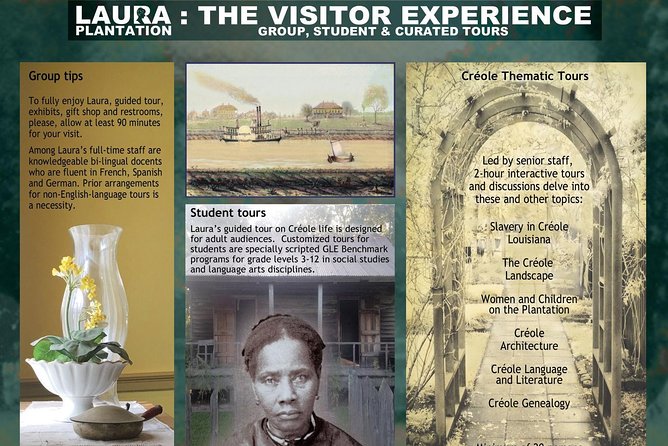
Laura Plantation addresses the difficult history of slavery as it existed in French colonial and American Louisiana. The guide-led presentation covers how slavery operated over time, reaching through the end of the 19th century, not just one short chapter. You should come prepared for frank topics, and you should also understand that “balanced” here does not mean softened. It means you get the owner side and the enslaved reality side, together.
This is also where asking questions becomes important. If you are hungry for deeper information about day-to-day routines, do not assume the tour will cover every detail you personally want. Use the guide’s Q&A moments to steer the conversation toward what you want to learn, such as labor patterns, daily life constraints, family life, or how enslaved communities connected across generations.
Guides Can Make or Break the Day: Amelia, Cameron, Joseph, Lee, Pam, Lindie, and Caroline
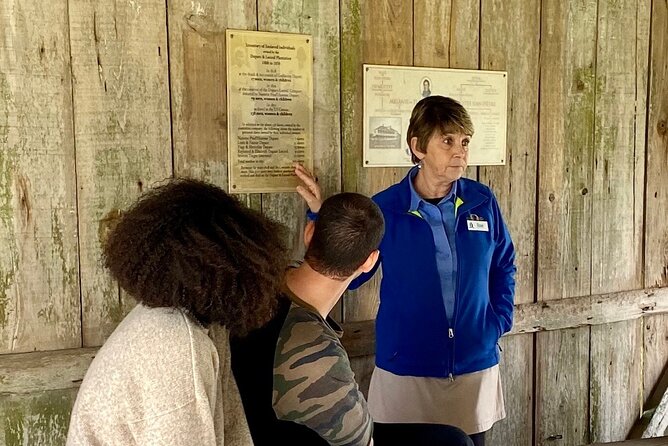
One of the most repeated strengths is the quality of the guides. Many people highlight that the guide does more than recite facts, they explain how the pieces fit together and they make it easier to connect architecture, culture, and lived experience.
For example, Amelia has been praised for bringing period-specific study to the tour content. Lee has been noted for explaining the plantation workings behind the scenes. Cameron is often described as explaining both Creole culture and what it was like for the people living on each side of the system. Joseph also stands out for keeping the visit entertaining while still staying informative.
Other names that have come up include Pam, Lindie, and Caroline, with compliments focused on clarity, pacing, and taking time with each group. The practical takeaway for you is simple: if you care about clarity, arrive on time, pay attention early, and do not be shy about asking follow-up questions. You control how much you get out of the visit.
Getting There from New Orleans: Great River Road Planning That Works
Most people handle Laura Plantation as a day-trip from New Orleans, roughly one hour by car. The drive follows the Great River Road along the Mississippi, which makes it feel more like a journey than a quick taxi stop. If you are the type who likes to pair history with scenery, this route is part of the payoff.
If you self-drive, you’ll want to keep it simple: confirm where you park and where you meet your group. The meeting point is 2247 LA-18, Vacherie, LA 70090, USA. Also remember that the tour includes outdoor walking, so you want shoes you can wear for a bit of uneven ground and humidity.
If you rely on an operator instead of driving, treat transportation as a separate budget line. Not because the tour is pricey, but because the getting-there cost can matter more than you expect when you compare it to a one-hour guided admission.
What to Wear and How to Prepare for a 1 Hour 10 Minute Tour
The tour is short enough that you do not need a “half-day” mindset, but long enough that comfort matters. Wear good walking shoes, especially if you’re sensitive to heat or if your legs tire easily. A portion of the route is outdoors, so dress for the weather of the day, not the forecast from yesterday.
Because the main house has specific accessibility limits, plan around that. Only the ground floor of the main house is ADA accessible, so if you need full mobility access upstairs or to all areas, the tour may not match what you’re imagining. Service animals are allowed, which is helpful if that applies to your group.
Bring patience for a working outdoor estate. The pace includes time for the guide to explain, but you will also be moving between areas. If you want to photograph, do it while you are in each key spot, since you are not touring at your own unlimited pace.
After the Tour: Turning One Visit into a Full Great River Road Day
You do not have to stop at Laura Plantation. After your guided visit, you can continue exploring independently and visit other plantations along the Great River Road. That is a smart way to get variety, because different sites show different angles of Louisiana’s plantation system, architecture, and the cultural layers that formed over time.
A good strategy is to think of Laura Plantation as your “context anchor.” It gives you Creole family framing, record-based storytelling, and a direct look at both the house and the enslaved quarters. Then, as you move on to nearby stops, you’ll be better at comparing what each estate highlights and what it chooses to emphasize.
What Reviews Get Right: The Big Strengths You Should Bank On
Across the positive feedback, a few themes show up clearly and they line up with what the tour is designed to do.
First, people strongly like the balanced perspective. The contrast between the lives of the owners and the enslaved community is presented in a way that helps you think about how the system worked. Second, the setting is described as beautiful and well kept, which helps you focus on learning rather than dealing with cluttered or worn-out grounds.
Third, the experience is often described as impactful, and that fits the content. You’re not just looking at old wood and pretty gardens. You’re seeing how people lived, how power operated, and how Creole culture shaped Louisiana for more than 200 years.
Finally, visitors frequently comment on guide quality and pacing, especially on tours that feel intimate rather than rushed. One practical cue from that overall feedback is to choose a day when you can stay alert and ask questions.
A Couple of Watch-Outs: When You Might Feel You Wanted More
Not every visit will match every expectation. One common concern is wanting more detail about the day-to-day life of enslaved people at the plantation. If that is your top priority, come with questions in mind, and ask for more specifics during the Q&A.
Another watch-out is pacing and time for exploring. The tour format moves through the property, and you may not have time to linger in every area after the guided route ends. So if you want to photograph the house from different angles or take a careful look at certain outdoor features, do it when your guide puts you there.
One more practical note from the real world: friendliness and clarity can vary by guide. Most guides earn praise for taking time, but if you get a guide who rushes or talks too fast for you, ask politely for repetition or clarification. You paid for the learning, and good guides will adjust to help you understand.
Should You Book the Laura Plantation Guided Tour?
I think you should book if you want a guided Creole plantation experience that does not dodge slavery and does not treat the site like a theme park. Laura Plantation is especially worth it when you care about how Creole culture formed in Louisiana, and you want your learning grounded in surviving records and family documentation.
Book it in advance if you can, since it is commonly reserved about 25 days ahead. And be realistic about the logistics: plan for your own transportation, wear shoes for outdoors time, and understand that the guided part is about an hour long, so you’ll need to ask questions to get the depth you personally want.
If you want a purely casual, light, or purely aesthetic stop, this may feel heavy. But if you want honest history in a well-preserved setting, with a guide who can answer your questions, it is a strong choice.
FAQ
How long is the Laura Plantation guided tour?
It runs about 1 hour 10 minutes.
Where does the tour start?
The meeting point is Laura Plantation: Louisiana’s Créole Heritage Site at 2247 LA-18, Vacherie, LA 70090, USA.
Which languages are offered?
Tours are offered daily in English and French.
What is included in the tour?
You get a local guide and a guided visit that includes the main house (Maison Principale), gardens, and original 1840s slave cabins.
Does the tour address slavery?
Yes. The tour honestly addresses the difficult history of slavery in French colonial and American Louisiana through the end of the 19th century.
Is hotel pickup or drop-off included?
No. Hotel pickup and drop-off are not included.
Do I need to drive myself?
You make your own way to the plantation, about an hour from New Orleans. If you do not have self-drive options, Laura Plantation partners with operators that may provide transportation.
How large is the group?
The tour has a maximum of 28 travelers.
Is the tour ADA accessible?
Only the ground floor of the main house is ADA accessible.
What is the cancellation and weather policy?
Free cancellation is available up to 24 hours in advance for a full refund. If the tour is canceled due to poor weather, you will be offered a different date or a full refund.
Final Take
If your goal is meaningful, guided Creole heritage with honest context, this is a solid book. Just go in knowing it is a focused 1 hour 10 minute tour, so you’ll get the best results by asking your questions early and planning for a comfortable walk outside.
Reviewed most recently around New Orleans
- New Orleans True Murder Tour: Sinister Criminal Intentions★ 5.0 · 729 reviews
- Honey Island Swamp Boat Tour★ 5.0 · 750 reviews
- Jean Lafitte 90-Minute Swamp and Bayou Boat Tour★ 4.5 · 762 reviews
- French Quarter Walking Tour With Comp 1850 House Museum Admission★ 5.0 · 781 reviews
- New Orleans Cocktail and Food History Tour★ 5.0 · 819 reviews
- New Orleans Lewd Spirits Haunted Tour with Bar Stops★ 5.0 · 823 reviews
- VIP Jazz Dinner Cruise with Private Tour and Open Bar Option★ 4.5 · 838 reviews
- Sunday Jazz Brunch Cruise in New Orleans★ 4.0 · 889 reviews
Plantation Tours, compared.
Swamp Boat Ride and Oak Alley Plantation Tour from New Orleans
Read our review →
Oak Alley Plantation Tour with Transportation from New Orleans
Read our review →
Boone Hall Plantation All-Access Admission Ticket
Read our review →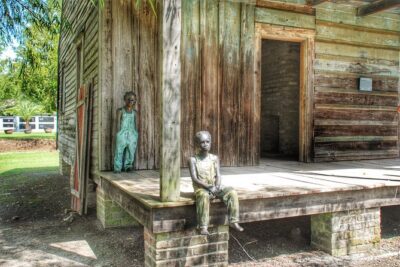
Whitney Plantation Tour with Transportation from New Orleans
Read our review →
Pearl Harbor, Dole Plantation, and Polynesian Center from Waikiki
Read our review →Browse the lists this tour appears in