
Reviewed · WALKING TOURS
True Crime NYC: Mafia Walk w/Ret. NYPD Detective and Local Food
If you like your New York stories with receipts, this Mafia Walk delivers. You start in the East Village, end in Little Italy, and you listen to case-style street history from retired NYPD detectives who worked the beats. I especially love the mix of real crime-family names and street-level specifics, plus the fact that the food is proper, full-size Italian comfort instead of a token snack. One thing to plan for: a lot of the tour is outside, so in winter you will feel the cold if you dress for indoor life only.
I also like that the guide does the hard part for you, connecting hierarchies, power moves, and rivalries to what you see on the sidewalk. And you get fun pop-culture hooks too, including The Sopranos filming locations along the way, without losing the historical thread. The one caution I’d flag is simple: this is a walking tour with a moderate pace, so if walking for a few hours is a struggle, you may want to skip.
This is a good match for first-timers who want a smarter way to see the East Village and Little Italy, and for anyone who likes true crime stories told like investigations, not like campfire legend. It is also a solid value if you actually plan to eat, because spaghetti and cannoli are built into the experience.
Key things I’d circle before you book
- Retired NYPD perspective: You get mob history explained with a law-enforcement mindset, not just movie trivia.
- Street-to-family connections: Names like Lucky Luciano, John Gotti, and Carlo Gambino are tied to actual corners and sites.
- Gambino ties on the route: You visit a former Gambino crime-family headquarters area, plus social-club history on Mulberry Street.
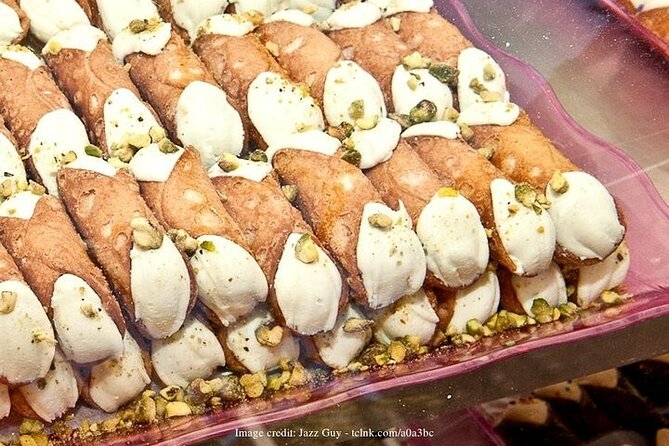
- Sicilian food that is not tiny: Full-size cannoli and an included pasta stop make the meal feel real.
- Outdoor walking, all-weather operation: The tour runs in most weather, so dress for wind and cold, not just temperature.
- Small group feel: Maximum of 35 people keeps it manageable for questions and pacing.
Retired NYPD on mob streets, and why that changes the whole tour
There are a lot of Mafia tours in New York. This one works because the tone is different. Instead of treating Cosa Nostra like a list of famous names, the retired detective guides frame it like you are learning how organizations actually operate: roles, hierarchy, territory, and how reputations spread.
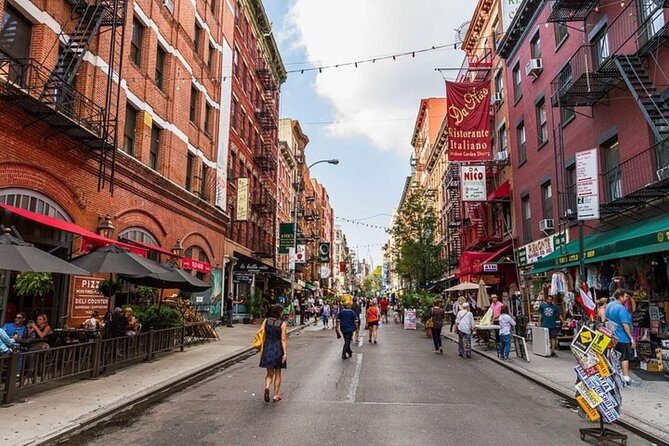
I also like that this tour is tightly connected to place. You are not just hearing about John Gotti or Carlo Gambino in the abstract. You are walking through the East Village and Little Italy areas where the underground networks became part of the city’s everyday geography.
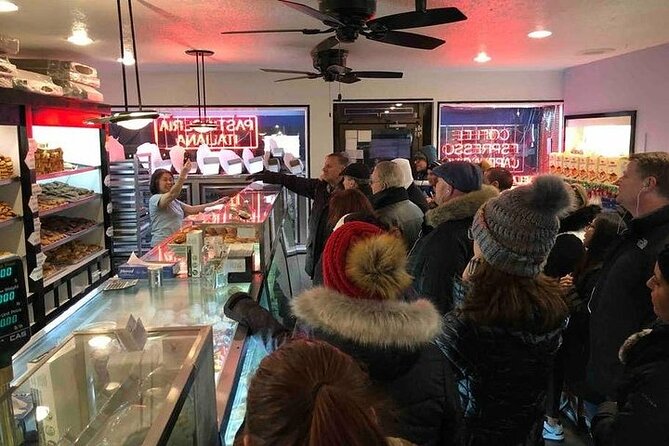
And then there is the food. A lot of walking tours give you a bite and a shrug. Here, you get pasta with tomato sauce and a full-size cannoli, plus additional Italian sweets at the end. If you are hungry, you will feel cared for.
More Food Tours in New York City
- NYC Bus Tour of Brooklyn, Bronx, Queens: Art, Food & Sports
★ 5.0 · 3,805 reviews - NYC: Chinatown & Little Italy Food Tour with 7 Flavorful Tastings
★ 5.0 · 2,733 reviews - Original NYC Guided Food Tour of Chinatown and Little Italy
★ 5.0 · 2,194 reviews
East Village to Little Italy: how the crime-family story is built
The route is designed to show how New York’s Mafia didn’t pop up in a vacuum. You start in the East Village gangland zone and follow threads that lead into Little Italy, where the community life and business relationships helped shape the criminal underworld.
Along the way, you hear about the hierarchy inside crime families, from foot soldiers to captains to the boss. That structure matters, because it explains why certain people rose, why certain alliances formed, and why violence was sometimes used like a tool for control.
You also get a mix of major-player names and specific local context. Expect references to Lucky Luciano and Meyer Lansky, plus mob figures like Carlo Gambino and John Gotti. The tour also points out that these groups were not only about crime headlines, they were about organization, logistics, and influence in neighborhoods.
The walk itself: East Village, Prohibition, Gambino ties, then cannoli heaven
The tour runs about 3 hours and ends on the corner of Mulberry and Canal Street. The walking is steady and the route is outdoors for a lot of it, so I’d plan on comfortable shoes and weather layers.
Stop 1: 302 E 12th Street and an old-school start
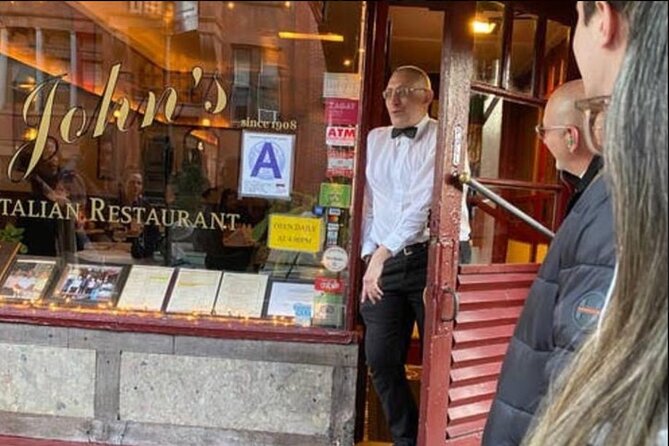
Your meeting point is 302 E 12th St, and the first stop is at a historic red sauce joint tied to the Mafia story. It’s the kind of place you can picture in an old New York movie, but the guide gives it context: why certain neighborhoods became connected to criminal commerce in the first place.
You get a full-sized cannoli here as part of the early experience, which is a nice move. It prevents the tour from turning into a long stretch of sightseeing hunger. If you tend to snack lightly while traveling, you will appreciate the fact that this one begins with food.
More Walking Tours in New York City
- SoHo, Little Italy, and Chinatown Walking Tour in New York
★ 5.0 · 3,153 reviews - Secrets of Grand Central Station Walking Tour New York City
★ 5.0 · 1,796 reviews - Greenwich Village Walking and Food Tasting Tour
★ 5.0 · 1,572 reviews - Artistic, Alternative Greenwich Village Walking Tour
★ 5.0 · 971 reviews
Stop 2: East Village welcome spaghetti at a Mafia-linked “red sauce” spot
Next you move through the East Village, and the tour begins with spaghetti welcome. This is where I’d say the “retired detective + food” combo really pays off. You eat inside a setting connected to the story, and you listen while you’re still warm and full.
This stop also sets the tone for what comes next: the origins of the Mafia in New York City and how the city’s immigrant community, business culture, and social networks were part of the backdrop.
Stop 3: Street hierarchy, power, and key names you can connect to corners
Here the guide slows the story down and helps you understand the internal structure of a crime family. You walk while learning how foot soldiers work, how captains run operations, and how bosses manage loyalty and risk.
Expect references to major figures tied to the neighborhoods you’re walking through, including Lucky Luciano, Joe “the boss” Masseria, John Gotti (the Teflon Don), and others. The point is not to memorize every name, it’s to understand the system behind the headlines.
You’ll also hear about second and third-level players, the kind who show up in case details even when the newspapers focus on the top names. That is what makes the tour feel like investigation instead of a greatest-hits list.
The Second Avenue Prohibition thread you might miss on your own
Midway through, the route picks up a Prohibition history angle along Second Avenue. This matters because Prohibition is one of the turning points for organized crime, and it helps explain why certain criminal opportunities took off.
You walk past places most tours skip, then connect what you see to what the guide explains about how enforcement pressure and illegal markets changed everything. Even if you think you already know Prohibition basics, the street-level framing makes it feel more real.
Stop 4: Liz Christy Bowery Houston Community Garden and a surprising connection
Next comes a stop at the Liz Christy Bowery Houston Community Garden. It’s an urban space that shows how neighborhoods evolve, and the tour connects it back to the Mafia story.
I like this moment because it breaks the nonstop crime-energy. You see how a neighborhood can carry old shadows and still grow new life. The guide uses it to show that criminal history does not erase community life, it layers over it.
Stop 5: Mulberry Street, Gambino firsthand accounts, and the John Gotti era
Then you hit Mulberry Street, where you hear firsthand accounts tied to the Gambino crime family and John Gotti. The story here is about social space and power. You’re learning how public-facing community venues could support private influence.
This is also one of the places where the guide’s background can really show. A lot of guides can talk history. The retired detective guides can explain why the history mattered for casework and what kinds of patterns investigators look for.
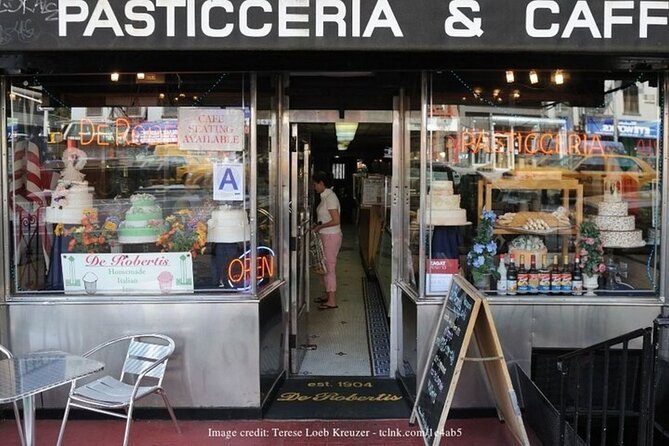
Stop 6: Little Italy dessert stop, with a full-size cannoli to end the experience
Your Mafia tour experience ends with a Sicilian cannoli, described as a cream-filled dolce from a pastry shop known for serving locals. The tour emphasizes the portion too, specifically noting that it is a full-size cannoli, not the tiny versions that show up on some other tours.
If you have ever had a mini-cannoli on a sightseeing day and felt mildly cheated, this stop is designed to fix that feeling. You get a real dessert you can taste and finish, not a garnish.
Stop 7: La Bella Ferrara and the large cannoli finish
The final pastry moment is at La Bella Ferrara, with another cannoli treat built into the end of the tour. The emphasis stays consistent: large, made right, and meant to be eaten as a proper ending.
I love that the tour doesn’t rush you through the last few stops. Ending in Little Italy with a full dessert also helps you shift from story mode to food mode, which is exactly what you want after walking.
Food and value: what you’re actually paying for
At $75.65 per person for about 3 hours, you are paying for three things: a guided route, a retired detective storyteller, and food that is more than a token.
Here’s what is included:
- Lunch pasta with tomato sauce
- A full-size cannoli
- Snacks, including the best Sicilian cannoli in Little Italy, again described as full-sized
- The tour operates in all weather
Drinks are not included, but you can buy them on the day. Alcohol is only served to people who meet the legal age requirement, which is 18 for this tour.
So the question is: does the food justify the price? For me, the answer is yes, because you aren’t paying mainly for a bite. You get spaghetti early, pasta for lunch, and a cannoli-heavy finish. If you skip lunch elsewhere, this tour can function like your meal plan for the day.
Also, the food stops are not just random. They are places tied into the criminal history context, which makes eating feel like part of the storytelling instead of a break from it.
The Sopranos filming locations: pop culture, but used the right way
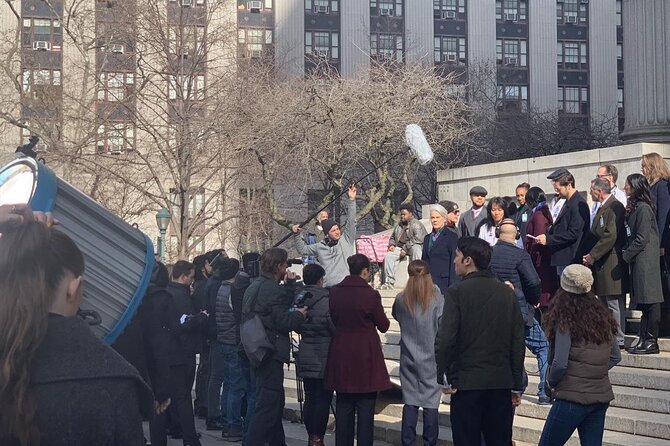
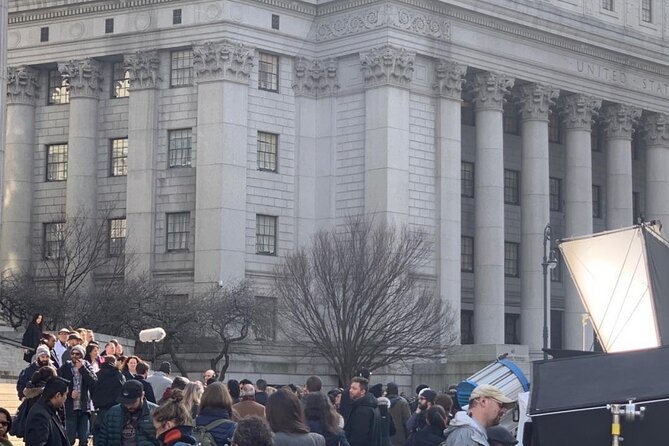
One of the highlights is that you see filming locations from The Sopranos TV show. This can go two ways on tours. Sometimes guides use it like shortcut trivia. Other times it becomes a distracting detour.
On this walk, the Sopranos references are used as a visual anchor. You connect what you see in real neighborhoods to the way TV borrowed the feel of the city’s social and street life. That connection makes the pop-culture element more useful, because it pushes you to notice the streets, not just the scenes you recognize.
If you are a fan of the show, you’ll likely enjoy spotting locations and hearing how the show mirrors real-world vibes. If you are not, you can still enjoy the practical mapping of neighborhoods through the lens of a famous series.
Practical notes: group size, pace, and what to wear
The tour caps at 35 travelers. That size is large enough to feel lively, but small enough that you are not stuck behind a wall of people the whole time.
It’s offered in English and uses a mobile ticket. You should also plan for normal walking conditions. The tour is not recommended for travelers with walking or leg conditions, and it calls for moderate physical fitness.
Because it runs in all weather, pack like a New Yorker. Even if the forecast looks mild, wind and damp conditions can matter. I’d bring a warm layer and something that blocks the chill, especially if you’re touring in winter.
Who this Mafia Walk is for
This is for you if:
- You want New York crime history explained with a law-enforcement mindset
- You like food stops that include real meals, not tiny samples
- You are curious about the East Village to Little Italy corridor beyond the usual landmarks
- You enjoy street-level stories with clear names like Lucky Luciano, John Gotti, and Carlo Gambino
It might not be for you if:
- You get uncomfortable in long outdoor walks
- You expect a purely food-focused format
- You want only light, comedic storytelling and not the heavier realities that true crime themes can bring
Also, if you care about guide quality, pay attention to names you’ve seen mentioned across recent groups. Guides like Frank, Louie, Dennis, Jane, Jay, Mike, and Denise have all been part of recent tours, and the consistent praise is for storytelling that feels structured and easy to follow.
Quick reality check on the one common drawback
One of the main “be careful” points is weather. In winter, many parts of the walk happen outside and it can get cold. If you are prone to freezing, plan to dress warmer than you think you need.
The other practical note is that while food is included, this is still primarily a walking history tour. If your top priority is food tasting only, you might wish for more time in restaurants. If your top priority is the streets and the stories, the food feels like a satisfying bonus.
Should you book the True Crime NYC Mafia Walk?
Yes, I’d book it if you want a clear, structured walk through East Village and Little Italy with a retired NYPD perspective and included meals. The strongest reasons are the specific street context, the Mafia hierarchy explanation, and the fact that you end up eating actual Italian comfort food, including full-size cannoli.
Skip it if you have limited mobility, hate long outdoor walks, or want a purely culinary experience. But for most people looking for an authentic, story-driven way to see these neighborhoods, this tour makes a lot of sense.
If you do book, go in hungry, wear comfortable shoes, and keep an open mind. New York’s Mafia story is not just about criminals. It’s about how the city’s social and business networks shaped everything, and this walk gives you the streets to prove it.
FAQ
How long is the True Crime NYC Mafia Walk?
It lasts about 3 hours.
Where does the tour start and end?
It starts at 302 E 12th St, New York, NY 10003, and ends on the corner of Mulberry and Canal Street, near 108 Mulberry St.
What food is included?
You get lunch pasta with tomato sauce and a full-size cannoli. The tour also includes snacks, including Sicilian cannoli in Little Italy, described as full-sized.
Is alcohol included?
No drinks are included, though you can purchase drinks on the day. Alcohol is only served to guests who meet the legal age requirement listed for the tour, which is 18.
Is the tour run in bad weather?
Yes, it operates in all weather.
Can I get a refund if I cancel?
Yes. Free cancellation is available up to 24 hours in advance for a full refund. If you cancel less than 24 hours before, you do not get a refund.
Reviewed most recently around New York City
- The Museum of Modern Art Admission Ticket★ 4.5 · 735 reviews
- Philadelphia and Amish Country, 1-Day Tour from NYC★ 4.0 · 734 reviews
- Top Rated Brooklyn Half-Day Food, History & Culture Tour via bus★ 5.0 · 758 reviews
- NYC: Woodbury Common Premium Outlets Shopping Trip★ 4.2 · 761 reviews
- Madame Tussauds New York City Admission Ticket★ 4.5 · 766 reviews
- New York City: Private Walking Tour with a Local★ 4.6 · 771 reviews
- Central Park Guided Walking Tour★ 5.0 · 774 reviews
- NYC: Woodbury Common Premium Outlets Shopping Round Trip Service★ 4.0 · 784 reviews
Walking Tours, compared.
History and Hauntings of Salem Guided Walking Tour
Read our review →
New Orleans Premier Ghost, Voodoo and Vampire Walking Tour
Read our review →
Freedom Trail History Small Group Walking Tour
Read our review →
Historic Charleston Guided Sightseeing Walking Tour
Read our review →
New Orleans Food Walking Tour of the French Quarter with Small-Group Option
Read our review →
St. Louis Cemetery No. 1 Official Walking Tour
Read our review →Browse the lists this tour appears in