
Reviewed · CITY TOURS
New York City Slavery and Underground Railroad Tour
New York’s slavery story is not stuck in a book. On this Underground Railroad walking tour, you follow a real path through lower Manhattan, with stops tied to abolition, escape routes, and the people forced to survive. It is interesting because the city itself becomes the classroom, from the waterfront edge of Battery Park to the stone-and-steel symbolism around Wall Street.
I love how the tour links the big names to street-level reality. You hear about figures like Frederick Douglass, but you also see places where people hid and waited while heading toward free states. I also love the emotional weight of the ending at the African Burial Ground National Monument, where the memorial does not let the story feel distant or abstract.
One possible drawback: you spend a lot of time standing in cold or rainy weather. Several people noted long listening stretches at street corners, and construction or blocked areas can limit what you can see from the sidewalk.
Key Highlights You Should Know
- Freedom Trail route in lower Manhattan that connects slavery, abolition, and escape plans
- Guides with strong storytelling, including people like Ludy, Sean, Maya, Maia, and Ludie
- African Burial Ground National Monument as a powerful, solemn finale
- Wall Street context tying the city’s finance system to enslaved labor
- Foley Square’s Triumph of the Human Spirit memorial and what it represents
- Historic exteriors like Fraunces Tavern, plus a look near the Alexander Hamilton Custom House area
A Lower Manhattan Route That Teaches the City by Walking
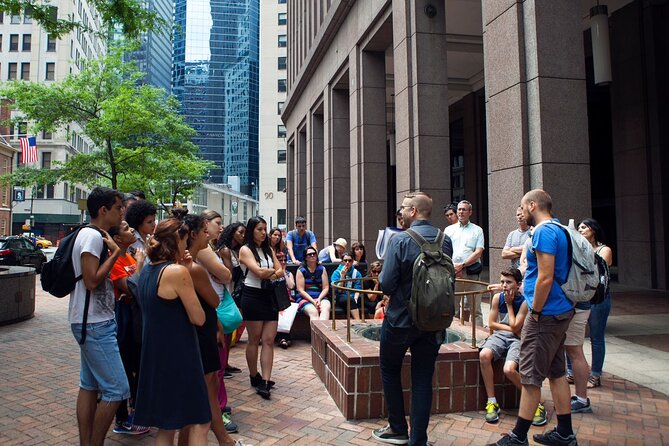
This is a true walking tour, designed for history buffs and for anyone who wants NYC to make sense beyond skylines and shopping streets. The core idea is simple: the Underground Railroad was not just a distant concept. It was a network of routes and safe support, and New York City was part of that story. The tour traces how enslaved people used help from abolitionists and allies to move from bondage toward freedom.
You start in Manhattan at 1 Bowling Green, then work your way through a chain of sites that build momentum as the theme deepens. The pace is not a sprint. It is a steady “stop, stand, learn, move” rhythm, and the total time is about 2 hours 30 minutes.
Group size is capped at 30, so you should still hear your guide clearly if the tour’s sound setup is working well. One review did point out a microphone issue, so if you are sensitive to audio, arrive early and pick a spot where you can hear without craning.
More City Tours in New York City
- New York City: Statue of Liberty & Ellis Island with Ferry
★ 4.6 · 18,683 reviews - New York City: American Museum of Natural History Ticket
★ 4.5 · 15,447 reviews - New York City: Top of the Rock Observation Deck Ticket
★ 4.6 · 14,488 reviews
Price and Value: Why $49 Can Be a Good Deal in NYC
At $49 per person for around 2.5 hours, this is priced like many small-group history tours in New York. What makes it feel like value is that several of the key stops are free, and the paid part is really the guide and interpretation.
Included in the tour is the guide plus structured context like New York’s role in slavery and a breakdown of the Underground Railroad story. You also get specific site themes covered along the way: the Underground Railroad, the African Burial Ground, Fraunces Tavern, and the site of New York’s first slave market (the tour brings this up as part of the narrative during the walking route).
In other words, you are not paying to enter one big-ticket attraction. You are paying for help reading the city, including why the same streets that look ordinary on a quick walk actually carried terrifying stakes.
Meet at Bowling Green, Then Let the Route Guide Your Focus
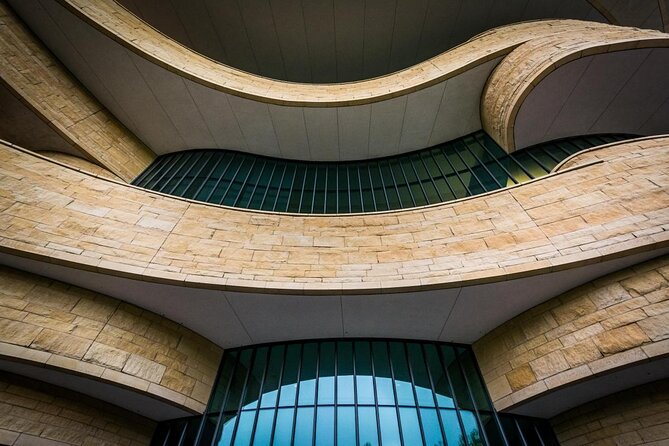
Your tour begins outside the National Museum of the American Indian area, with the first stop listed as an exterior visit. The starting point is 1 Bowling Green, New York, NY 10004. From there, the route is set up to keep you oriented as you go west and then through the financial and memorial corridors of downtown Manhattan.
Because the tour is outside for much of the time, you should dress for real walking weather, not just the weather you see from a subway platform. The reviews mention frigid, rainy, windy conditions making it hard for some people to finish. If you run cold, bring layers and plan to keep moving even when you stop to listen.
Also, this is rated for moderate physical fitness. That usually means you can handle walking plus long standing at corners. If that sounds hard, consider whether you want to choose a tour with more indoor time.
Guide Power: What People Like Most About the Storytelling
This tour seems to live or die with its guide, and the reviews strongly suggest that the best ones are both informed and emotionally careful. Many comments praised guides for passionate, clear delivery, plus the way they connected the humanity of people involved to the facts on the street.
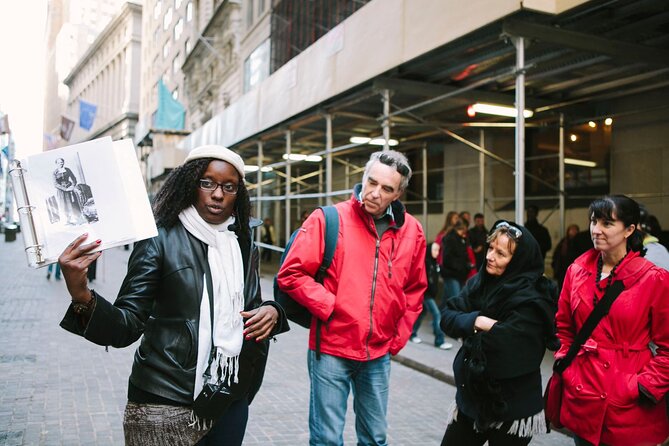
Names you may encounter in reviews include Ludy, Ludie, Sean, Shawn, Maia, and Maya. A repeated theme is that guides do more than recite dates. They explain symbols and context, sometimes with photos and a binder of historical figures and places.
I love that this approach gives you a “mental map” you can keep after the tour. You do not just leave with sadness. You leave with specifics you can look up later, like names, locations, and the meaning behind memorial design elements.
Stack these New York City options against each other
- NYC: SUMMIT One Vanderbilt Experience Ticket
★ 4.7 · 37,985 reviews - NYC: 9/11 Memorial & Museum Timed-Entry Ticket
★ 4.8 · 31,428 reviews - NYC: Empire State Building Tickets – Observatory & Museum
★ 4.7 · 25,757 reviews - NYC: Empire State Building Observation Deck Tickets
★ 4.7 · 22,072 reviews
Stop-by-Stop: What Each Part of the Walk Adds
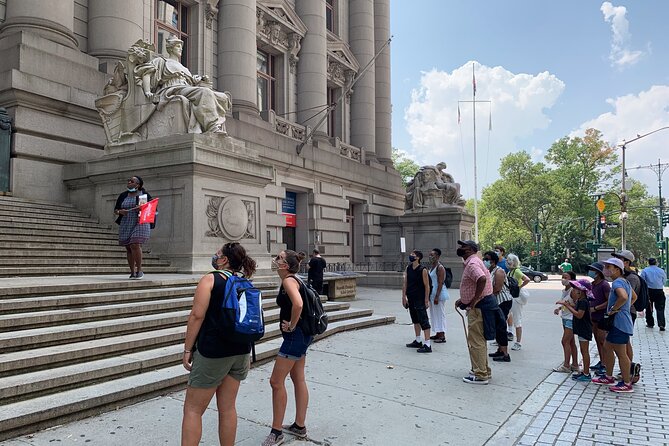
Stop 1: National Museum of the American Indian Area and the Alexander Hamilton Custom House Exterior
You kick things off right near the National Museum of the American Indian in Manhattan. The itinerary describes an exterior look linked to the Alexander Hamilton Custom House, a Beaux-Arts building from the early 1900s. Even though you are not doing this as a deep museum visit, the location matters. It sets a tone: NYC is layered, and buildings you might treat as purely “architectural” also connect to trade and commerce that relied on slavery and exploitation far beyond these sidewalks.
This first leg also helps you get your bearings early, especially since the whole tour is built around learning to see the city in a new way.
Time on this stop is listed at about 10 minutes, and admission is noted as not included. Since it is an exterior visit, you should not expect a long indoor break here.
Stop 2: Battery Park and the Idea of Arrival
Next up is Battery Park. The theme here is movement, arrival, and how the waterfront shaped NYC. The tour description highlights that for more than 200 years, Battery Park was a gateway and millions of newcomers came through this area.
That might sound like a general NYC fact at first, but in this kind of tour, it is a setup. The guide can frame arrival in both directions: who came looking for opportunity, and who was forced into NYC’s economy through the slave system.
This is a short stop, about 10 minutes. It is enough to establish context, then you move on before the story gets lost in general tourism.
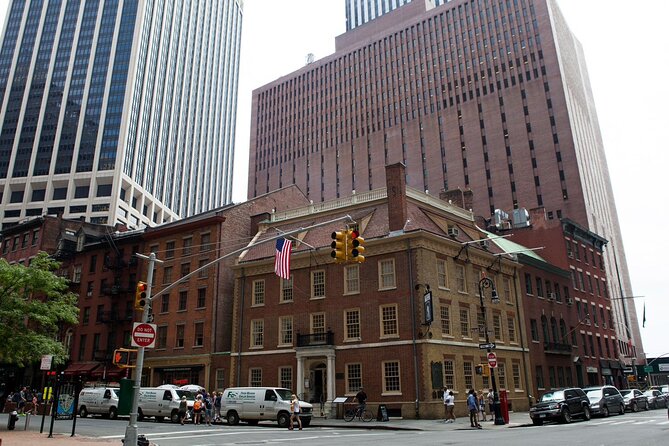
Stop 3: Fraunces Tavern Exterior and the Revolutionary-Era Anchor
Fraunces Tavern Museum is next, again listed as an exterior visit. The itinerary notes its prominent role before, during, and after the American Revolution.
Why do this on a slavery and Underground Railroad tour? Because revolution language about liberty can feel like a contradiction unless you also look at who was excluded and exploited. A guide can use this stop to help you hold two truths at once: political ideals and brutal systems that shaped daily life.
This stop is about 15 minutes. If the weather is rough, this one can be a relief since the museum itself is not the focus here, just the historical place in the street picture.
Stop 4: Wall Street, the Colonial Wall, and Enslaved Labor
Now you reach one of the most discussed segments. The itinerary gives a specific and chilling detail: an actual wall existed on Wall Street from 1685 to 1699, and it was built by enslaved people.
This is the “wait, what?” stop for many people, because Wall Street today reads as finance and capitalism. Here, the guide ties it back to physical labor and the slave system that helped build structures of wealth.
It also helps explain why this tour is more than a lesson in slavery history. It is also a lesson in how power got constructed, brick by brick, and then protected.
Time here is about 30 minutes, which means you should treat this as the centerpiece of the walking portion. You might also hear about where people who escaped slavery hid while en route toward free states, with the route connecting to sites associated with colonial Manhattan settlement history such as Fort Amsterdam.
One thing to watch: because it is longer, you will be standing through more of the guide’s narration. If you need frequent mobility breaks, this is where you will feel it most.
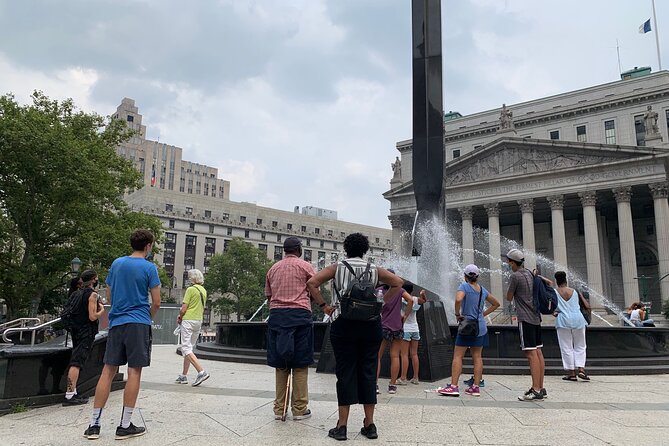
Stop 5: Foley Square and Triumph of the Human Spirit
Foley Square comes next, about 15 minutes. The itinerary names a sculpture honoring the presence of enslaved people in New York, known as the Triumph of the Human Spirit.
This stop is valuable because it shifts the tone from survival amid systems to survival as a force that shaped American life. In other words, it is not only about the harm. It also points to resilience and the enduring presence of African people and their descendants in the city’s development.
This is also a free stop, so the cost is not in the site. The cost is in the emotional work of paying attention.
Stop 6: African Burial Ground National Monument, the Sacred Finale
The tour ends by reaching African Burial Ground National Monument, about 10 minutes, and it is free. This is the oldest and largest known excavated burial ground in New York documenting the lives of enslaved people in New York.
Multiple reviews described this as touching, solemn, and powerful, and several people said this was the emotional high point. One review highlighted that guides helped explain symbolism carved into the monument. Another said the memorial resonated as an unforgettable way to see the city.
If you are the type who wants to sit with meaning, this is where you slow down mentally. You might even find yourself looking longer than the allotted time, because the space is designed for remembrance.
One practical note: some reviews mentioned that parts of the African Burial Ground area were under construction or blocked off. If you are traveling at a time when the site is partially closed, the guide may still take you into areas that are available, but what you can view directly might vary.
The Extra Ending Walk: The Former Site of the First African-American Church
After the African Burial Ground stop, the tour description says you walk to the former site of the first African-American church in New York. It also notes that it was one of the Underground Railroad stops.
This matters because it links faith, community organization, and networks of support. In many Underground Railroad stories, safe routes were not only physical locations. They were also communities with moral purpose and practical help.
Even if you only get a brief time at this final site, it helps close the narrative loop: survival, community, escape support, and remembrance.
How Much You Will Stand, and What to Do About It
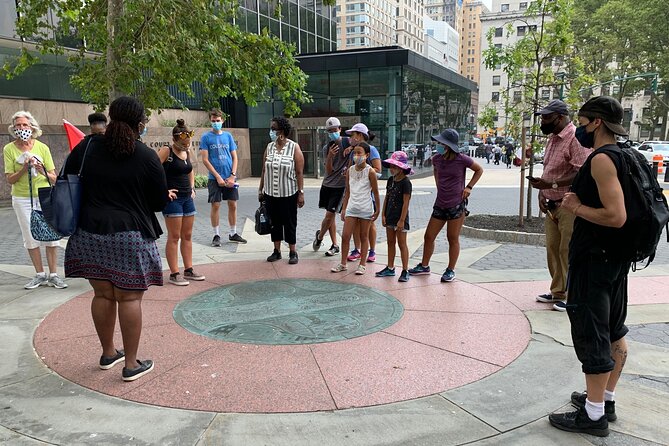
If you are planning this tour for yourself or a group, go in with your eyes open. Several reviews flagged lots of standing while the guide talks, with limited chances to truly “look around” at certain corners. Construction and blocked off areas can also reduce visible details.
My practical advice:
- Wear comfortable shoes with good traction. Manhattan sidewalks can be slick.
- Bring layers, even if the day looks pleasant on the morning forecast.
- Position yourself early so you are not stuck at the back where audio and sightlines worsen.
- If weather is extreme, use your judgment. This tour depends on good weather, and it is not built around indoor alternatives.
Who Should Book This Tour (and Who Might Want a Different One)
You will likely love this tour if:
- You want an Underground Railroad and slavery story that is specific to New York City.
- You like walking city blocks with a guide who ties sites to people and outcomes.
- You care about memorial spaces like the African Burial Ground and want help understanding symbols and context.
You might think twice if:
- Long standing is a dealbreaker for you.
- You are looking for constant visual spectacle at every stop. This tour is heavy on narration and learning.
- You dislike tours where closures or construction could change what you can see.
One extra point from the reviews that I take seriously: many people said even locals learned major details they did not know. If you live in NYC and think you already know downtown history, this kind of tour is still a wake-up call.
Should You Book? My Honest Take
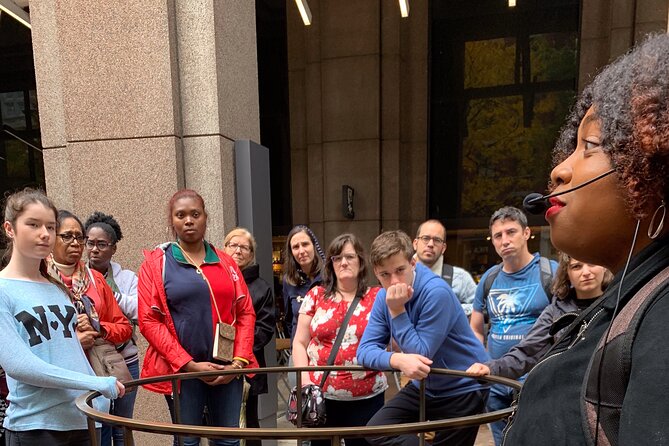
For $49, I think this is worth booking if you want a guided, humane, and non-simplified account of slavery and escape routes in New York City. The strongest part is the guide-led storytelling, especially around the African Burial Ground and the way Wall Street is framed in relation to enslaved labor and the city’s built environment.
Just be smart about the practical tradeoffs. You will be outside, you will stand more than you might expect, and weather can swing the experience. If you dress for it and pick a time when conditions are kind, this tour can leave you with a real sense of how NYC’s past is written into the streets.
FAQ
Where does the tour start and end?
The tour starts outside at 1 Bowling Green, New York, NY 10004. It ends at the African Burial Ground National Monument at 290 Broadway, New York, NY 10007.
How long is the tour?
The tour is listed as about 2 hours 30 minutes.
What is included in the $49 price?
The tour includes a local guide and historical context focused on slavery in New York and the Underground Railroad, plus coverage of stops such as the African Burial Ground, Fraunces Tavern, and the site of New York’s first slave market.
Is the tour offered in English?
Yes. The tour is offered in English, and you receive a mobile ticket.
Is the tour dependent on weather?
Yes. The experience requires good weather. If it is canceled due to poor weather, you will be offered a different date or a full refund.
What is the cancellation policy?
You can cancel for a full refund if you cancel at least 24 hours before the experience’s start time. If you cancel less than 24 hours before, the amount paid is not refunded.
Reviewed most recently around New York City
- New York City Dinner Cruise with Live Music★ 4.0 · 377 reviews
- Museum of Sex NYC Admission Ticket★ 4.5 · 380 reviews
- Central Park Private Pedicab Tour (60 mins)★ 5.0 · 382 reviews
- “The Met” Metropolitan Museum of Art Tour Semi-Private 8ppl Max★ 5.0 · 384 reviews
- Statue of Liberty, Ellis Island, and 9/11 Memorial Guided Tour★ 4.0 · 385 reviews
- 1-hour New York City Skyline Sightseeing Cruise★ 3.5 · 391 reviews
- Excursion to Washington from New York in 1 day★ 5.0 · 393 reviews
- NYC: Meet the Met – Extended 3hr Small-Group Tour★ 4.6 · 397 reviews
City Tours, compared.


Boston Duck Boat Sightseeing City Tour with Cruise Along Charles River
Read our review →


New Orleans City Sightseeing Hop-On Hop-Off Bus Tour
Read our review →
Pearl Harbor, USS Arizona Memorial & Honolulu City Tour
Read our review →Browse the lists this tour appears in