
Reviewed · WALKING TOURS
Best Salem Witch Trials Historical Walking Tour
What makes this Salem Witch Trials walk interesting is how fast you move on foot from the memorial to the exact downtown corners tied to the 1692 accusations. You’ll see real names, real places, real fallout, all in about 90 minutes.
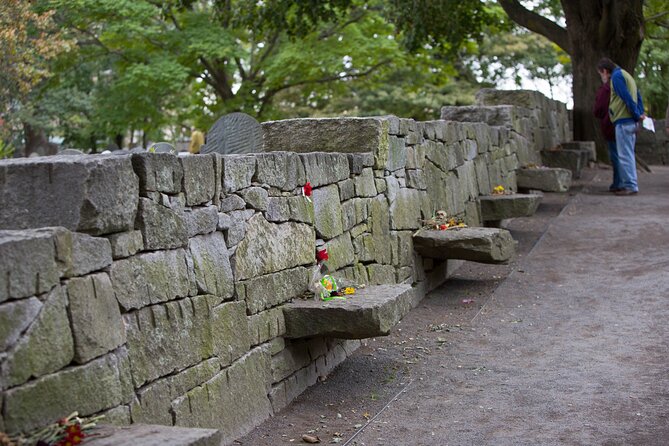
I love two parts right away. The Salem Witch Trials Memorial gives you a bench-by-bench look at the 20 victims, including how they died and the date. I also like how the route centers on the Witch House, Judge Jonathan Corwin’s 1660s home, the only surviving structure with direct 1692 ties.
One thing to consider is that many trial buildings are gone, so you will spend time standing and listening at sites where structures used to be, not inside preserved landmarks.
Key takeaways before you go
- A 90-minute, about-one-mile walk that mixes story time with frequent site stops
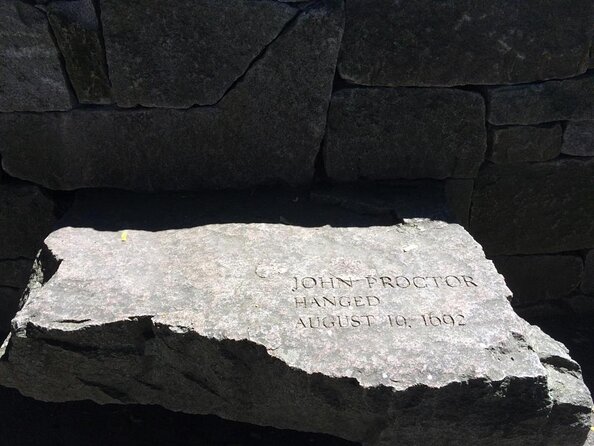
- Salem Witch Trials Memorial benches with names, death details, and dates for the 20 victims
- Downtown Salem locations tied to arrests, court, jail, and key judges, even when buildings no longer exist
- The Witch House at Salem focused on Judge Jonathan Corwin and meetings linked to the proceedings
- A practical “extra context” stop at the Witch Dungeon Museum for how jails and stocks worked
- Small group size (max 40) and multiple departures daily to fit your schedule
How this tour works, and why the walk beats guessing on your own
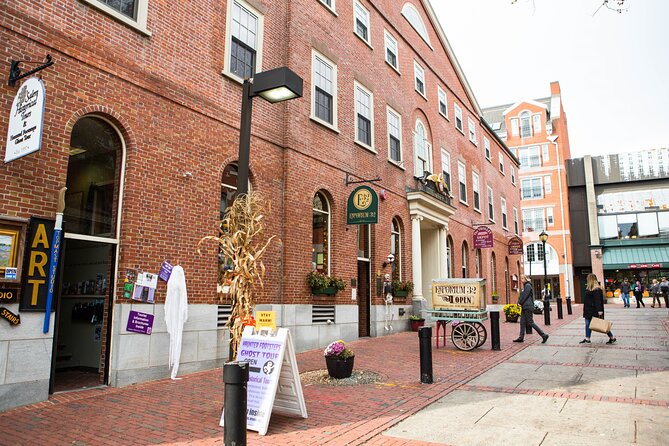
This is a guided walking tour based in downtown Salem. You meet the guide at 8 Central St, Salem, inside the Salem Historical Tours Office area, and you’ll want to arrive about 15 minutes early so you’re checked in before the group sets off. Tours run 10 am, 1 pm, and 4 pm, and they operate in all weather, so dress for wind and cold if you’re going off-season.
The route is about one mile total over roughly 90 minutes. That matters because Salem streets are old and uneven: narrow sidewalks, cobblestones, and stairs show up. The company notes that everyone must be able to complete the walk within the time window so there are enough stops for the guide to share details.
At $30 per person, this can be a strong value if your priority is context. You are paying mostly for the human brainpower of a local guide: the connections between people, places, and why a town could flip into a trial machine so quickly.
More Historical Tours in Salem
- History and Hauntings of Salem Guided Walking Tour
★ 5.0 · 14,564 reviews - Wicked Awesome Tours: Witch Trial History and Salem Haunts!
★ 5.0 · 1,032 reviews - 2.5-Hour Salem History & Sightseeing Guided Walking Tour
★ 5.0 · 850 reviews
Starting at 8 Central St: your “game plan” for 1692 Salem
The tour begins downtown, right where you can easily keep exploring after it ends. That’s a real perk. You do not need to worry about ending somewhere remote. The walk returns to the downtown area, and the guide can point you toward what you want to do next.
You’ll also get an immediate orientation. The first stop-style segment focuses on the demographics, theories, and personal stories that fed the hysteria in 1692. Even if you already know the headline names, this kind of setup helps you understand why accusations spread fast in a small, tightly connected community.
Practical tip: go into this with comfortable shoes and a willingness to listen while you stand still. Some parts feel like you are watching a documentary on the sidewalk. That’s not a bug. Salem doesn’t have a lot of intact 1692 structures left, so the guide leans on place-based storytelling.
Salem Witch Trials Memorial: the bench details you can’t “Google” fast enough
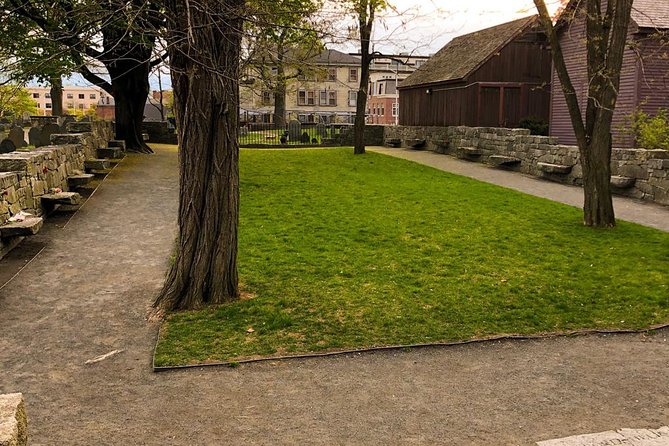
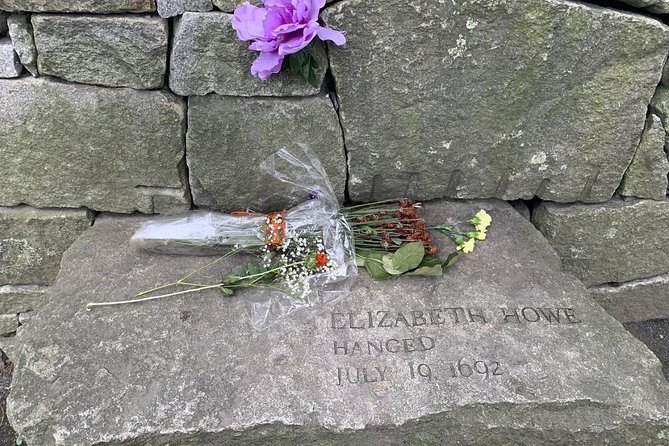
The emotional center of the walk is the Salem Witch Trials Memorial. It’s a bench-style memorial dedicated in 1992 to honor the 20 innocent victims of the 1692 trials. Each bench includes the person’s name, how they died, and the date.
This is one of those stops where the guide’s job is not just to talk, but to help you read the design. You’ll hear the symbolism behind the layout and you’ll also get personal stories connected to the names. If you want your Salem experience to feel grounded in people rather than costume myths, start here.
One drawback to expect: this memorial is a stop, not a museum. You can take it in quickly, but the lasting impact comes from hearing the stories tied to the names.
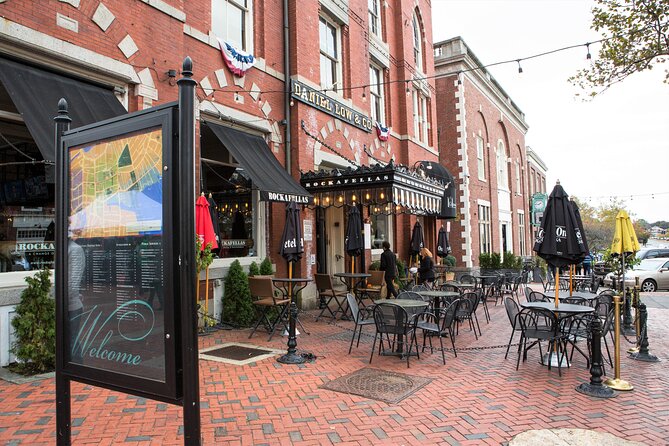
Rockafellas Restaurant: when the First Church turned into town-stage power
Next, you’ll head to Rockafellas Restaurant in the center of historic Salem. Today it’s a popular eatery, but the building is known historically as the Daniel Low and Co. building, originally the site of the First Church of Salem and the city meeting house in 1692.
Why that matters: places of worship and civic decision-making weren’t separate worlds. The same town spaces that shaped daily life also shaped the flow of fear, authority, and accusation.
The tour briefly connects this site to the trial atmosphere. You do not need to pay for admission for this stop (and meals are not included), but it’s a helpful moment to see how a “normal” downtown building could once carry enormous power.
More Walking Tours in Salem
- Salem Voodoo, Vampires, and Ghosts Guided Walking Tour
★ 5.0 · 1,931 reviews - Bewitched Walking Tour of Salem
★ 5.0 · 1,895 reviews - Satanic Salem Walking Tour
★ 5.0 · 1,635 reviews - Mysteries and Murders of Salem Guided Night-Time Walking Tour
★ 5.0 · 1,488 reviews
Joshua Ward House (Merchant Hotel): George Corwin, the High Sheriff, and fear with paperwork
The tour then goes to the site known historically as the Joshua Ward House, now the Merchant Hotel. This is tied to George Corwin, described as the High Sheriff of Essex County in 1692.
Here’s the kind of detail that makes this tour worth it. You’ll hear how Corwin signed arrest and execution warrants tied to innocent victims. The story also includes the darker side of local power, including the claim that he took people’s property and tortured some prisoners in his home.
Standing near a modern hotel, it’s hard to “see” the moment. The value comes from the guide putting the machinery of authority into plain words: arrest, warrant, custody, and then irreversible outcomes.
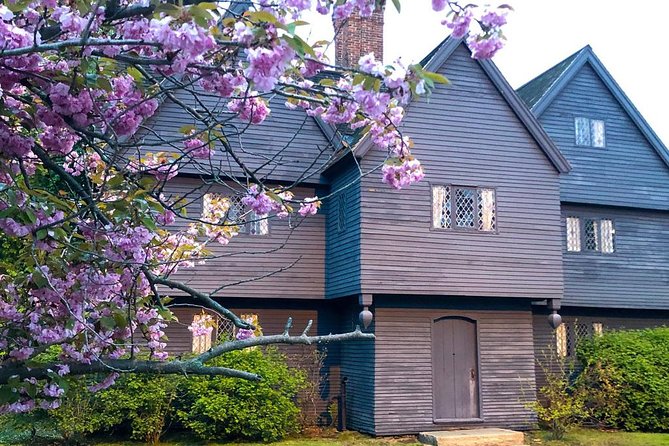
The Witch House on its own: Judge Jonathan Corwin’s 1660s home
If you want the clearest physical link to 1692, this is the stop. The Witch House at Salem is described as the only remaining Salem structure with direct ties to the 1692 witch trials.
This is the home of Judge Jonathan Corwin. The guide explains that Judge Corwin used to meet with Judge Hathorne in the house to discuss who could be a witch. The house dates back to the 1660s, which gives you something rare in Salem: a spot where you can stand inside the same timeframe that shaped the court’s thinking.
This is also where pop culture framing can distract people. The guide’s role here is to keep you focused on the court connections, not the spooky branding. If you only have time for one “real place” moment on this walk, make it this.
Sewall Street at the Salem YMCA: Betty Parris and the spark that caught
Next you’ll learn about the Salem YMCA on Sewall Street. Sewall Street is named for Judge Stephen Sewall, identified with the Witchcraft Court.
The guide connects this area to a specific person: nine-year-old Betty Parris, moved here in July 1692. Betty was the daughter of Rev. Parris, and the tour also discusses her cousin’s role in the early spread of the witchcraft hysteria.
You might think this era is only about judges and courts, but moments like this show how the process depended on children, households, and what adults believed they were witnessing. The buildings tied to this exact story are long gone, but you’ll get the narrative anchor.
Lyceum Hall and Turner’s Seafood: Bridget Bishop’s land and the fast timeline
At Turner’s Seafood at Lyceum Hall, you’ll hear a story that moves quickly and hard. The tour notes that Lyceum Hall was built on land once owned by Bridget Bishop and her husband Edward. Bridget Bishop is described as the first woman executed in 1692.
The guide shares the timeline. It took eight days for Bridget Bishop’s arrest, trial, and execution. Eight days turns the whole thing from “slow-burn history” into something sharper, and it helps you understand how momentum can overwhelm fairness.
This stop also keeps the tour grounded in downtown Salem life. You are not “escaping” into a historical theme park. You’re learning history in the middle of where people actually live, eat, and walk.
Witch Dungeon Museum for jail reality: cells, payment, and stocks
The tour includes a stop at the Witch Dungeon Museum. This is important because it gives you a different kind of evidence. It’s not presented as a direct 1692 structure tied to the trials, but it helps explain how jailing worked during the period.
You’ll hear about small jail cells sized like closets or phone booths, the idea that prisoners had to pay for their own jail time, and the general process behind imprisonment. There’s also a photo op in the pillories, which are also described as stocks.
Why I think this stop works: the court story alone can feel abstract. This part turns it into physical suffering and daily humiliation, which is what many people overlook when they only focus on the courtroom drama.
If you’re budget-sensitive, check whether you want to spend additional money there since admission is listed as not included for this stop.
Bewitched statue on Salem streets: when TV history overlaps real trial history
Then you get a quick, funny, slightly ironic detour: the Bewitched statue of Elizabeth Montgomery. This spot lets you take a picture with Samantha Stevens, while the guide explains how Salem connects to filming the show.
The tour also notes that the statue sits on land tied to Salem’s history. That blend is the point. Salem has two narratives running at once: the real one and the made-for-TV one.
If you’re tired of dark history by this point, this stop gives you a breather. Just don’t let it replace the earlier court and jail context. This is a pause, not the core lesson.
Essex Lodge area and the court of Oyer and Terminer: judges overruled juries
Next, you’ll be in the area of the Salem Masonic Building, Essex Lodge. The Witchcraft Court, called the court of Oyer and Terminer, is described as being located in the middle of Washington Street in front of the present-day Masonic building.
The guide also mentions that additional trials happened in January 1693 at this site.
The story gets especially chilling here. You’ll hear about decisions described as travesties, including an instance where an accused person was declared innocent by the jury, but the judges nullified that outcome.
This stop is where the tour shifts from “what happened to individuals” to “how the system worked.” It’s not just bad luck. It’s authority that moved against due process.
50 St Peter St: the missing jail, the crushed man, and the cost of detention
The final major stop is at 50 St Peter St. The Witchcraft Jail itself is described as gone, but the tour explains that it was located at this address. It also points out that this jail was one of the jails used during the trials across the greater Boston area.
You’ll learn about names connected to imprisonment there. One of the most intense stories involves Giles Corey, described as the man crushed during an interrogation. The tour also notes that some prisoners died in jail.
This is a strong closing note because it ties the whole timeline together. Court decisions were not just paperwork. They ended in prisons, suffering, and death.
After this, the tour wraps back toward downtown, where you can turn your visit into a self-guided day. That ending location is practical, because you are not stranded after 90 minutes with no obvious next step.
Value for your $30: what you get, what costs extra, and what you should watch for
This tour’s price is straightforward. It costs $30 per person for a guided, 90-minute walking experience. What makes it feel like value is that most of the key storytelling stops are free to view, while the optional paid experiences show up as separate add-ons.
Still, watch for this pattern:
- Some locations list admission as not included. That can mean you might need extra tickets if you want to go inside a specific site.
- Food is not included. The Rockafellas stop is a location stop, not a meal deal.
Also, keep expectations realistic. Many structures from 1692 are gone, so you are relying on the guide’s ability to translate “a vanished building” into a clear mental picture. This is where the best guides can make the difference.
One more expectation shift: the tour says it visits as many listed locations as possible, and the guide may not hit every stop in the exact order. That’s normal in a walking tour, especially with crowds and weather.
Who should book this tour, and who might be happier elsewhere
Book it if you want:
- A fast, guided way to connect major figures and major locations from the Salem Witch Trials era
- The most famous surviving structure, the Witch House, plus nearby court and jail sites
- A dark-history walking tour that mixes facts with human stories, not just spooky vibes
Skip it, or at least adjust expectations, if you:
- Want only surviving buildings and interiors you can tour repeatedly
- Need lots of seating, because you’ll stand at street corners and memorial points during the narrative
- Are very strict about following a precise checklist order, because the route can flex
If you do book, one smart move is to arrive ready to ask questions. The tour design is about conversation plus walking, and you’ll get more out of it when you push beyond the headline names.
FAQ
Will the tour run in bad weather?
Yes. The tour operates in all weather conditions, so dress appropriately.
Where do I check in, and where does the tour start?
Check in at the Salem Historical Tours Office at 8 Central St, Salem, MA 01970. The tour starts there.
How long is the walking tour?
It’s about 90 minutes.
How much walking is involved?
The tour is about one mile in total and includes frequent stops. Salem sidewalks can be narrow and uneven, with cobblestones and stairs.
Are tickets for stops included in the $30 price?
Some stops note admission tickets as free, while others list admission as not included. Plan on possible extra costs for certain sites if entry is required.
What time do tours depart?
Tours depart at 10 am, 1 pm, and 4 pm. Plan to arrive 15 minutes early.
Is there a cancellation refund if plans change?
Yes. You can cancel up to 24 hours in advance for a full refund.
If you want a practical, story-driven way to understand 1692 Salem without spending your whole day researching, this tour is a solid bet. It’s short enough to fit into a normal Salem itinerary, and it focuses your attention where the surviving structure, memorials, court sites, and jail stories make the biggest impact.
Reviewed most recently around Salem
- The Salem Witch Walk★ 4.5 · 1,301 reviews
- Mysteries and Murders of Salem Guided Night-Time Walking Tour★ 5.0 · 1,488 reviews
- Satanic Salem Walking Tour★ 5.0 · 1,635 reviews
- 2.5-Hour Salem History & Sightseeing Guided Walking Tour★ 5.0 · 850 reviews
- Wicked Awesome Tours: Witch Trial History and Salem Haunts!★ 5.0 · 1,032 reviews
- Requiem for Salem Walking Ghost Tour★ 4.5 · 562 reviews
- Salem Ghost Tour: Witches & Wicked Whispers★ 4.5 · 571 reviews
- Bewitched Walking Tour of Salem★ 5.0 · 1,895 reviews
Walking Tours, compared.
History and Hauntings of Salem Guided Walking Tour
Read our review →
New Orleans Premier Ghost, Voodoo and Vampire Walking Tour
Read our review →
Freedom Trail History Small Group Walking Tour
Read our review →
Historic Charleston Guided Sightseeing Walking Tour
Read our review →
New Orleans Food Walking Tour of the French Quarter with Small-Group Option
Read our review →
St. Louis Cemetery No. 1 Official Walking Tour
Read our review →Browse the lists this tour appears in