
Reviewed · HISTORICAL TOURS
American Museum of Natural History Admission Ticket
The American Museum of Natural History is interesting because you can spend one afternoon to one full day watching the universe get bigger in scale, from deep time to oceans and space. I love that this ticket gives you flexible, full admission time, and I love the museum’s true “wow” set pieces like the Tyrannosaurus Rex skeleton and the giant blue whale model. One drawback to plan for is that you may need to convert your voucher into a ticket at the museum, which can add waiting time.
With an adult price of $37 and an easy Upper West Side location, this is a strong pick if you want a self-guided visit with lots of choices and minimal stress. Just keep in mind that general admission does not automatically include some special add-ons, like the planetarium space show or other ticketed experiences, so you may want to decide in advance what you care about most.
Key Highlights You Should Care About

- 40+ exhibition galleries for natural history and the universe at your own pace
- T. rex in Hall of Saurischian Dinosaurs for the classic, can’t-miss photo stop
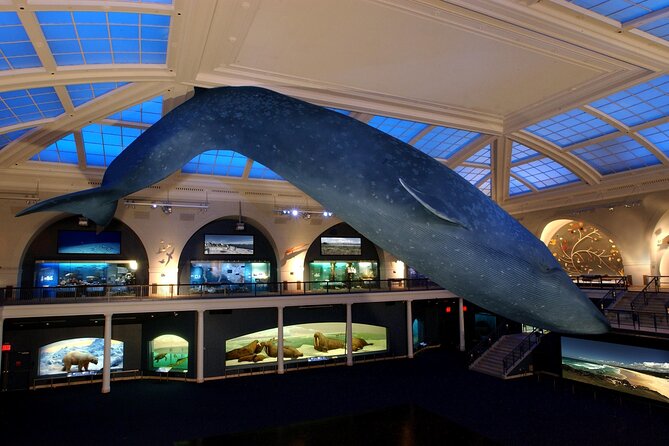
- Milstein Hall of Ocean Life with a 94-foot (29-meter) blue whale model
- Rose Center for Earth and Space for astronomy and the big picture of science
- Richard Gilder Center for Science, Education, and Innovation for hands-on style learning
- Some major extras are ticketed (so check what you want before you go)
First Stop at AMNH: What This Admission Ticket Really Gives You
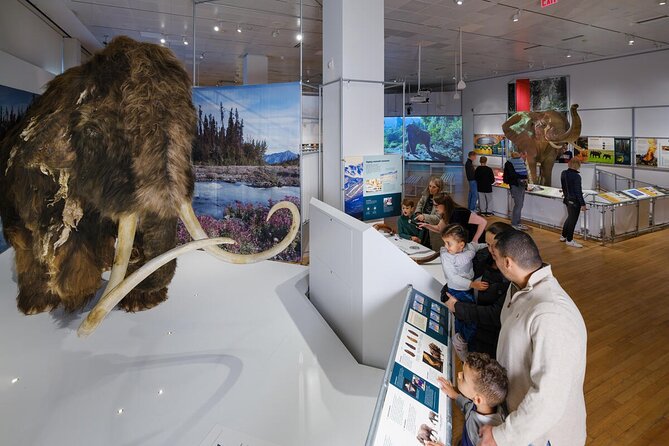
This is not a guided tour with a fixed route. It’s an admission ticket that lets you enter and explore the American Museum of Natural History on your schedule. That matters because AMNH is huge. When you can choose your own pace, you don’t feel guilty if you spend 30 minutes staring at fossils, then suddenly decide you need the rest of the day for ocean life and space.
The ticket is priced at $37 per person and is designed for roughly 3 to 4 hours of museum time. In real life, you’ll likely land somewhere on that range, or longer if you’re traveling with kids, or if dinosaurs and ocean animals are your thing. The upside is simple: you’re paying for access to dozens of galleries, not for a short, sprint-style experience.
One more practical thing: general admission includes more than 40 permanent exhibition galleries plus the Rose Center for Earth and Space and the Richard Gilder Center for Science, Education, and Innovation. That’s a lot of ground without needing advance planning for every single room.
More Museums in New York City
- NYC: 9/11 Memorial & Museum Timed-Entry Ticket
★ 4.8 · 31,428 reviews - NYC: Empire State Building Tickets – Observatory & Museum
★ 4.7 · 25,757 reviews - New York City: American Museum of Natural History Ticket
★ 4.5 · 15,447 reviews
Price and Value: Is $37 Worth It for a 3 to 4 Hour Visit?
At $37, this ticket sits in the category of “not cheap, but you’re buying a real day of entertainment and learning.” What makes the value work is the scale. You’re not just buying entry to one exhibit. You’re getting access to broad sections of the museum, including core halls that people build their whole AMNH visit around.
I also like that it’s sold with an actual time window of about 3 to 4 hours (approx.). That gives you a sense of how to plan your day. If AMNH is your main activity, you can build the rest of your itinerary around it. If it’s part of a bigger NYC plan, you still have enough time to hit the must-see areas without feeling like you’re shortchanging yourself.
One caution for value: the ticketed add-ons are not included in general admission. That can affect your budget if your group is excited about the butterfly vivarium, the giant-screen film, Invisible Worlds, or the Hayden Planetarium Space Show. You can still enjoy plenty without those, but your “total cost” might climb if you want everything.
Getting In Smoothly: Voucher to Ticket, and Why Timing Matters
The ticket experience is built around converting your voucher into an admission ticket once you arrive. In theory, that swap is quick. In practice, it’s smart to treat it like a short delay risk, because you are still going to a ticketing area on arrival.
So here’s my advice: give yourself a little buffer. If you’re arriving right at opening, you’ll usually feel better about the day, because crowds build. Also, if you’re traveling with kids or a stroller, extra waiting can feel longer than you expect. Plan to arrive with water, snacks if you need them, and comfortable shoes.
The museum is near public transportation on the Upper West Side. That’s convenient because AMNH is easier to reach than many attractions that require a long cross-town ride. Once you’re inside, pick up a paper map at the entrances, information desks, or membership desks. AMNH signage is not bad, but the museum is big enough that a map turns confusion into a plan.
The Core Experience: Your AMNH Route Through Iconic Halls
AMNH is one-stop for people who want big-scale natural history. You can focus on dinosaurs, marine life, mammals, or space and still feel like you’re seeing something complete. Here’s how I’d think about your visit once you’re inside.
Another New York City day, played differently:
- NYC: SUMMIT One Vanderbilt Experience Ticket
★ 4.7 · 37,985 reviews - NYC: Empire State Building Observation Deck Tickets
★ 4.7 · 22,072 reviews - NYC: Edge Observation Deck Admission Ticket
★ 4.6 · 20,918 reviews - New York City: Statue of Liberty & Ellis Island with Ferry
★ 4.6 · 18,683 reviews
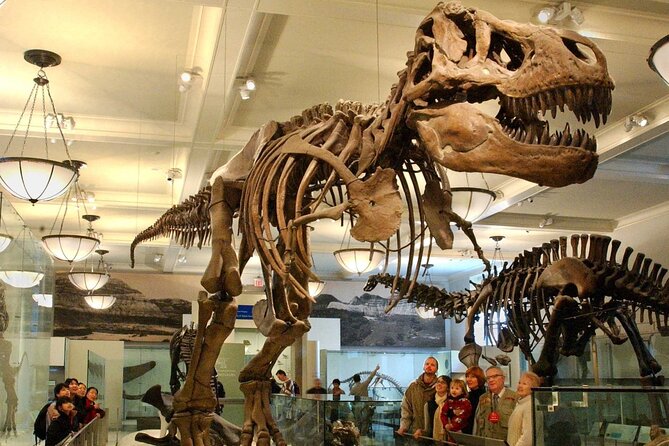
Hall of Saurischian Dinosaurs, T. rex Energy First
If you only have a short window, start with dinosaurs early. The most iconic highlight here is the Tyrannosaurus Rex skeleton in the Hall of Saurischian Dinosaurs. This is the room that pulls everyone in, including teenagers who swear they are not museum people.
Why it works early: you’ll be more energized and the room is easier to enjoy when you’re not fighting crowds. Also, it helps your brain “commit” to the theme of the day, because dinosaurs connect to evolution, geology, and deep time.
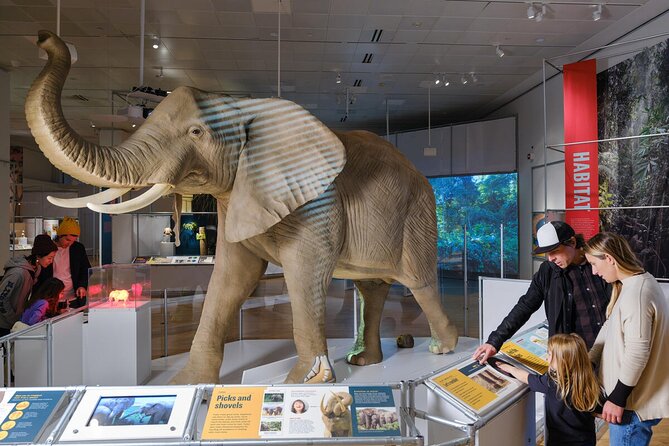
Akeley Hall of African Mammals, Asian Elephants and Big Frames
Next, shift from the roar of ancient predators to the presence of living animals. Look for the Asian elephants at the Akeley Hall of African Mammals. Even if you’ve seen elephants before, the way AMNH presents them creates a different feeling. It’s not just an animal encounter. It’s scale, anatomy, and how museums turn natural history into something you can understand in a single glance.
If you’re traveling with kids, this is a helpful mid-visit anchor. You go from one “wow” to another without needing to think too hard about your route.
Milstein Hall of Ocean Life, the 94-Foot Blue Whale
Then go to the ocean side of things. The Milstein Hall of Ocean Life includes a 94-foot (29-meter) blue whale model. It’s the kind of exhibit that makes you stop walking. You end up standing there for a while, looking up and around, because it doesn’t feel like a small display. It feels like an event.
This is also a good place for a mental reset. By the time you reach ocean life, your group might be ready for a slower, more visually calming experience than the dinosaur galleries.
Rose Center for Earth and Space, Where Science Gets Bigger
AMNH’s space component is the Rose Center for Earth and Space. This is where the museum’s “from the universe to the planet” theme becomes real. Even if you don’t do the planetarium add-on, the Rose Center is built to help you connect astronomy and Earth science.
If your group includes kids who love stargazing, this portion can be a highlight even without the Hayden Planetarium Space Show. If you already know you want that planetarium experience, decide before you go so you can plan for the extra ticket.
Richard Gilder Center, Science Learning in Motion
The Richard Gilder Center for Science, Education, and Innovation rounds out the day by giving you another style of learning. AMNH is not just about looking at objects behind glass. It includes spaces that support curiosity and science thinking, so you’re not only reading labels.
This is a good area to visit when your legs start to feel heavy. You can move at your group’s speed, pause when something catches your attention, and keep the experience fun instead of turning it into homework.
What’s Included vs. What’s Not: The Ticketed Extras That Can Change Your Plan
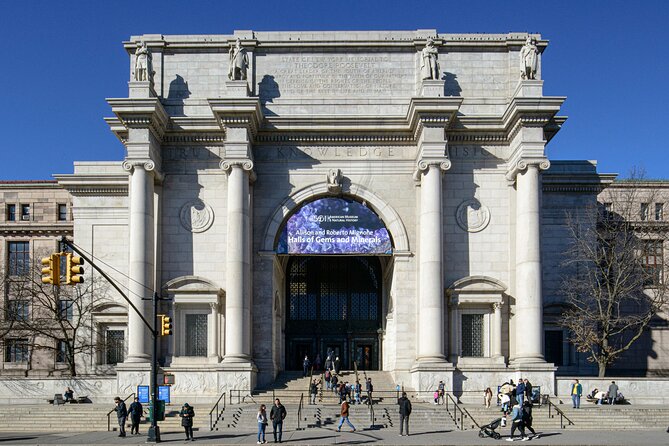
General admission covers more than 40 permanent galleries and the Rose Center plus the Richard Gilder Center. But it does not include several ticketed experiences, including:
- Invisible Worlds
- the butterfly vivarium
- the giant-screen film
- the Hayden Planetarium Space Show
This matters because people often build their expectations around those signature experiences. If you know you want one of them, treat it as an optional upgrade, not a surprise. If your group is flexible, skip them and enjoy the main halls with your ticket and time you already paid for.
One more note: some exhibits may be partially closed for refurbishing depending on the day. I’d build your plan around the main headline rooms and not around a single “perfect” itinerary that requires every exhibit to be open.
How Long Should You Spend: 2 Hours, 3 Hours, or a Full Day?
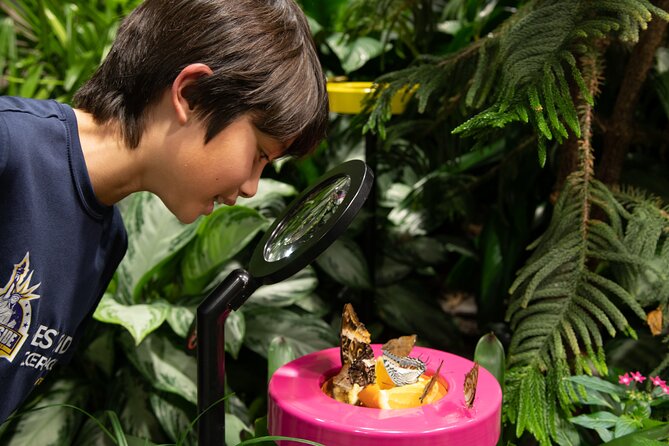
The ticket is designed for about 3 to 4 hours, and that’s a solid target for most people. In my mind, there are two realistic AMNH styles.
1) Hits and highlights (2 to 3 hours): You focus on a few top galleries, like dinosaurs, ocean life, and space, then call it a win.
2) Comfortable tour (3 to 4 hours): You see several big halls plus time to wander and follow your curiosity.
3) Full-day museum mode (4+ hours): You take breaks, slow down, and cover more of the smaller exhibits.
If you’re traveling with kids or a stroller, longer visits can be easier than you think, but the museum’s floors are busy and mostly not “quick-walk” surfaces. In other words, plan for walking and for frequent pauses.
Also, the museum is sometimes busy even early. Crowds can rise fast, so starting early can help you keep the visit enjoyable.
Navigating the Big Building: Maps, Signage, and Stroller-Friendly Reality

AMNH is famously large. Even with a map, you may feel like you’re turning corners and walking more than you expected. A theme in people’s experiences is that it can feel confusing, with signs that do not always guide you as directly as you’d like.
My suggestion is simple:
- Pick up a paper map right away.
- Choose your top 3 must-see areas before you start moving.
- Use the map to connect those areas, instead of trying to “randomly explore” from room to room.
Strollers and accessibility are generally workable. It’s a very family-friendly setting, and you’ll see families moving through the galleries. Still, expect lots of walking, and expect the day to feel physically real. The museum has hard floors and lots of them, so comfy shoes matter.
Food and Breaks: The Reality Check for Kids and Adults
If you have young kids, you will appreciate having built-in breaks. The museum includes a food court, and it can be a lifesaver when everyone is hungry at the same time. It’s also useful if you need gluten-free options, since some people have found gluten-free items like pizza and brownies available there.
Even if you do not need special meals, plan to pause once or twice. This prevents the classic “we’ve only seen half the museum, but everyone is done” situation.
Who This Works Best For
This ticket is a great fit for:
- Families who want a fun, educational outing that can keep kids interested
- Couples who like science and want a major NYC attraction that rewards time
- Teenagers and older kids who enjoy big exhibits and recognizable subjects like dinosaurs and marine animals
- Anyone who prefers self-paced sightseeing over a strict tour schedule
If your group wants an all-in, high-touch experience, you might feel better with a guided approach. But for most visitors, the self-guided structure is exactly what you want at AMNH, because everyone’s priorities differ.
Should You Book This AMNH Admission Ticket?
I’d book it if you want a flexible admission into one of NYC’s biggest natural history destinations, and you’re aiming for a 3 to 4 hour visit that you can shape around your group. The price is reasonable given the number of core galleries and the inclusion of the Rose Center and Richard Gilder Center.
I’d think twice if your top priority is the ticketed add-ons, since general admission does not include the planetarium space show, giant-screen film, or the butterfly vivarium. Also, keep in mind that you may still need time to swap your voucher for a ticket when you arrive, which can affect your first hour.
If you want an easy, high-impact NYC day with major highlights like the T. rex skeleton and the blue whale model, this is a smart, practical choice.
FAQ
How long is the American Museum of Natural History admission valid for?
The experience is listed for about 3 to 4 hours (approx.).
What is included with this admission ticket?
General admission includes access to more than 40 permanent exhibition halls, the Rose Center for Earth and Space, and the Richard Gilder Center for Science, Education, and Innovation.
What is not included in general admission?
Ticketed exhibitions are not included, including Invisible Worlds, the butterfly vivarium, the giant-screen film, and the Hayden Planetarium Space Show.
Where is the museum located?
The museum is on the Upper West Side of Manhattan in New York City.
Do I need to convert a voucher into a ticket?
Yes. You’ll need to convert your voucher into an admission ticket.
Is there a map available once I arrive?
You can get a paper map at the museum entrances, information desks, and membership desks.
Is the attraction family-friendly?
Yes. It is described as family-friendly and suitable for kids.
Are service animals allowed?
Yes, service animals are allowed.
Are there any age-based admission details?
Children under 3 qualify for waived admission fees.
What is the cancellation policy?
Free cancellation is available. You can cancel up to 24 hours in advance for a full refund. If you cancel within 24 hours of the start time, you will not receive a refund.
More Historical Tours in New York City
- NYC: Starship Landmark 90 Minute Sightseeing Cruise
★ 4.6 · 3,666 reviews - Starship Landmark 90 Minute Sightseeing Cruise
★ 4.5 · 2,073 reviews - Top Rated Brooklyn Half-Day Food, History & Culture Tour via bus
★ 5.0 · 758 reviews - History and Hauntings of Salem Guided Walking Tour
★ 5.0 · 14,564 reviews
Reviewed most recently around New York City
- The Museum of Modern Art Admission Ticket★ 4.5 · 735 reviews
- Philadelphia and Amish Country, 1-Day Tour from NYC★ 4.0 · 734 reviews
- Top Rated Brooklyn Half-Day Food, History & Culture Tour via bus★ 5.0 · 758 reviews
- NYC: Woodbury Common Premium Outlets Shopping Trip★ 4.2 · 761 reviews
- Madame Tussauds New York City Admission Ticket★ 4.5 · 766 reviews
- New York City: Private Walking Tour with a Local★ 4.6 · 771 reviews
- Central Park Guided Walking Tour★ 5.0 · 774 reviews
- NYC: Woodbury Common Premium Outlets Shopping Round Trip Service★ 4.0 · 784 reviews
Historical Tours, compared.


History and Hauntings of Salem Guided Walking Tour
Read our review →
Charleston’s Old South Carriage Historic Horse & Carriage Tour
Read our review →

Big Island in a Day: Volcanoes Waterfalls Sightseeing and History
Read our review →
Freedom Trail History Small Group Walking Tour
Read our review →
Historic Charleston Guided Sightseeing Walking Tour
Read our review →
Starship Landmark 90 Minute Sightseeing Cruise
Read our review →Browse the lists this tour appears in