
Reviewed · WALKING TOURS
San Francisco LGBTQ Walking Tour with Local Guide
San Francisco’s Castro is one of those neighborhoods where you can feel the past and present at the same time. This 2-hour LGBTQ walking tour is interesting because it turns famous street corners into a clear story of rights, resistance, and community pride, guided by local educator Kathy.
I especially love how you get both the big-name landmarks and the smaller memorial details that make the meaning stick. I also like the human pace and feel, with a max group size of 2 travelers, so you can ask questions instead of shouting over a crowd.
One possible drawback: this is a walking tour, and while public walkways are wheelchair accessible, you will still spend about two hours on your feet and in and out of the flow of the neighborhood.
Key things I found most memorable
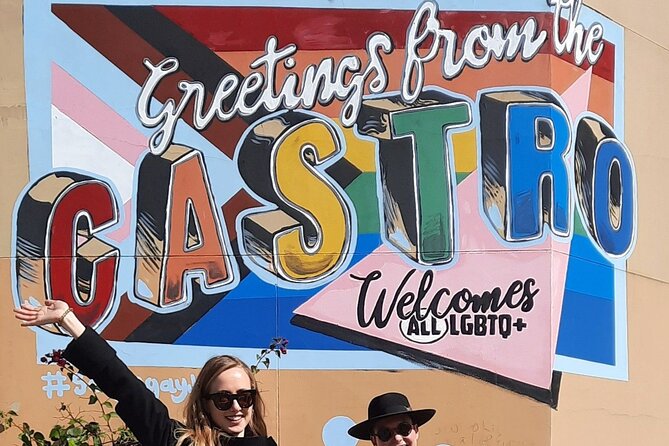
- Kathy’s local, long-time perspective on the Castro, delivered with humor and real stories
- Harvey Milk stops that connect one life to national change, including his campaign headquarters turned community space
- Memorials you can actually see, including the Pink Triangle Memorial Park and Rainbow Honor Walk Project
- AIDS Quilt Names Project original site, tied to remembrance and urgency rather than just sightseeing
- Small group format that keeps the tour personal, not rushed
Walking the Castro with a long-time local guide named Kathy
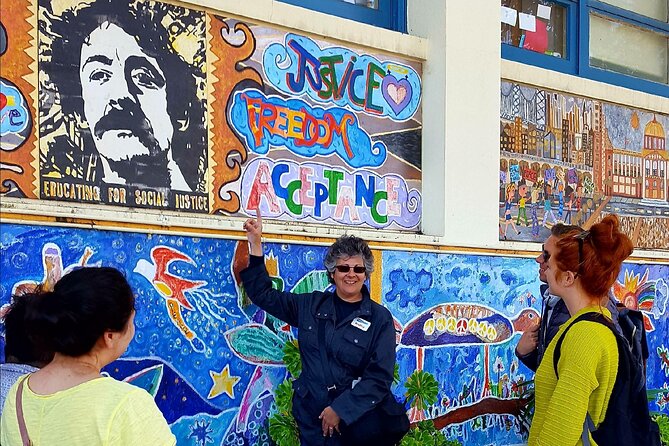
If you like your travel with context, this tour is a smart choice. The Castro can look like it’s all parties and rainbow signage, but the guide storyline keeps you grounded in why the neighborhood became what it is. You are not just looking at walls and buildings, you are learning what those places meant when the community needed them most.
The biggest reason this tour works is the guide, Kathy. Based on the feedback and the way she’s described, she brings three things you cannot fake: neighborhood familiarity, a clear sense of timeline, and a tone that stays welcoming even when the subject matter gets serious. She is also known for being funny without turning history into a joke, which matters on tours like this.
And because it is a mobile ticket experience offered in English, it is easy to show up and get moving without extra faffing. Once you meet at the start point, you are walking.
More Walking Tours in San Francisco:
- North Beach & Little Italy Walking Tour: Food, History & Flavor
★ 5.0 · 1,044 reviews - San Francisco Chinatown Walking Tour
★ 5.0 · 778 reviews - Chinatown Walking Tour: Food, History & Flavor
★ 5.0 · 575 reviews
Start at 400 Castro St, then settle into a comfortable neighborhood rhythm
You meet at 400 Castro St and end back at 400 Castro St, so you do not have to plan a second leg of transportation. The start time is 10:00 am, and the tour runs about 2 hours total.
The pace tends to feel manageable because the stops do a lot of the work for you. Instead of nonstop walking, the tour breaks the experience into short pauses where the guide can point, explain, and connect dots. Several people note that the walk does not feel like a grind, and that matches how this kind of tour should be. You want to absorb the meaning, not just rack up steps.
Also, the tour has a maximum of 2 travelers. That small group size is a big deal. You get a more conversational experience, and the guide can adjust to how much detail you want. If you like asking follow-up questions, this is one of the best setups in San Francisco.
Castro Theatre and the neighborhood story you can see with your own eyes
One of your early moments is the Castro Theatre, described as Spanish Colonial Baroque architecture. Even if you are not an architecture person, it is a useful anchor. You are in the middle of a real neighborhood, and this building helps explain how cultural spaces in the Castro have long been part of community life.
From there, you learn how the district got its name. That might sound like a trivia moment, but it matters because neighborhood identity is never just a label. A name can signal history, power, and the way people claim space. In a place like the Castro, the guide keeps connecting the physical neighborhood to the social story.
This is also where you get the tour’s overall tone: it’s both celebratory and honest. The guide frames LGBTQ culture and diversity alongside the fact that civil rights were not equal, and that the struggle shaped what you see today.
Harvey Milk Plaza: the lesson behind the rainbow flag
Next up is Harvey Milk Plaza. This stop is important because it gives you a clear biographical path into the political side of LGBTQ history. You learn how Harvey Milk arrived in San Francisco and became the first openly gay male politician to serve public office in the United States, and how he functioned as a civil rights activist.
The guide also explains how the rainbow flag was created. That’s a great moment to pay attention, because the flag can feel like pop culture now. On this tour, you get the deeper angle, why symbols matter when policies and protections lag behind people’s lived reality.
Even if you already know a few Milk facts, this stop helps you connect symbolism to strategy. Activism is not only about protests, it is also about building visibility that pushes decision-makers.
Stack these San Francisco options against each other
- Big Bus SF: Hop-on Hop-off Tour with 17 Stops and Sunset Option
★ 4.0 · 4,539 reviews - Napa and Sonoma Wine Country Full-Day Tour from San Francisco
★ 4.5 · 4,455 reviews - Small Group Yosemite and Giant Sequoias Day Trip from San Francisco
★ 5.0 · 3,671 reviews - San Francisco: Hop-On Hop-Off Sightseeing Tour with 17 Stops
★ 4.5 · 3,600 reviews
The Milk campaign story continues at the HRC Action Center and Store
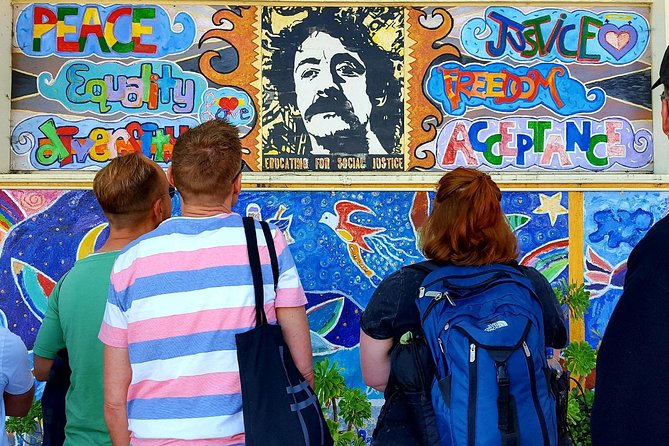
From Harvey Milk Plaza, you move to Human Rights Campaign Action Center and Store, which is described as Harvey Milk’s original camera shop and campaign headquarters and his resident area. That combination is powerful. You are not looking at a museum display. You are standing at a place that was tied directly to organizing and daily life.
Today, it operates as the HRC Action Center and Store, which gives the tour a forward-facing thread. The guide uses this stop to talk about how LGBTQ people still do not have equal rights in areas like employment, housing, and public accommodations.
That framing is one reason this tour feels worth doing even if you have seen a few queer-history photos online. You leave with a sense that the story is not locked in the past. It continues, and that is exactly what makes memorial sites so meaningful.
One practical tip: this is typically a shorter stop, so listen closely. The guide’s best detail here is the connection between place, purpose, and what still needs fixing.
Memorial stops that make the history feel personal, not abstract
This tour leans hard into remembrance, and it does it in a way that stays grounded. You see multiple memorial and remembrance projects, and each one highlights a different part of the LGBTQAI+ experience: visibility, honor, and the human weight of loss.
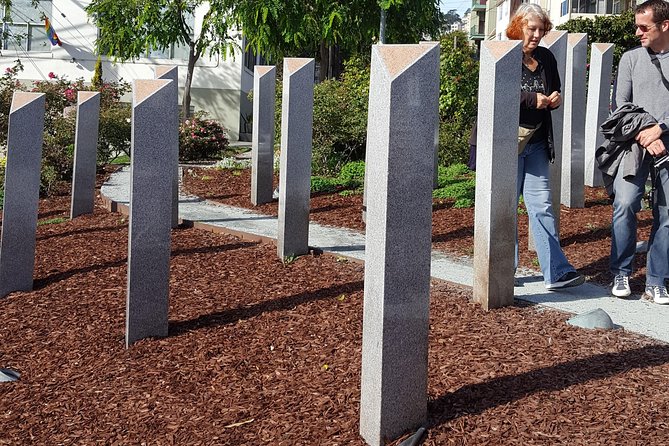
Pink Triangle Memorial Park
You visit Pink Triangle Memorial Park. The pink triangle is a widely recognized symbol linked to persecution, and seeing it in person helps you understand why it became a tool for remembrance and education. The guide’s narrative makes the stop more than a landmark photo.
Rainbow Honor Walk Project
You also stop at the Rainbow Honor Walk Project. This is where you learn to look down and around. People often assume they will get sweeping “big picture” history on tours like this. Instead, this stop rewards attention. It turns public space into a record of people who helped move the community forward.
AIDS Quilt Names Project original site
Another major stop is the AIDS Quilt Names Project original site. If you have never stood near a quilt display before, it can be hard to fully grasp the scale and emotional impact. The value here is that the tour ties remembrance to action: the quilt is not just art, it is accountability and memory, naming people so they are not erased by time.
How all these stops work together
These memorial stops create a chain. Symbol, honor, and names. You start to see the pattern: activism preserves dignity, and remembrance preserves momentum. It’s moving, but it is also practical, because it makes you think about how communities keep history alive when institutions fail.
What you take away about activism in the Castro
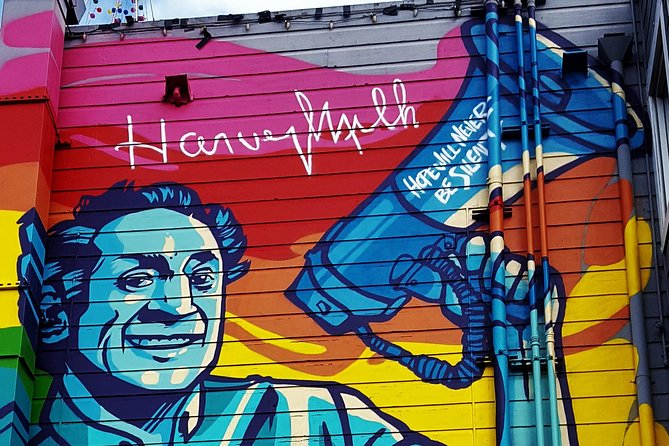
By the time you finish, you should feel like you understand why the Castro became an epicenter of LGBTQ activism and events. The guide links local landmarks to bigger themes: visibility, political action, community building, and the ongoing fight for equal rights.
I like that the tour also handles the present reality. One person-centered detail that stands out in the way the tour is described is how the guide keeps the message relevant without turning it into a lecture. You get inspiration, but you also get a sober reminder that rights do not automatically keep up with visibility.
You will likely notice how the neighborhood itself functions like an exhibit. Signs, buildings, memorials, plazas. Instead of reading about activism from a book, you are learning it where it happened and where it still matters.
And because the group is tiny, you can bring your own questions into that flow. If you are curious about particular people, symbols, or how activism shifted over time, you can ask without feeling like you are interrupting a parade of strangers.
Price and logistics: how $40 holds up in San Francisco
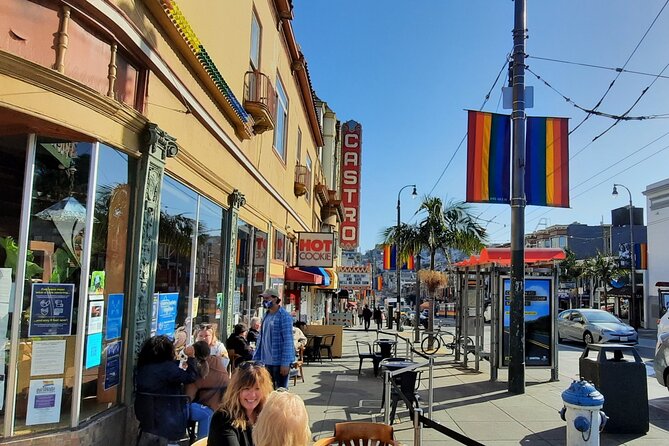
At $40 per person, this tour is priced in a way that feels fair for what you are getting. Two hours of guided storytelling in a historic neighborhood is already a decent value. The bigger value perk is the small group cap of 2 travelers, which usually means better attention and less wasted time.
You also get admission tickets included for the scheduled entry-linked stops, and the overall experience includes a local guide throughout. That matters in a city where guided experiences can easily become “pay for a walk and a photo.” Here, the guide’s narrative is clearly the product.
It is also offered in English, which is helpful for planning if you want to focus on content rather than translating every detail. The tour runs rain or shine, and since you are outdoors for much of it, you will want to dress for San Francisco weather, not for what the morning sky promises.
Who this Castro walk is best for
This is a great fit if you want LGBTQ history that is grounded in specific places. You do not need to be an expert. In fact, this tour is ideal for first-timers because it gives you a usable mental map of the Castro, plus the meaning behind the landmarks.
It also works well for repeat visitors. Even if you have seen the Castro before, you will likely learn new connections and new reasons to look at familiar corners. The guide’s long-time resident approach helps with that.
Families might also enjoy it, based on the feedback about how accommodating and engaging the guide can be. Just note that it is still a story that touches on real discrimination and the AIDS crisis, so it is better for kids who can handle that kind of learning in an age-appropriate way.
Should you book this Castro LGBTQ walking tour?
Book it if you want a guided, place-based understanding of the Castro, especially through the lens of Harvey Milk and the memorial projects like the Pink Triangle Memorial Park and Rainbow Honor Walk. The combination of Kathy’s local perspective, a small group size, and a tight two-hour format makes it feel efficient without feeling rushed.
Skip it only if you are looking for a purely social neighborhood walk with minimal political content. This tour connects culture to civil rights, and it does not pretend those threads are separate. If that sounds like what you want from San Francisco, you will get exactly that.
FAQ
What is the duration of the San Francisco LGBTQ walking tour?
The tour lasts about 2 hours.
Where do I meet for the tour, and where does it end?
You meet at 400 Castro St, San Francisco, CA 94114 and the tour also ends at 400 Castro St.
What time does the tour start?
The listed start time is 10:00 am.
Is the tour offered in English?
Yes, the tour is offered in English.
Does the tour run in bad weather?
The tour operates rain or shine.
Is the tour wheelchair accessible?
The tour uses public walkways that are wheelchair accessible.
Reviewed most recently around San Francisco
- San Francisco Premier Dinner Dance Cruise★ 4.0 · 384 reviews
- A Magical Night with the San Francisco Mentalist: Jay Alexander★ 5.0 · 384 reviews
- 2-Hour Sunset Sail on the San Francisco Bay★ 5.0 · 392 reviews
- 1.5-Hour San Francisco Bay Sailing Tour★ 5.0 · 393 reviews
- Alcatraz Island Prison Tour & Bay Cruise Combined Package★ 4.6 · 399 reviews
- San Francisco: Half-Day Wine Country Excursion with Tastings★ 4.3 · 409 reviews
- Yosemite National Park 2-Day Tour from San Francisco with Lodging★ 4.5 · 412 reviews
- San Francisco: Hop-On Hop-Off Deluxe Bus Tour with 20 Stops★ 3.7 · 425 reviews
Walking Tours, compared.
History and Hauntings of Salem Guided Walking Tour
Read our review →
New Orleans Premier Ghost, Voodoo and Vampire Walking Tour
Read our review →
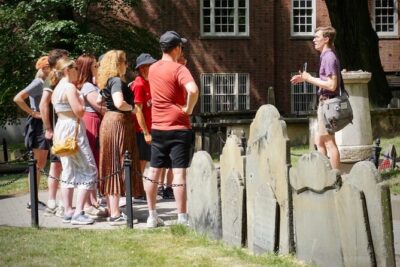
Freedom Trail History Small Group Walking Tour
Read our review →
Historic Charleston Guided Sightseeing Walking Tour
Read our review →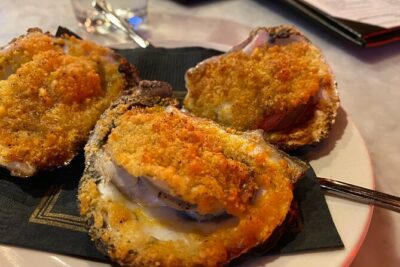
New Orleans Food Walking Tour of the French Quarter with Small-Group Option
Read our review →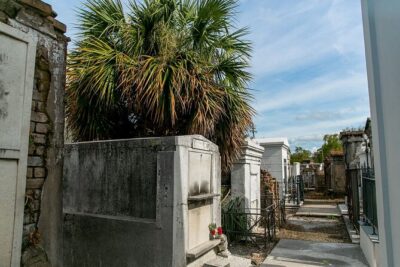
St. Louis Cemetery No. 1 Official Walking Tour
Read our review →Browse the lists this tour appears in