
Reviewed · HISTORICAL TOURS
San Antonio Missions UNESCO World Heritage Sites Tour
San Antonio Missions are interesting in a very specific way: they sit close together, but each one feels different, so you can see how a whole religious and water system worked as it evolved. I like that this tour keeps you moving efficiently, without turning it into a frantic checklist. I especially like the small group size, plus the kind of storytelling you get from guides such as Domingo and Alex, who clearly know their way around the sites.
My favorite part is that you get hotel pickup and drop-off and you visit the big hitters fast, including Mission San Jose for its baroque church and film, and the irrigation story at Mission San Juan and the Espada Aqueduct. The one drawback to plan for is heat and walking: reviews mention it can get hot, so bring water and sunscreen and wear shoes you can trust.
If you want a relaxed, guided overview that hits the UNESCO highlights in one morning, this fits. If you’re hoping for an in-depth, linger-at-every-stone kind of day, you may want to add extra independent time on your own after the tour.
Key things I’d circle on your map
- Hotel pickup in select downtown hotels, so you skip the hassle of figuring out rides across multiple stops
- Four missions plus Espada Aqueduct, with short, well-paced time blocks so you actually see things
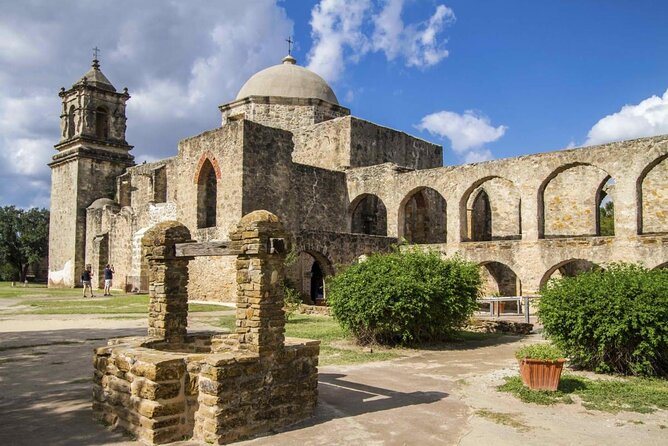
- Mission San Jose includes baroque architecture and an award-winning film, not just exterior photos
- Irrigation is the theme, with Mission San Juan and the Espada Aqueduct showing how water shaped life
- Small group max of 12 travelers, which helps keep questions from getting lost
- No guided Alamo tour included, though you can choose to be dropped near it at the end
Why this UNESCO missions day works (and why it is not just sightseeing)
San Antonio’s missions are UNESCO for a reason, but the part you feel when you visit is how practical everything was. These sites were not built as museum props. They were part of daily life, with churches, farms, and irrigation systems working together. This tour is designed to show you that in a short time window, and that makes it a smart value for your day.
For $75 per person and about 3 hours 30 minutes, you are paying mostly for two things. First, the driver-guide does the heavy lifting, turning each stop into a story you can remember. Second, the route prevents you from spending half the day in transit between distant points. With small-group size capped at 12, you are less likely to feel herded.
The tour is also built around free admission at the stops you visit. That matters because the missions are popular, and it is easy to overpay when you are stacking separate tickets and separate guides. Here, the ticket situation is simple, and the guide narration is the “premium” you are really buying.
More Historical Tours in San Antonio:
- San Antonio Haunted History Ghost Tour
★ 4.5 · 771 reviews - New York City: American Museum of Natural History Ticket
★ 4.5 · 15,447 reviews - History and Hauntings of Salem Guided Walking Tour
★ 5.0 · 14,564 reviews
The nuts and bolts: timing, group size, and what to expect on the ground
The tour runs about 3 hours 30 minutes. It is a mix of guided stops and short walks on-site, with recorded and live narration. The schedule is tight enough to cover four missions plus key irrigation elements, but it is not a sprint.
You get mobile tickets, and you can expect confirmation at booking time. Service animals are allowed, and the tour is near public transportation. The physical demand is described as moderate, and some reviews point out the outdoors can be hot, so plan like it is daytime walking.
Also, a small but important detail: this is scheduled to be maximum 12 travelers. That tends to make a real difference. You can ask a question and still keep the group moving.
Mission Concepcion: original frescos and a quick but meaningful first stop
Stop 1 is Mission Concepcion. You get about 25 minutes, and admission is free. The big draw here is the chance to see the original frescos, then walk the grounds while your guide explains what you are looking at.
Why it works as a first stop: it sets the tone. Instead of starting with architecture trivia, you begin with art and faith on the mission grounds, then build outward into the bigger story of how these sites functioned. Even if you are not an art person, the frescos help you understand that people were working, praying, and living inside these spaces, not just visiting them later.
A consideration: the time is short. If you want to study every detail, you will likely want to come back on your own later. For most people, though, it is a great opener.
Mission San Jose: baroque architecture, a film, and mission life in context
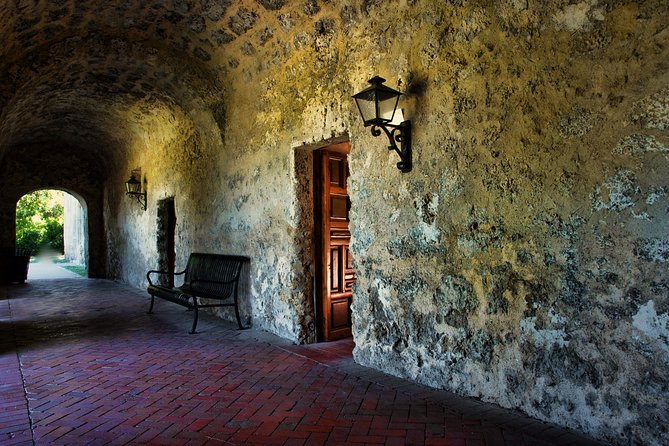
Stop 2 is Mission San Jose, and this is where the tour gives you more time, about 1 hour. Admission is also free. The stop is built around mission life and the nomadic hunters and gathers, plus time to explore the church and grounds.
This is also the stop with the most “I can picture it” payoff. The itinerary calls out one of the finest examples of baroque architecture, and the tour includes an award-winning film. That film piece is surprisingly helpful because it bridges the gap between what you see on-site and what those buildings meant in daily life.
If you like architecture, this will be your anchor stop. If you care about context, it also helps. You see how the mission community was organized and how different groups and lifestyles connected to the mission world.
One practical tip from reviews: some guides use tools like an iPad to show images of structures before reconstruction, and to explain what was original and what was restored. That visual comparison can make your walk through the church and grounds feel more three-dimensional, even when you are short on time.
Mission San Juan and the irrigation lesson you will actually remember
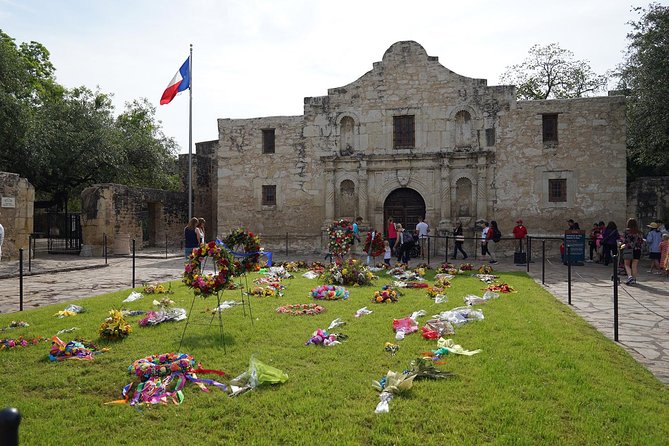
Stop 3 is Mission San Juan, about 10 minutes. Admission is free. The focus here is irrigation and agriculture.
Why this matters: most mission visits focus on the church first, but water is what made farming possible, and farming is what supported the mission community. This stop is short on purpose, so you get the irrigation theme without losing the rest of the route.
A quick watch-out: because it is only 10 minutes, it is not the place to try to read every sign. Treat it like a focused highlight, then look for the water-related details your guide points out so you leave with a concept, not just photos.
The Espada Aqueduct: the 5-minute waterworks moment
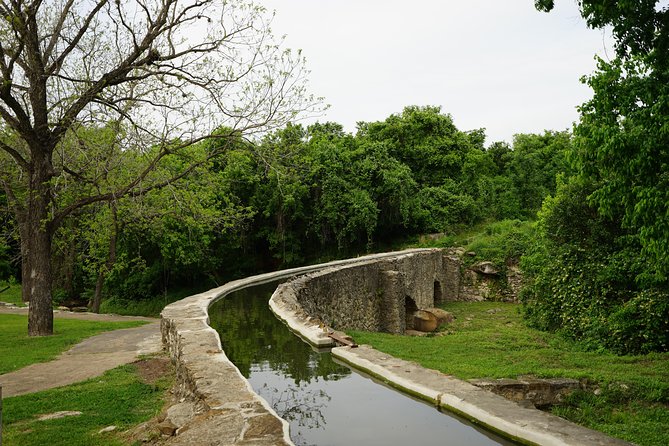
Stop 4 is The Espada Aqueduct, about 5 minutes. Admission is free. This is where you see the irrigation system that helped water the mission lands.
Five minutes sounds brief, but it is effective here. The aqueduct is the visual proof of the irrigation story. You get the key view, you understand what it did, and you move on. If you spend too long here, you might lose energy for Mission Espada, which finishes the guided circuit.
If you are the type who loves technical details, you will likely enjoy the way the guide connects this aqueduct to agriculture and daily life. If you are more “show me the vibe” on a trip, it still works because the structure is easy to recognize and quick to photograph.
Mission Espada: church and grounds to close the mission circuit
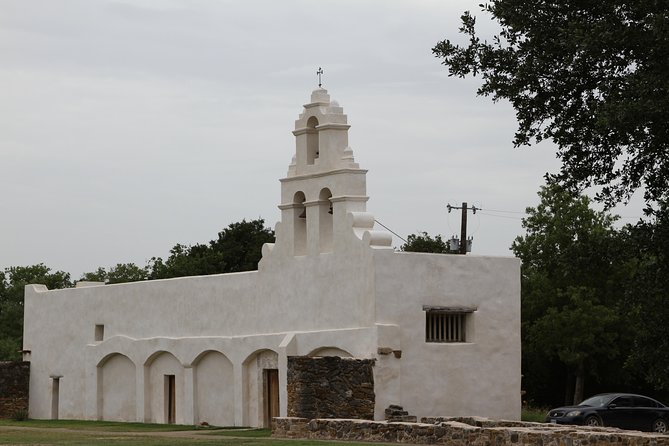
Stop 5 is Mission Espada, about 10 minutes, admission free. You explore the church and grounds, and this stop helps round out the tour’s message: these places were religious centers, yes, but also were physical workplaces tied to land and water.
The time at Espada is shorter than San Jose and Concepcion, but it functions like a landing pad. You have already learned about frescos, baroque architecture, nomadic connections, agriculture, and irrigation. Now you get a final look at a mission church space and grounds to tie those pieces together.
If you are thinking about photos, this is often where you will want your camera ready. The prior stops build your attention, so you tend to notice small details more at the end.
La Villita and Alamo Plaza: local flavor around the mission core
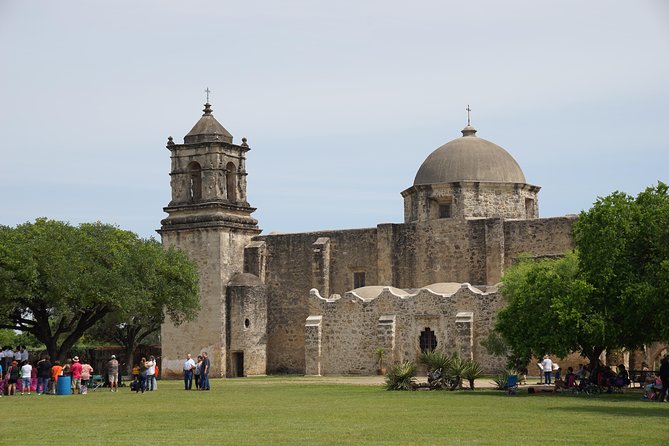
Even though the guided mission stops are the heart of the day, the tour also includes time in the general downtown area, including La Villita Historic Arts Village and Alamo Plaza. In plain terms, this helps you avoid ending the tour feeling like you only saw churches and walls.
La Villita is a good spot to reset your brain after outdoor walking. Alamo Plaza gives you a sense of where everything is anchored in San Antonio’s tourist and civic geography. It is not just “more stops,” it is context for where these missions sit today.
The Alamo choice at the end: what is included and what is not
Near the end, you listen to the founding of Mission San Antonio de Valero and learn about the Battle of the Alamo. Then comes your choice: your last stop is either your downtown hotel or the Alamo itself.
Important: a guided tour of the Alamo is not included. The Alamo uses its own tour guides, or you can do it self-guided. So plan for the missions portion of your guided time, then treat the Alamo as an optional add-on after.
This setup is practical because it prevents the day from running long. It also gives you flexibility. If you want history without extra walking, take the hotel drop. If you want to see more, go to the Alamo.
Value check: $75 and what you are really paying for
Price is $75 per person. That is not an impulse buy if you only care about one building. But if your goal is to understand the UNESCO site as a system, the value starts to make sense.
You get:
- Multiple missions in one day rather than separate trips
- A guide with live and recorded narration, plus the kind of added detail that shows up in reviews, including local context and photo tips
- Hotel pickup and drop-off at select downtown hotels, which can save time and hassle
- Free admission for the mission stops you visit
The biggest value is the “interpretation.” At a mission, it is easy to see stone and assume you know the story. A good guide makes it click, especially with the irrigation theme. You leave with a mental map that is more than a set of pictures.
If you are visiting for a short time and you do not want to rent a car or coordinate transit, this tour also saves decision fatigue. You show up, you learn, and you get out with a coherent understanding.
Pace and comfort: relaxed enough to enjoy, structured enough to finish
One of the most consistent things in the feedback is that the pace feels right. You get enough time to soak in each site without it turning into a full-day slog. You also get some free time built in for things like photos and visitor center stops, which helps if you want to slow down for a moment without losing the group.
Still, it is not a sit-down all day. The moderate physical fitness note, plus the repeated reminder to bring water and sunscreen, tells you this is outdoors time with short walks. If you are sensitive to heat, go prepared and take the shade when you can.
Who this tour suits best
This is a great fit if you:
- Want a guided overview of the UNESCO missions without dealing with multiple self-guided stops
- Like history that connects buildings to daily life, especially water and farming
- Prefer small-group tours where you can ask questions and get answers
- Are short on time and want to see four missions plus irrigation highlights in one morning
It may not be ideal if you:
- Need a long, unhurried visit at a single mission
- Want a fully guided Alamo experience as part of the package
- Expect to do minimal walking and minimal outdoor exposure
Quick planning tips so your day feels easy
Bring water. Reviews explicitly mention the heat factor. Wear sunscreen and a hat if you handle sun exposure poorly.
For the sites themselves, wear shoes that work on uneven outdoor ground. The walking is described as mild, but mission grounds are not like smooth indoor floors.
If you care about photo angles, you will likely find it useful to ask your guide for photo tips. Some guides in this program are known for knowing where the best shots are and helping the group with photos.
Should you book this San Antonio Missions UNESCO Tour?
I think you should book it if your priority is getting the mission story in one efficient, guided morning. The combination of hotel pickup, a small group, and a route that hits Mission Concepcion, Mission San Jose, Mission San Juan, Mission Espada, plus the Espada Aqueduct is exactly what many first-time visitors need.
If you are the type who enjoys learning the “how did life work here” side of history, the irrigation focus is a big win. And if you want a simple add-on at the end, the Alamo option gives you flexibility without forcing extra guided time.
Book it with eyes open for the main tradeoff: it is outdoors and it is not a long-stay tour. Bring what you need for comfort, and you’ll get a clear, memorable overview of why these missions earned UNESCO status.
FAQ
How long is the San Antonio Missions UNESCO World Heritage Sites tour?
It runs about 3 hours 30 minutes.
What missions are included on the tour?
You visit Mission Concepcion, Mission San Jose, Mission San Juan, and Mission Espada, plus a stop at the Espada Aqueduct.
Is admission included for the mission sites?
Yes. The tour includes admission tickets for the listed mission stops, and the itinerary notes free admission for each.
Do I get hotel pickup and drop-off?
Yes, pickup and drop-off are included at select downtown hotels.
Is an Alamo tour included?
No. The Alamo tour is not included. You can be dropped near the Alamo, where you can use their own guides or go self-guided.
What is the group size?
The tour has a maximum of 12 travelers.
Reviewed most recently around San Antonio
- San Antonio Haunted History Ghost Tour★ 4.5 · 771 reviews
- San Antonio Premium City Tour with Alamo & River Walk Cruise★ 4.5 · 943 reviews
- The Haunted Ghost Bus Tour in San Antonio★ 4.5 · 971 reviews
Historical Tours, compared.
History and Hauntings of Salem Guided Walking Tour
Read our review →
Charleston’s Old South Carriage Historic Horse & Carriage Tour
Read our review →

Big Island in a Day: Volcanoes Waterfalls Sightseeing and History
Read our review →
Freedom Trail History Small Group Walking Tour
Read our review →
Historic Charleston Guided Sightseeing Walking Tour
Read our review →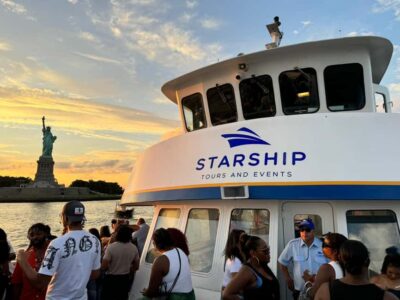
Starship Landmark 90 Minute Sightseeing Cruise
Read our review →Browse the lists this tour appears in