
Reviewed · WALKING TOURS
ORIGINAL Old Louisville Walking Tour seen in The New York Times!
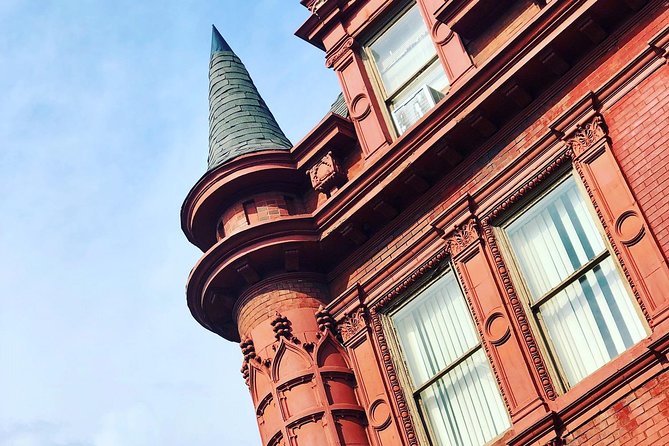
Old Louisville has one of those street-level histories that feels both grand and odd. You get Victorian architecture and neighborhood lore in the same walk, so the area doesn’t stay stuck in textbooks.
Two things I like a lot: first, the small, guided pacing makes it easier to absorb details without rushing, and second, you cover famous landmarks like St. James Court and Millionaires Row so you leave with a map in your head, not just photos.
One possible drawback to plan around: the route starts in a transitional area, and it is not a sit-and-see tour. You need to be able to walk about 90 minutes without a bathroom break, and it is not recommended for visitors with mobility issues.
Key highlights before you go

- Certified guide plus a tightly run walk that keeps the group focused
- Victorian architecture stops across Old Louisville, including Millionaires Row area viewpoints
- The Witches’ Tree stop, a short moment with a dramatic local legend
- Conrad-Caldwell House Museum and other mansion facades you view from the outside, with optional add-ons for inside tours
- Central Park designed by Frederick Law Olmsted, plus a nod to the long-running Shakespeare in the Park tradition
- Maximum group size of 20, so questions and conversation stay realistic
Entering Old Louisville’s 40-block world, one story at a time
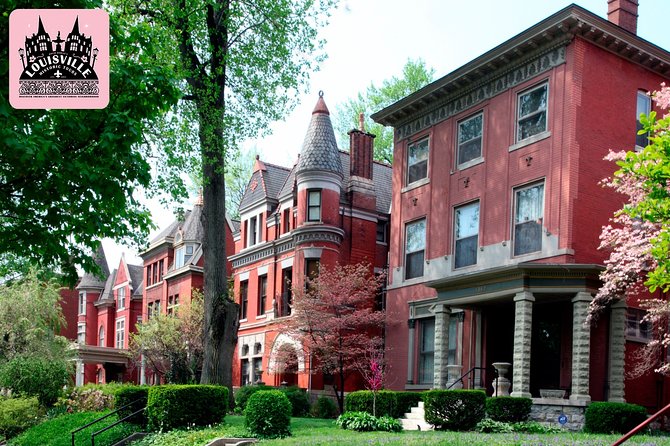
This Old Louisville Walking Tour is built for people who like history they can see with their eyes. Old Louisville is huge on paper, more than a thousand structures spread across about 40 square blocks, and your guide helps you understand what you are actually looking at.
The neighborhood is also transitional. That means you should expect the same mix you might see in a larger city neighborhood. The good news is the tour stays structured, with a consistent pace and a clear route. The better news is that you learn how the area developed, and why the wealth and architecture show up the way they do.
Another practical plus: the tour is designed for orientation. In about 2 hours, you get the names, the layout, and the “why” behind the big sights. That makes a big difference later when you want to explore on your own, because you already know what direction you are facing and which blocks matter most.
More Walking Tours in Louisville:
- History and Hauntings of Salem Guided Walking Tour
★ 5.0 · 14,564 reviews - New Orleans Premier Ghost, Voodoo and Vampire Walking Tour
★ 4.5 · 12,856 reviews
Starting at West Ormsby Avenue and South 4th Street: quick and clear, but be street-smart
The tour meets at West Ormsby Avenue and South 4th Street, then ends back near the start. It is a central meeting point, which helps if you are using public transportation or trying to fit this into a tight itinerary.
Here’s the realism part. The starting area is the kind of place where you might encounter panhandlers or people experiencing homelessness. That does not mean the tour is unsafe or “scary,” it just means you should treat it like any busy urban street corner: stay aware, keep your phone put away while you are checking your bearings, and follow your guide’s lead.
What helps you settle in fast is that you are not wandering. This is a guided route with scheduled stops, so you spend your energy learning and looking, not figuring out where to go next.
The main walk in Old Louisville: Victorian facades, private homes, and the Conrad-Caldwell connection
Your first major stop focuses on Old Louisville itself, covering a large chunk of the historic district and giving you the big picture. You are learning how the neighborhood became one of the largest historic districts in the United States, and what “transitional” means in real life on these streets.
One key detail: it is a walking tour and you do not enter houses or other private structures. Most of the homes you pass are private residences. That means the tour experience is about observing, not touring every building like a museum open house.
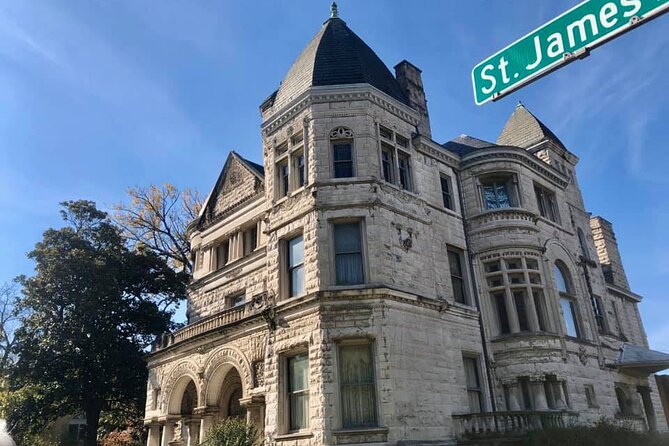
You do stop in front of the Conrad-Caldwell House Museum, often called Conrad’s Castle. This is one of the anchors for people interested in architecture and local storytelling. The tour itself does not include entry into the mansion, but you can arrange an inside visit separately if you want the deeper look.
If you are the type of traveler who likes to pair “exterior views first” with an optional add-on, this structure is ideal. You see the building in context on the walk, then decide later whether you want to spend money and time going inside.
Practical tip: since you are not going in anywhere during the main part, dress for the weather and plan your water. The tour requires that you can walk about 90 minutes without a bathroom break, so it is smart to handle that before you arrive.
The Witches’ Tree: a five-minute legend with real local flavor
You have a short stop at The Witches’ Tree, where a gnarled tree marks the spot of an earlier tree cherished by local witches. When the original tree was cut down, the story goes that townspeople faced a curse, including a tornado sent in revenge.
This is one of those stops where you do not come for the scenery alone. You come for the way the neighborhood keeps its folklore alive, turning a single landmark into a conversation piece.
You might also notice offerings left on the twisted trunk. If you see that, just treat it as local custom: observe, don’t interfere, and let the story land the way your guide presents it.
Because the stop is only about 5 minutes, you will not feel stuck. It is a quick reset, a change in tone from architecture to legend, and then you are back on your feet.
Millionaires Row and Bernheim Mansion: looking at wealth through Richardsonian Romanesque details
After the Witches’ Tree moment, the tour heads toward the Millionaires Row area. Here, the architecture starts to feel like it was designed to announce status from blocks away.
A highlight is the stop at Bernheim Mansion Bed and Breakfast. Your guide points out features tied to its style, including green men arranged around a triple Roman-arched porch. Those kinds of details matter because they show you how the builders and owners used craft as a public statement.
Again, you do not enter during this walk. You are viewing from the outside and learning how to read the building like a page. For me, that is the best part of this tour format. Instead of rushing through rooms, you learn how to spot the clues on the front.
If you are hoping for an inside look at the mansion, this tour does not include admission. But seeing the architecture closely from the sidewalk can still be a “good enough” experience, especially if you want value and time efficiency.
The Filson Historical Society and the Ferguson Mansion’s Beaux-Arts style
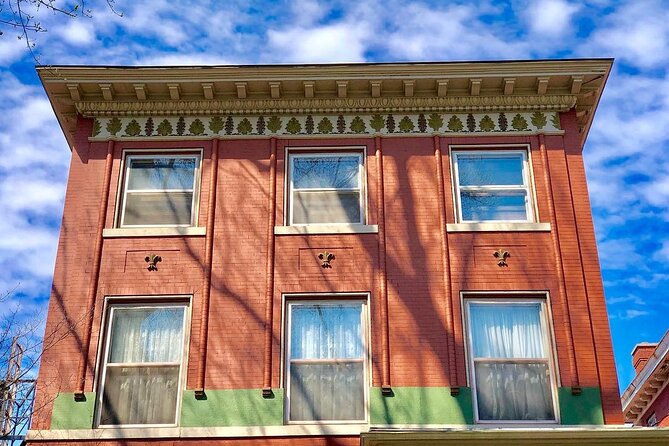
Next up is The Filson Historical Society, housed in the Ferguson Mansion. You get a quick stop that connects architecture style with civic purpose.
The Ferguson Mansion was built in 1905 and is described as a grand example of Beaux Arts architecture. From the sidewalk, you can appreciate the “formal” feel of the style, and your guide helps connect the look to the era that produced it.
Just like other mansion stops on this walk, entry is not included in the tour experience. But the payoff is that you learn what to notice, then you can choose later if you want to arrange an additional visit separately.
If you are a history-minded traveler, this stop also works as a lesson in how big houses can shift roles over time. You see the architecture first, then your guide gives you the context for how the building became headquarters for a local historical organization.
Central Park by Frederick Law Olmsted: a green pause with a Shakespeare connection
The tour ends with Central Park, a smaller neighborhood version of a big idea. This park was designed by Frederick Law Olmsted, and it provides the kind of shaded walkways that make Louisville feel livable even in warmer months.
The tour highlights that Central Park covers about 14 acres of native tree species and sits as the green heart of the neighborhood. Even if you only spend a few minutes there during the walk, the shift in scenery helps your brain process everything you just learned.
There is also a cultural note: Shakespeare in the Park happens here each summer, and since 1961 it has been the nation’s oldest free outdoor Shakespeare event. That is a fun fact to keep in your pocket, because it turns the park from “just a park” into part of Louisville’s ongoing public life.
Guides, pace, and what to expect from the storytelling
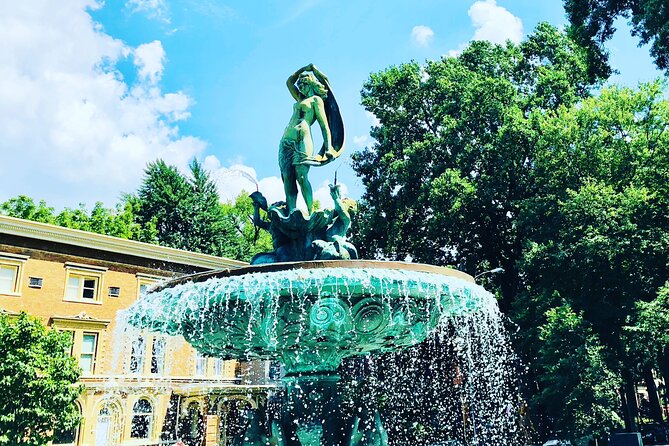
This tour is built around the guide, and the most consistently praised ingredient is how the stories get told. Guides like Angelique, Gabe, David, Frances, and Brenda show up in the tour experience in a way that points to a real pattern: clear communication, steady pacing, and lots of small neighborhood details.
I like that the pace is described as easy and engaging, not slow and sleepy. When you are walking in a compact area, a guide who can keep the pace and still answer questions makes the time feel purposeful.
You should also know what you are buying: this is not a “go inside everything” tour. It is a street-level education in architecture, ownership, and the local myths that survived into modern day Louisville.
Price and value: why $25 makes sense for a short walk with big payoff
At $25 per person for about 1 hour 40 minutes to 2 hours, the value depends on what you want from your travel time.
If you mainly want random photos, you can walk around Old Louisville on your own. But if you want to understand why particular buildings look the way they do, why certain landmarks matter, and how the neighborhood shaped Louisville, a guided walk is a shortcut. It saves you the guesswork and the time spent reading long explanations later.
You also get a certified guide included. That matters for quality, because the tour is about interpretation. Without guidance, it would be a beautiful neighborhood walk, but you might miss the connections.
Just plan for what is not included. Optional inside visits can cost extra, and gratuities are not included. Based on the tour info, gratuities are suggested at $5 per person.
Getting the most out of it: who should book, and who should skip
You should book this if you:
- like architecture you can actually see up close from the sidewalk
- want a quick way to learn a neighborhood layout in Louisville
- enjoy local legends as much as official history, especially the Witches’ Tree story
- want a small-group feel, with a max of 20 people
You might want to skip or choose a different format if:
- you have trouble walking for about 90 minutes without a bathroom break
- you need mobility-friendly access, since the tour is not recommended for visitors with mobility issues
- you strongly prefer indoor visits, since this walk stays outside and does not enter private houses
Should you book this Old Louisville Walking Tour?
If you want a high-value, focused introduction to Old Louisville, I think this is a strong choice. The combination of Victorian architecture, neighborhood storytelling, and quick stops like the Witches’ Tree and Central Park makes the time feel packed in the right way.
Book it especially if you like tours that help you “read” a place, not just look at it. Then, if you fall in love with a specific landmark like Conrad’s Castle, you can decide on an optional inside visit later.
Skip it if you are not comfortable with steady walking or you are hoping for lots of building entry points. Otherwise, this tour is a solid way to understand Louisville without spending your whole day in transit.
FAQ
How much does the Old Louisville Walking Tour cost?
The tour costs $25.00 per person.
How long is the walking tour?
It runs about 1 hour 40 minutes to 2 hours.
Where does the tour start?
The meeting point is West Ormsby Avenue and South 4th Street (W Ormsby Ave & S 4th St, Louisville, KY 40203, USA).
Where does the tour end?
The tour ends back at the meeting point.
Is the tour offered in English?
Yes, the tour is offered in English.
What is included with the tour ticket?
The tour includes a certified guide. Gratuities and admission to certain stops are not included.
Do you go inside the homes on the tour?
No. This is a walking tour and you do not enter the private residences or other structures. You stop and look from the outside.
Is admission to the Conrad-Caldwell House Museum included?
No. The tour stops in front of the museum, and admission is not included. You can arrange an inside tour separately for a fee.
What physical requirements should I plan for?
You should have a moderate physical fitness level, and you must be able to walk 90 minutes without a bathroom break. It is not recommended for visitors with mobility issues.
What happens if the tour is canceled or I need to cancel?
This experience is non-refundable and cannot be changed for any reason. If it is canceled due to poor weather, you will be offered a different date or a full refund.
Reviewed most recently around Louisville
- Kentucky Derby Museum – General Admission and Guided Track Visit★ 4.5 · 866 reviews
- Old Louisville Ghost Tour as Recommended by The New York Times @ 4th and Ormsby★ 5.0 · 1,201 reviews
Walking Tours, compared.
History and Hauntings of Salem Guided Walking Tour
Read our review →
New Orleans Premier Ghost, Voodoo and Vampire Walking Tour
Read our review →

Freedom Trail History Small Group Walking Tour
Read our review →
Historic Charleston Guided Sightseeing Walking Tour
Read our review →
New Orleans Food Walking Tour of the French Quarter with Small-Group Option
Read our review →
St. Louis Cemetery No. 1 Official Walking Tour
Read our review →Browse the lists this tour appears in