
Reviewed · CITY TOURS
Houston’s Official City & Mural Tour!
Houston’s official city and mural tour is a smart first stop if you want to understand the city fast, without spending a whole day figuring out routes. I love how the tour pairs big-picture downtown landmarks with real street art, so you see the story behind the skyline. I also like the added map and orientation, which helps you keep exploring after the bus drops you back near where you started. One thing to consider: it’s an outdoor, open-air style ride, so hot sun and sudden rain can make the trip more tiring than a fully indoor tour.
You get around with a cowboy-themed Houston City Tours bus, starting at the Houston City Tours Visitor Center on Dallas Street. Depending on the day, you’ll have live guidance on weekends, and pre-recorded audio on weekdays, so the information stays consistent. I’ve seen real examples of guides like Yolanda and Antonio bringing stops to life, with clear personality and stories, not just facts.
Key things that make this Houston tour practical and fun
- Downtown-first orientation in about 80 minutes, perfect when your schedule is tight
- Street art plus murals, not just classic monuments
- Photo breaks are built in at select stops when conditions allow
- Small group size up to 50 people, which feels less chaotic than big buses
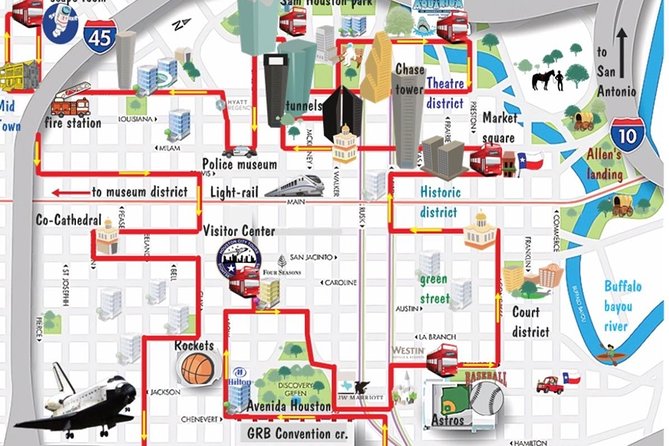
- A map you can use afterward, so you turn one ride into several better walks
- Weekday audio, weekend in-person guide, for predictable commentary
Getting Oriented in Downtown Houston Without Getting Lost
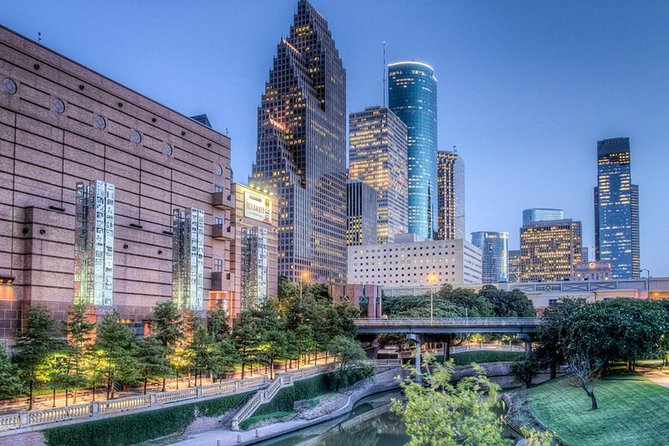
If you’re new to Houston, the hardest part is knowing what to look at first. This tour is designed for that problem. You start at 1302 Dallas St, and within the first stretch you’ll be seeing major landmarks like the Chase Tower area and the downtown theater zone. That quick context matters, because Houston can feel spread out. After a ride like this, you’ll know what’s nearby, what’s worth a return visit, and which neighborhoods feel like your kind of Houston.
The bus style is also part of the value. It’s open-air, so you get skyline views while you’re moving, and you are not stuck staring at walls for 80 minutes. On nice days, the breeze alone is worth it. On bad days, you’ll want to plan for the weather, because you can feel the elements more than you would on an enclosed tour.
One practical tip: if you want the best views, you’ll likely pick the top deck. But the seating can mean dealing with sun and trees overhead depending on where the bus passes. I’d choose based on your comfort level, not just your camera. If you hate heat or you’re traveling with someone who gets uncomfortable in sun, the lower level is the smarter move.
Stack these Houston options against each other
- Houston: Space Center Houston Admission Ticket
★ 4.6 · 3,274 reviews - Space Center Houston Admission Ticket
★ 4.0 · 1,403 reviews - NASA’s Space Center Admission Plus Houston City Tour
★ 4.0 · 744 reviews
Price and What You Actually Get for $44.95
At $44.95 per person for about 1 hour and 20 minutes, you’re paying for convenience plus guided context. You’re not paying for an all-day museum pass or a multi-neighborhood deep route. This is a “get your bearings” kind of tour, and that’s where the money makes sense.
Here’s the value breakdown that matters in real life:
- You get a bus route through a lot of downtown must-sees in a short time.
- You get commentary that helps connect what you’re seeing to the city’s growth.
- You get an orientation map you can use after the tour, which turns the ticket into a planning tool.
There are also a couple of stops that mention free admission for photo time. City Hall (Art Deco, from 1939) is one, and the Houston Graffiti Building stop also includes free admission for the short time on site. Those details do not turn the price into a bargain, but they help you avoid feeling like you’re paying for a pure drive-by.
Where it might feel less worth it is if you’re hoping for lots of off-the-beaten-path stops outside downtown. The route is focused on the central core. If you already know downtown well and you want something more spread out, you may want to pair this with another targeted activity.
Meet at Dallas St, Then Let the Route Do the Work
Logistics are refreshingly simple: meet at the Houston City Tours Visitor Center at 1302 Dallas St. There’s no hotel pickup and drop-off, so you’ll want to arrive with transit or parking in mind. The tour ends back at the meeting point, which makes it easier to build the rest of your day.
This is also a good tour to schedule early in your trip. The fastest payoff comes when you use it to plan. After you’ve seen the theater district, the bayou area, and the mural stops, you’ll be in a better position to choose what to walk to next.
Group size is capped at 50, so you’re not stuck in a totally packed bus. That also means you’re more likely to actually hear moments of commentary and spot details outside your immediate window.
The First Stops: Convention District Parks, Sacred Landmarks, and Houston’s Working History

The tour begins with a set of stops that help you understand Houston’s center of gravity. You start with a park in the heart of the Convention Center district. It’s an easy way to orient yourself, because you’re seeing the modern downtown footprint before you get into older, more historic layers.
Next, you pass a major Catholic landmark, described as the mother church in Houston and a historic landmark. This kind of stop is not about being religious. It’s about learning the city’s identity markers. Churches, civic buildings, and theaters often tell you as much about a place as skyscrapers do.
Then you head toward the old union train station area, now associated with the Houston Astros. This is the kind of transformation that makes cities interesting. You’ll get the idea of how Houston reused older structures and turned them into something modern and high-energy.
As the route continues, you’ll see references to the last original downtown buildings and the area where the first Houstonians set up commerce and government. Even if you don’t go deep on each exact site during the bus ride, these stops give you a sense of continuity. Houston didn’t just grow upward. It grew outward, and those early civic and commercial choices still show up in today’s city map.
More City Tours in Houston:
- Houston: City Tour and NASA Space Center Admission Ticket
★ 4.4 · 488 reviews - Houston: Guided City Tour by an Open-Top Double Decker Bus
★ 4.5 · 414 reviews - New York City: Statue of Liberty & Ellis Island with Ferry
★ 4.6 · 18,683 reviews
City Hall and Quick Photo Time in Hermann Square
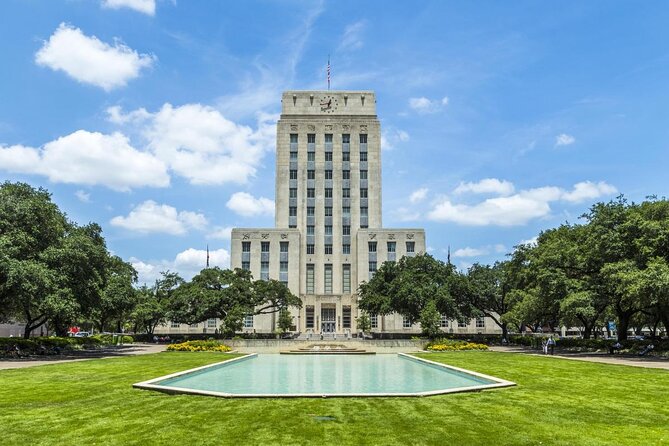
City Hall is one of the clearer “you should actually pause for a moment” stops. The building is Art Deco and dates to 1939, and it sits in front of Hermann Square. Depending on weather and traffic, you may be able to hop off for around five minutes to take photos.
That short photo window is useful because it forces you to slow down. You can line up shots, zoom in on architectural details, and then rejoin the bus without losing the flow of the tour.
If your biggest goal is photos, plan your camera settings for both sun and shade. City Hall area can shift lighting fast depending on the time of day and passing clouds. The tour is not built for long museum-style wandering, so you’ll want to work efficiently during the photo moment.
Houston’s Theater District: Symphony and Opera in One Dense Area
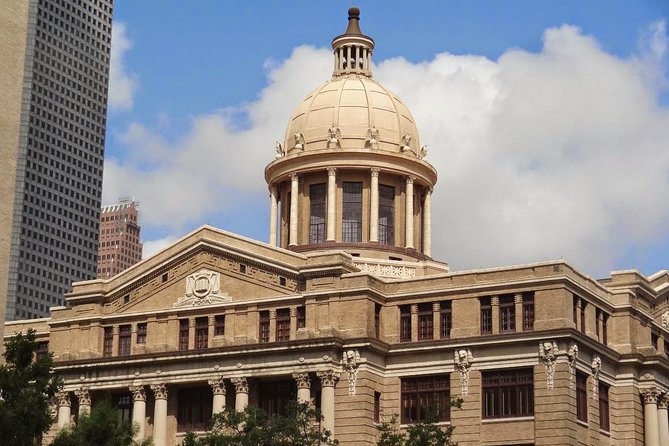
Passing through the theater district is one of the best ways to learn Houston’s arts identity quickly. You’ll drive through the second-largest theater district in America, and you’ll see key institutions tied to performance culture.
Two major stops connect here:
- One theater linked with the Houston Symphony
- Another tied to the Houston Grand Opera
Even if you don’t plan to attend a performance, the district itself is a useful reference point. It tells you where people gather, where late nights happen, and where the city invests in arts infrastructure. This can also help you choose your next evening plans after the tour ends.
If you like walking tours, you can use the theater district as your base. After your bus orientation, it’s easier to decide whether a show night is realistic or whether you should pick a smaller-scale evening plan.
Aquarium Area Stop: Sea Life and Family-Friendly Timing
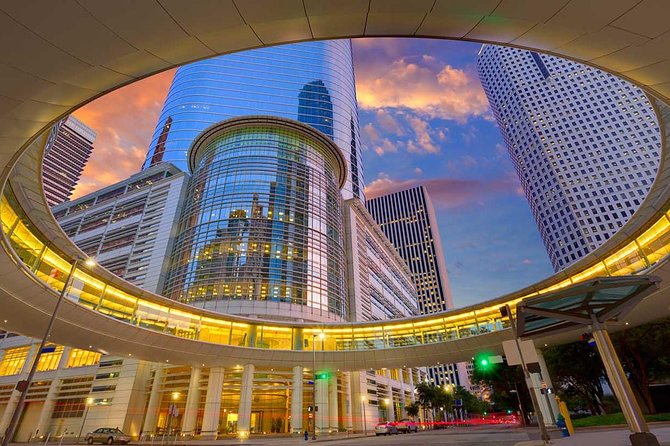
One stop in the route is described as a seafood restaurant zone plus an area focused on sea life, including touch pools, a shark tank, and displays of aquatic ecosystems. Depending on conditions, you might get around five minutes for photos.
This part is most useful if you’re traveling with kids or you want something visual that breaks up the civic and architectural stops. It’s also a helpful “anchor” area for food planning, because the presence of seafood restaurants gives you a built-in dinner idea after the ride.
That said, don’t expect a full aquarium experience on this bus tour. The timing is short. Think of this as a spot to recognize the area and decide if you want to return later when you can spend real time.
The 1923 Spanish-Style Public Library and Other Texture Stops
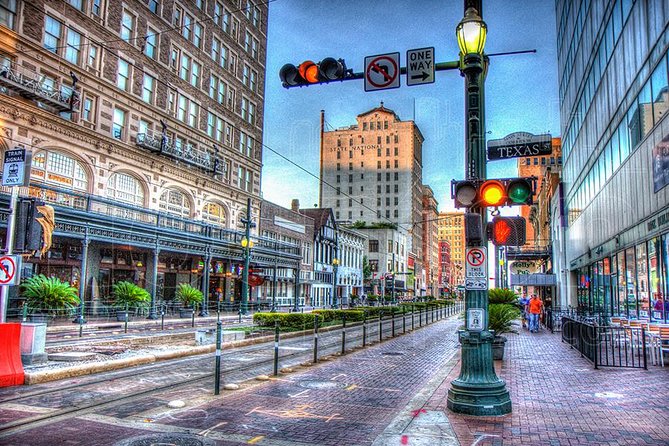
The tour also includes a 1923 Spanish-style historic public library. This kind of stop is perfect for art and architecture lovers because it shifts your attention away from only big skyline buildings. You see how Houston’s civic buildings carried style and identity, not just function.
You also get a park tied to the Apollo 11 mission controlled from Houston. That stop works well because it connects the city to a global story. Even if you already know Apollo 11 facts, the point here is Houston’s role, shown through a public space.
These “texture” stops are part of why this tour is more than a skyline drive. They add variety. They also give you extra names to look up later if you want to keep learning after the bus ride.
Buffalo Bayou, Bridges, and Why Founding Stories Matter
A major emotional moment in this tour comes around the Buffalo Bayou. You’ll see the bridge on the river area, and there’s a founding story tied to 1836 when John and Augustus Allen founded Houston.
This is where the city’s geography starts to click. Houston is a water-and-land story as much as it is a downtown-and-skyscraper story. Buffalo Bayou connects neighborhoods, shapes development, and helps explain why certain areas grew the way they did.
If you enjoy photography, bayou bridges and waterfront angles can be your best pictures of the day. Just remember it’s still an outdoor ride, so your photo time might be limited if traffic and weather don’t cooperate.
JPMorgan Chase Tower Area and the Tallest Building Reminder
You’ll also pass the area tied to the JP Morgan Chase Tower, described as Texas’ highest building. This gives you a clear visual marker of the city’s growth and modern ambition.
The tower area is more than a bragging right. When you look at it after seeing the older civic buildings, you start to understand the city’s timeline. Houston built upward, but it also kept civic landmarks and historic structures in the same general downtown zone. That contrast is a big part of the tour’s power.
Graffiti Building and the Street Art Angle That Art Lovers Want
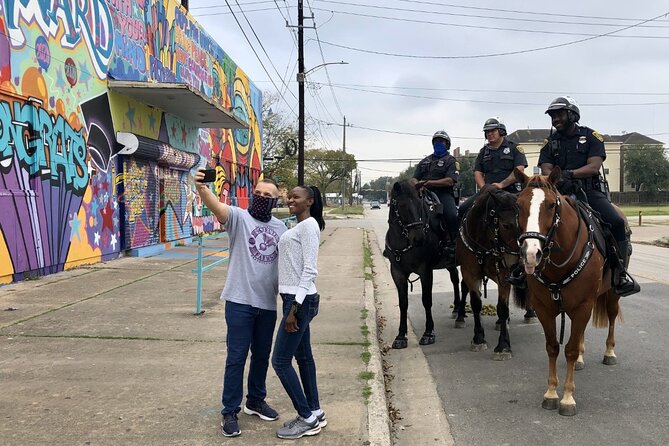
The Houston Graffiti Building stop is a highlight if you care about murals as living public art. You’re set up to see street art expressions and creative building-scale murals around that area. There’s also a short opportunity for photo time when conditions allow, and free admission is listed for the photo window.
This is one of the best places to pay attention to details. Don’t just look for the overall mural. Look for layers and style choices: color blocks, lettering, and the way the artists use the building as a canvas rather than treating it like a blank surface.
One practical note: if you’re hoping to take photos, wear shoes you’re comfortable standing in. This is not a long walking detour, but you may be on and off quickly.
Old Sam Houston Park Area: Historic Homes and Museums Nearby
Near the end, you’ll see an area described as 11 historic homes and museums next to the old Sam Houston park. This is a nice way to end the tour because it signals there’s more to explore if you want it.
Even if you don’t go inside during the bus ride, you’ll get the location context. That makes it easier to pick a museum later based on your interests. It’s also a good ending point for people who want history without committing to a full guided museum program.
Weather Reality: Heat, Sun, Rain, and How to Plan Smart
Because this is an open-air style bus, weather management is part of the experience. In hot months, the bus is not a cool indoor environment in the way you might expect from a fully air-conditioned vehicle.
That means you should plan like a local:
- Bring sun protection, including sunglasses and sunscreen.
- Bring or buy water, and take breaks when offered.
- Consider sun shade and seating choice. If you’re on the upper deck, you’ll feel the heat more.
- If storms hit, be ready to move downstairs for comfort and safety.
Heavy rain can be rough. There are reports of water getting inside in bad weather. If you get caught in sudden storms, the best move is to prioritize comfort and listen to your guide for what to do next.
If you’re traveling with someone older, sensitive to heat, or very uncomfortable outdoors, you’ll likely be happier if you choose a cooler time of day. Houston weather changes fast, and this tour is more comfortable when you can avoid peak sun.
Picking a Seat: Where Views Meet Comfort
Seat choice matters more than most people expect on an open-air bus.
If you want views, top deck seats can deliver. You may also be close enough to the scenery that you notice details through the moving ride. But there can be issues like sun intensity and occasional tree contact that blocks parts of your sightline.
If you want comfort and shade, you may prefer downstairs seating, especially in heat or after weather turns. You also get a calmer experience if you prefer less exposure to noise and wind.
If you’re unsure, think about your top priority:
- Photos and skyline angles
- Comfort and reduced sun exposure
How the Commentary Works on Weekdays vs Weekends
The tour uses a simple system: live guidance on weekends and pre-recorded audio on weekdays. That setup is helpful because you’re not wondering whether the information will be complete. Either way, you’ll hear context connected to the route.
The commentary quality can also depend on volume and background distractions. If you know you’re sensitive to loud audio, consider bringing earplugs as a personal comfort item. That’s a small thing, but it can change how much you enjoy the ride.
Also, the stops are structured for short photo opportunities and quick look time. You’re not meant to treat the bus tour like an all-day walking excursion. Use the route as an orientation layer, then go back later to the places you want deeper time.
Who Should Book This Tour, and Who Might Want Something Else
I’d recommend this Houston City Tours experience if:
- You’re visiting Houston for the first time and want fast orientation.
- You love murals, street art, architecture, or just want a visual survey of downtown.
- You want an easy plan that lasts about 80 minutes and helps you build the rest of your day.
- You’re traveling with kids, since the short duration is often easier to manage than longer tours.
I’d think twice if:
- You need full air conditioning during the entire ride.
- You’re traveling during the hottest part of summer and you or your group struggles with heat.
- You want broad coverage well beyond downtown, since the focus stays mostly in the central core.
Final Call: Should You Book the Houston Official City and Mural Tour?
If your goal is to understand downtown Houston quickly, this is a strong choice. The mix of civic landmarks, arts stops, and street art gives you a rounded view in a short time, and the included map helps you turn that first orientation into better walking plans later.
Book it if you’re flexible with weather and you can handle an outdoor ride. Skip it or pair it with an indoor plan if you’re heat-averse or rain-sensitive. Either way, this tour is at its best when you treat it like your Houston starting point, then go explore what sparks your curiosity.
FAQ
How long is the Houston official city and mural tour?
It runs for about 1 hour 20 minutes.
What does the tour cost?
The price is $44.95 per person.
Where do I meet for the tour?
You meet at 1302 Dallas St, Houston, TX 77002, at the Houston City Tours Visitor Center.
Is there hotel pickup or drop-off?
No. You have to meet at the visitor center, and the tour ends back at the meeting point.
Do I get a live guide or audio?
On weekends, an in-person tour guide is available. Every weekday includes pre-recorded audio.
Is this tour air-conditioned and what should I do in hot or rainy weather?
The tour is on an open-air style bus, so it can be uncomfortable in extreme heat. There are air-conditioned waiting areas before and after, and you can go downstairs for comfort and safety. In rain, you can expect outdoor exposure and the option to adjust for comfort.
Reviewed most recently around Houston
- Astroville Tunnel Tour of Downtown Houston (Air-Conditioned)★ 5.0 · 657 reviews
- NASA’s Space Center Admission Plus Houston City Tour★ 4.0 · 744 reviews
- Space Center Houston Admission Ticket★ 4.0 · 1,403 reviews
- Houston: City Tour and NASA Space Center Admission Ticket★ 4.4 · 488 reviews
- Houston: Guided City Tour by an Open-Top Double Decker Bus★ 4.5 · 414 reviews
- Houston: Space Center Houston Admission Ticket★ 4.6 · 3,274 reviews
City Tours, compared.



Boston Duck Boat Sightseeing City Tour with Cruise Along Charles River
Read our review →

New Orleans City Sightseeing Hop-On Hop-Off Bus Tour
Read our review →
Pearl Harbor, USS Arizona Memorial & Honolulu City Tour
Read our review →Browse the lists this tour appears in