
Reviewed · WALKING TOURS
Birmingham Civil Rights Tour- Riding & Walking
Birmingham is famous for civil rights history, but the sites can feel scattered when you are doing it on your own. I love how this tour links major landmarks to the real stories behind them, and I also love the small-group setup (up to 14) that makes it easy to ask questions of guides like Mike or Clay.
One heads-up: you will walk over a mile total, outdoors in temps that can range from 40 to 100F, so it is not a great fit if you cannot walk unassisted at a reasonable pace.
Key things to know before you go
- Air-conditioned van time between stops, so you are not roasting or freezing the whole trip
- Entrance fees are included, so you are not hit with add-ons at each site
- About a mile of walking, with enough breaks built in to keep it manageable
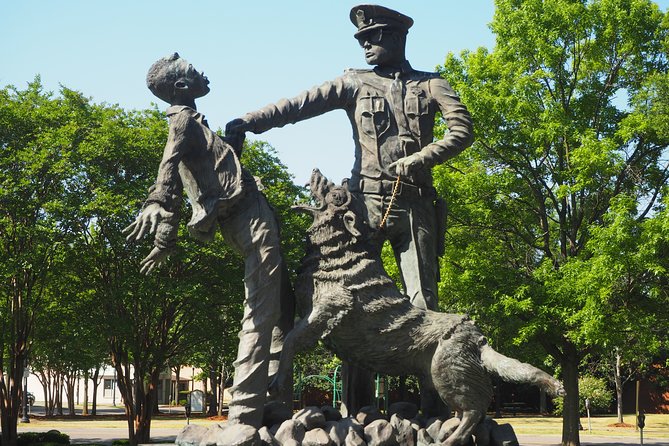
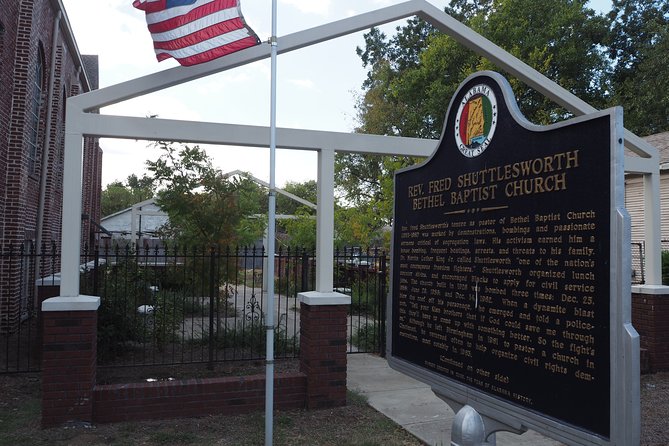
- Grounded, chronological storytelling at stops like Kelly Ingram Park, Dynamite Hill, and Bethel Baptist Church
- Tough topics handled with care, with time for questions and context at every stop
Why Birmingham’s Civil Rights Story Works So Well With a Guide
Birmingham is one of those American places where history is not locked behind glass. It sits in street corners, church steps, and neighborhoods that still look real and lived-in. The hard part is matching what you see with why it mattered, and that is where a guided tour changes the whole experience.
On this ride-and-walk tour, you get a connected storyline that helps you understand how protest, resistance, and organizing played out in one city over time. You also get the kind of context that makes the landmarks make sense, like when you stand at Kelly Ingram Park and learn what the sculptures and setting are pointing to. Instead of feeling like you are checking boxes, you start seeing patterns: tactics used by city officials, the courage of local leaders, and the way national attention was pulled into events unfolding right here.
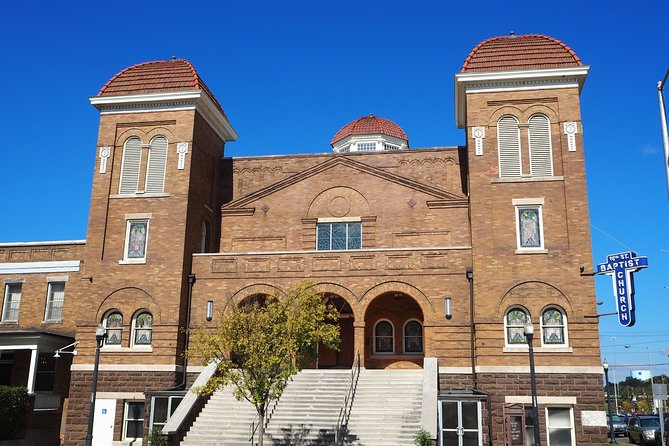
The emotional weight is real. You will hear about the bombing at 16th Street Baptist Church, and it can be hard to absorb. But the tour does not feel like shock value. It feels purposeful, with a tone that pushes you to understand, not just to stare.
Your Pace, Your Comfort, and the Real Walking Plan
This is a roughly 3-hour tour with a mix of short walks and vehicle time. You will start at 512 16th St N (downtown Birmingham), and you will end back at the same meeting point. The group is capped at 14 people, which keeps the pace human and gives you a chance to ask questions without shouting across a bus.
Expect to walk a little over a mile total. That sounds doable, but the weather range matters. The tour runs outdoors in temperatures anywhere from 40 to 100F, rain or shine. If weather becomes an issue, the operator notes there is transportation support if rain makes things uncomfortable, but the tour still stays on track unless severe weather forces a change.
Bring practical basics: closed-toe walking shoes, water, and a hat or light layer depending on the forecast. Also, plan to keep your attention during transitions. The van rides are not just travel time. They are part of the story, with live commentary that connects what you just saw to the next stop.
If you want a mostly sit-down city tour, this is not it. If you are okay with a steady walking pace and you want real context, it is a smart trade.
Kelly Ingram Park and 16th Street Baptist Church, Where the Story Turns
Stop 1 and Stop 2 focus on Kelly Ingram Park and the Civil Rights District. If you only had time for one Birmingham stop, I get it. This is the kind of place where you can see how symbolism works. You walk around the park, and your guide connects the statues and setting to marches and confrontation. You start to understand how public space becomes a battlefield, not just in the moment, but in how people remember it.
Then comes 16th Street Baptist Church, a site that is both central and deeply painful to learn about. You do not just look at the building. You learn about the church’s role in the movement and the tragedy of the bombing that killed four little girls. Hearing the details in context matters here. Without that grounding, the site can feel like a grim photo op. With the guide, it becomes a window into what the community was enduring and why this location mattered so much.
A practical note: because this is outdoors and reflective, you may want a slower internal pace. Let the information land. This is one of those moments where the tour’s tone is worth paying attention to.
Linn Park, Boutwell Auditorium, and Bull Connor’s Opposition
After the church and park, you move into the era of backlash and enforcement. At Linn Park, you learn where march protests ended in Birmingham and how different groups fought for civil rights in the city. This stop is short, but it is useful because it helps you map movement, not just people and slogans. You start to picture routes, stop points, and where tension escalated.
Next is Boutwell Auditorium, where the story widens to include the role of the city’s power structure. Your guide explains Bull Connor and his clashes with those fighting for civil rights. Even if you think you know the name, the value of a guided stop is the context: what Connor represented in practice and how his decisions shaped what protesters experienced on the ground.
What I like about these stops is the balance. You are not only hearing about protest. You are learning about the systems meant to stop it. That makes later stops like Dynamite Hill feel less random, and more like part of a broader strategy of intimidation.
Dynamite Hill and Bethel Baptist Church: Courage Under Threat
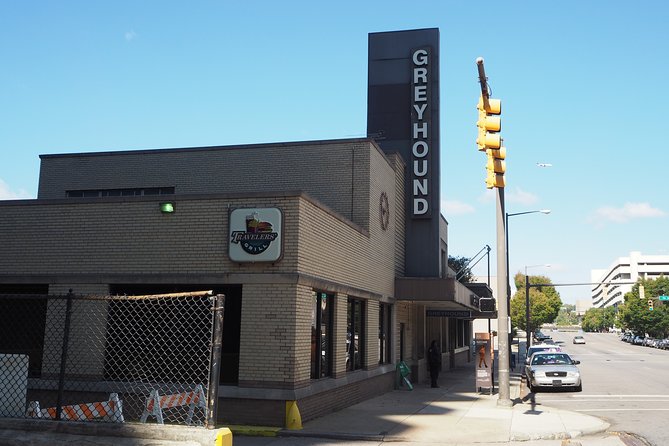
One of the most striking parts of the tour is the visit to Smithfield and Dynamite Hill. This is where the tour connects “history” to actual places that were targeted. You see houses and churches that were being bombed during the civil rights movement, and the story behind those attacks helps you understand how fear was used as a weapon.
This stop can feel heavy in a different way than the church bombing story. It is not only about a single event. It is about a pattern, and that pattern is why guides put time into explaining what residents faced and why the community took such risks. You also get a clearer idea of why local leaders were so urgent and why national attention mattered.
Then you visit the Historic Bethel Baptist Church, where Rev. Fred Shuttlesworth led much of the movement. This is one of the stops that turns your emotions into understanding. You are not only absorbing tragedy. You are also learning how organizing worked in real life, with leaders who were willing to step into danger to keep the work moving forward.
Black Business District to School Integration at John Herbert Phillips Academy
Eddie Kendrick Memorial Park offers a shift in focus that I think is essential. It is tied to the Black Business District, and you learn about Black life in Birmingham during its heyday. This part matters because civil rights history is not only marches and court dates. It is also community, labor, culture, and economic life.
Then the tour moves to John Herbert Phillips Academy. Here you hear about attempts to integrate schools in Birmingham, and your guide connects that work to Rev. Fred Shuttlesworth. This stop helps you see that the movement was not only about public demonstrations. It was also about access to education, safety, and equal treatment in daily institutions.
If you have ever wondered why civil rights history is so tied to schools and neighborhoods, this sequence answers that. You see the link between building a future and confronting a present built to resist it. It is one thing to read about integration. It is another to stand where those efforts were attempted and explained in plain language.
The Freedom Riders Attack Stop at a Wells Fargo ATM
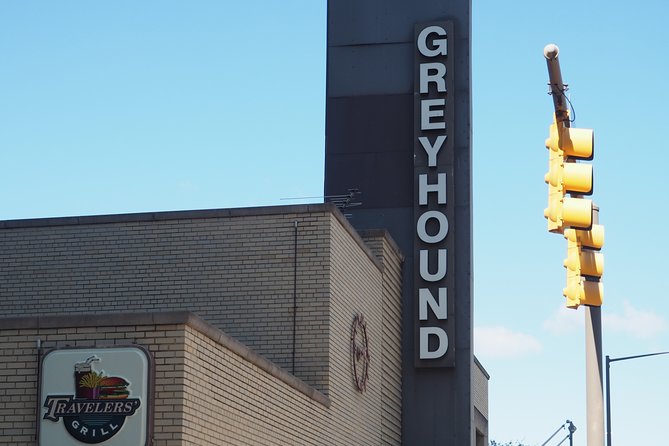
The final stop is brief but unforgettable. You see where the Freedom Riders were attacked in Birmingham, marked at a Wells Fargo ATM location. It is a strange feeling to hear about a violent civil rights moment in a modern commercial setting, but that is part of the point.
A guide helps you do the mental work. You learn what the Freedom Riders were pushing against and how violence was used to derail the message. Even with a short visit here, the payoff is strong because it closes the loop on the broader story: local courage feeding into national pressure, and national attention colliding with local resistance.
If you are looking for closure, this stop might not give it. But it gives clarity. The story does not end where the violence happened. It continues into the idea that actions ripple outward.
What the Guide Adds That You Cannot DIY
The strongest praise for this tour is not about the route. It is about the guide. People talk about Mike and Clay with consistent admiration for how they tell the story in a way that feels respectful, emotional, and grounded. The difference shows up in how questions are handled. Instead of giving you a script and moving on, the guide takes time to answer.
It also shows up in how the tour balances facts with human detail. You hear about major names, like Bull Connor and Fred Shuttlesworth, but you also get a sense of how people lived through fear and pushback. That is why the stops feel connected rather than random.
You should also plan on some care in the pacing. One theme from the experience is that the guide looks out for the group, including finding shade when possible and building in restroom breaks. That is not fancy, but it matters when you are walking over a mile in real weather.
Bottom line: a guide turns landmarks into a timeline you can hold in your head, and that makes it easier to remember.
Value, Included Fees, and Who This Tour Fits Best
This tour is set up for value in practical ways, even if you do not see a price tag in front of you. Entrance fees are included, along with all taxes, fees, and handling charges. That means you can focus on the experience instead of paying for each stop separately.
You also get air-conditioned transportation between locations, plus live commentary from the driver/guide. With small-group size, you get more interaction than you would on a large bus, and you are more likely to hear the story clearly.
Who should book it:
- People who want a serious, structured Birmingham civil rights overview in one afternoon
- Visitors who like a mix of vehicle time and walking, not one or the other
- Anyone who benefits from matching sites to significance, especially if you do not know the city well
Who might skip it:
- Anyone who cannot walk at least a mile unassisted
- Anyone sensitive to cold or heat, because the tour runs outdoors in temps from 40 to 100F
- People hoping for a mostly seated experience
Should You Book This Birmingham Civil Rights Tour?
If you are visiting Birmingham and you care about understanding what happened, I think this tour is a smart choice. The stop selection is strong and logical, from Kelly Ingram Park to 16th Street Baptist Church, then out to Dynamite Hill, Bethel Baptist, school integration efforts, and the Freedom Riders attack site.
Book it if you want guided context and a small group experience where you can ask questions. Consider it less if you have limited mobility or you cannot handle walking over a mile outdoors in varying temperatures.
If you do book, come with comfortable shoes and an open mind. This is not a casual downtown stroll. It is a guided walk through the cost of civil rights, told with care.
FAQ
How long is the Birmingham Civil Rights Tour?
It runs about 3 hours (approx.).
Where does the tour start?
The meeting point is 512 16th St N, Birmingham, AL 35203. The tour ends back at the meeting point.
What time does the tour begin?
The start time listed is 9:45 am.
How much walking is involved?
The tour includes walking over a mile total. Travelers are advised to have a moderate physical fitness level and be able to walk unassisted at a reasonable speed.
Are entrance fees included?
Yes. All entrance fees are included, along with all taxes, fees, and handling charges.
Is the tour offered in English?
Yes. The tour is offered in English.
Does the tour run in bad weather?
It runs rain or shine. If canceled due to significant weather such as a hurricane, tornado, or ice, you can choose an alternative date or receive a full refund.
Can children join?
Yes, but children must be accompanied by an adult.
Are service animals allowed?
Yes, service animals are allowed.
More Walking Tours in Birmingham
- History and Hauntings of Salem Guided Walking Tour
★ 5.0 · 14,564 reviews - New Orleans Premier Ghost, Voodoo and Vampire Walking Tour
★ 4.5 · 12,856 reviews - Little Havana Food and Walking Tour in Miami
★ 5.0 · 8,882 reviews - Chicago: Gangsters and Ghosts Walking Tour
★ 5.0 · 7,155 reviews
Walking Tours, compared.
History and Hauntings of Salem Guided Walking Tour
Read our review →
New Orleans Premier Ghost, Voodoo and Vampire Walking Tour
Read our review →
Freedom Trail History Small Group Walking Tour
Read our review →
Historic Charleston Guided Sightseeing Walking Tour
Read our review →
New Orleans Food Walking Tour of the French Quarter with Small-Group Option
Read our review →
St. Louis Cemetery No. 1 Official Walking Tour
Read our review →Browse the lists this tour appears in