
Reviewed · THE USA
Santa Fe Revisited
A Santa Fe history tour that ties together Spanish roots and today’s culture is interesting in a very practical way, because you start to see how the city was built, by whom, and why it matters. Your guide, Ana Pacheco, is a born-and-bred Santa Fe historian who connects landmarks to stories you can still feel in the streets.
I like two things most. First, it’s longer than many walking tours, so you get enough time to understand each stop instead of just taking photos and moving on. Second, the tour stays focused on what you’re actually looking at, from La Conquistadora to the Miraculous Staircase. One thing to consider is that Loretto Chapel admission is not included, and the experience runs only in good weather required conditions.
Key highlights you should know before you go
- Ana Pacheco brings local depth and tells the story in a way that connects old events to modern Santa Fe
- A longer Plaza-area route gives you real time at major landmarks, not a rushed hop
- Spanish, Native, Mexican, and American history is woven together across about four centuries
- WWII-era Manhattan Project history shows up at 109 East Palace, right in the downtown mix
- Loretto Chapel is the one ticket curveball, since admission is not included
Why this Santa Fe walking timeline works so well around the Plaza
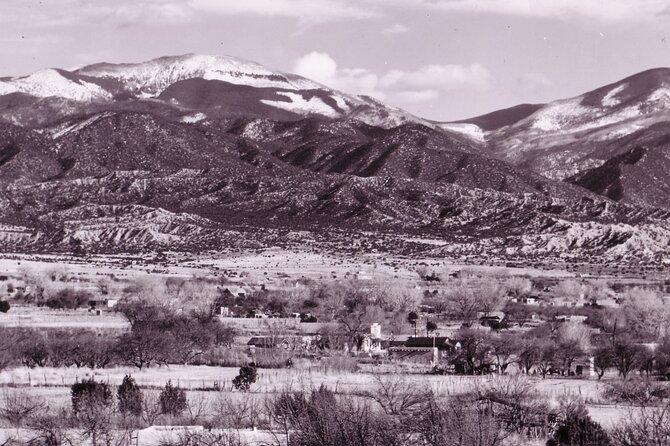
Santa Fe can feel like a postcard version of itself, until you learn the sequence. This tour is built to do that, starting with the big religious and civic anchors and then tracking how different cultures shaped the same few blocks.
Ana’s approach is simple: she points to what you’re seeing, then explains the story behind it. That turns the Plaza area from a set of pretty buildings into a readable map of Santa Fe’s past.
This also helps you plan the rest of your trip. Once you understand the city’s layering, it gets easier to choose what to revisit later, and what to skip because you already “got it” once during the walk.
More for the Santa Fe shortlist:
- Santa Fe Ultimate History Walking Tour
★ 5.0 · 516 reviews - New Mexican Flavors Food Tour of the Santa Fe Plaza
★ 5.0 · 466 reviews
Price and pacing: what $80 gets you in real time
At $80 per person for about 2 hours and 15 minutes, you’re paying for more than a route. You’re paying for an active guide who can keep the story moving at a pace that still gives you time to look, ask questions, and absorb details.
The group is capped at 10 travelers, so the walk does not feel like a stampede. That matters in Santa Fe, where small streets and crowded sidewalks can make big tours hard to enjoy.
The pricing also makes more sense because several key stops are admission-ticket-free on the tour plan. You’ll spend your money where you actually choose to, like Loretto Chapel, rather than paying entrance fees at every stop.
Start at the Cathedral Basilica, then zoom into La Conquistadora
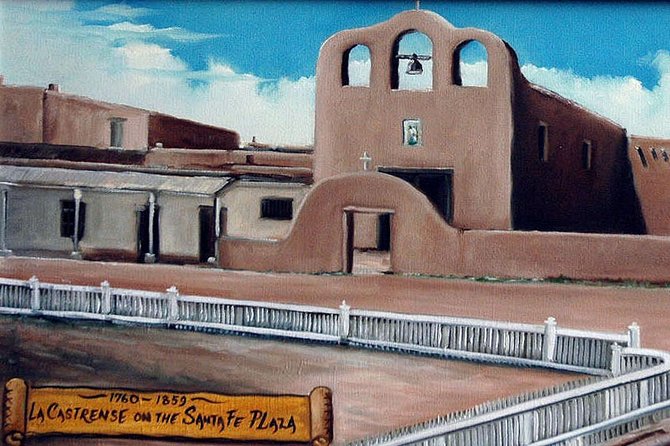
You begin at the Cathedral Basilica of St. Francis of Assisi (131 Cathedral Pl) at 10:00 am. Even before you move, this start point tells you the tour’s tone: religion, art, and civic life all matter here.
From there, Ana focuses on a highlight that’s easy to overlook if you just walk by. You’ll hear about La Conquistadora, described here as the oldest Madonna in the United States. That sets up a theme you’ll keep seeing throughout the walk, how objects and traditions travel with people and then become local identity.
This is also where the tour benefits from extra time. The cathedral area is more than a single photo stop. You get a chance to understand why the Plaza region became the center of gravity, and how later Spanish, Mexican, and American chapters built on top of what was already there.
One practical note I’d plan for: guided entry into church interiors can be restricted at certain sites, so it’s smart to expect that you might be able to enter on your own rather than as part of the guided narration. If you care about interiors, I’d keep an extra window of time later in your day for self-entry.
The Plaza-to-mission connection, and why Santa Fe feels older than it looks
Santa Fe’s downtown feels compact, which makes it perfect for a walking tour. But it can also make it easy to think the history is all in the same “layer.” Ana helps you see that it isn’t.
During the route, you’ll get references to the Santa Fe Plaza, plus the Loretto Chapel and the San Miguel Mission church, described as the oldest in the country. The point is not to recite dates. It’s to show how one area became a stage where different cultures left landmarks.
This “connection thinking” is why I like longer tours here. You’re not only learning what exists, you’re learning how the pieces relate, which helps you stop guessing and start recognizing patterns as you walk.
109 East Palace: the WWII checkpoint in the middle of the old city
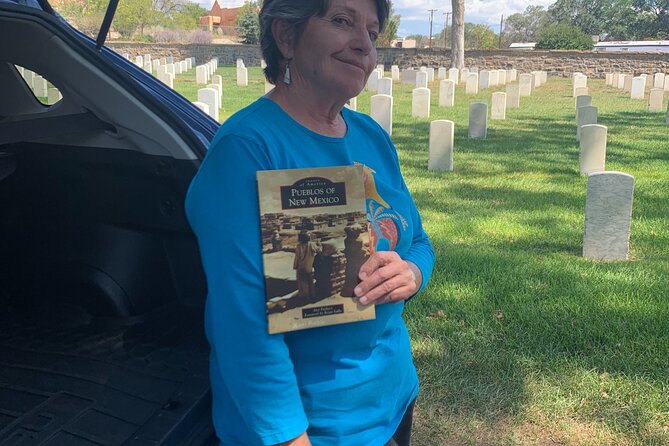
One of the most surprising parts of the plan is 109 East Palace. Here you’ll hear about a military checkpoint connected to the Manhattan Project during WWII.
That stop is a good reminder that Santa Fe is not only a long-ago story. Even when the buildings look rooted in earlier centuries, the city’s role in national events shows up too, and it shows up close enough to walk to.
At about five minutes on the tour plan, it’s brief, but that’s often the right approach for this kind of site. The value comes from context. Ana gives you the why behind the presence, so when you look at the building, you can place it in the bigger US story rather than treating it like a random downtown structure.
Palace of the Governors: civic power plus the Pueblo story
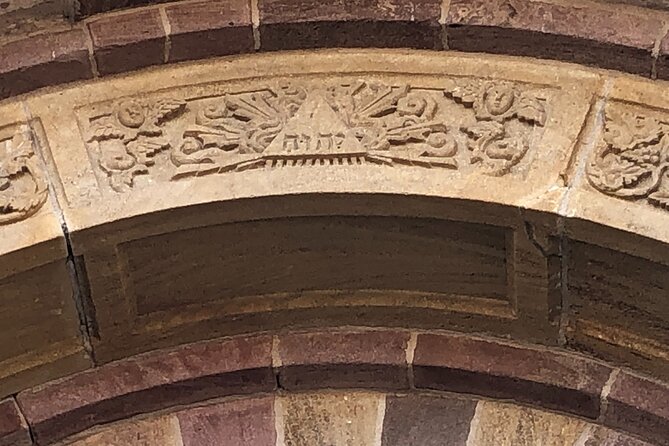
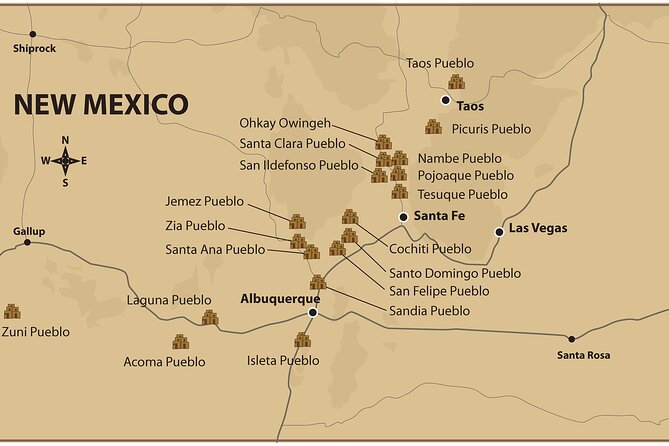
Next you’ll head to the Palace of the Governors. This is one of Santa Fe’s anchor structures, and it’s positioned in a way that makes it hard to ignore. The tour highlights it as the oldest government building in the U.S. and then widens out to discuss New Mexico’s 19 Indian Pueblos.
This is where the tour earns its keep, because it helps you connect civic power to Native presence. You’re not only learning that Spanish and Mexican eras happened. You’re learning how Native communities fit into the region’s political and cultural reality.
There’s also an interesting architectural detail emphasized in the plan: it’s noted as the only U.S. government building designed as a Native American symbol. Even if you’re not an architecture nerd, that fact gives you something concrete to watch for as you look around the site.
This stop is about ten minutes, which is a good amount of time for understanding the big picture. It’s also a stop where you’ll likely start forming questions for later museums and independent walking.
Loretto Chapel and the Miraculous Staircase: when ticket planning matters
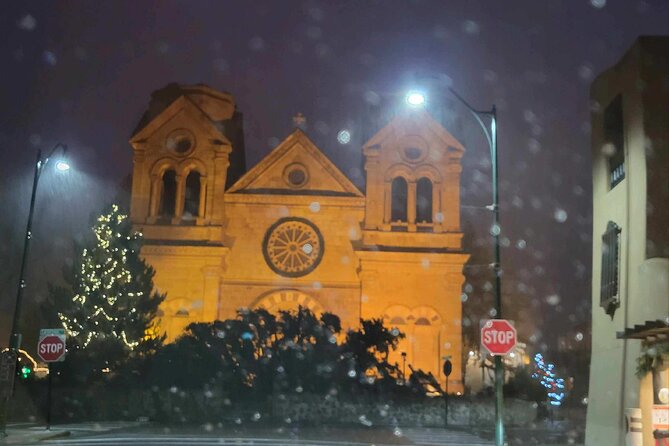
Then comes the tour’s most “plan it right” element: Loretto Chapel.
You’ll hear that it was built in 1878 by Archbishop Lamy to accompany the Sisters of Light Loretto Academy. The tour also connects it to European influence, describing it as Gothic-Revival and inspired by Saint Chapelle in Paris. The architect tied to the restoration is listed as Antoine Mouly, with a note that it was patterned for King Louis IX in Paris.
All of that might sound like background trivia until you reach the legend at the center of the chapel. The plan explains the 360-degree staircase built between 1877 and 1881, known as the Miraculous Staircase. The legend says it had no visible means of support, and it’s associated with St. Joseph the Carpenter.
Here’s the practical part you should not gloss over: Loretto Chapel admission is not included in the tour. So budget for it if this is a must-see for you. Also, since this is a privately run museum now after being closed and deconsecrated in 1968, you should expect a different feel than a church you might be used to.
If you want the best outcome, use the tour to learn the story first, then decide on your ticket timing. Going into Loretto with the legend already explained makes the visuals far easier to “read.”
Burro Alley: a small street with a big character count
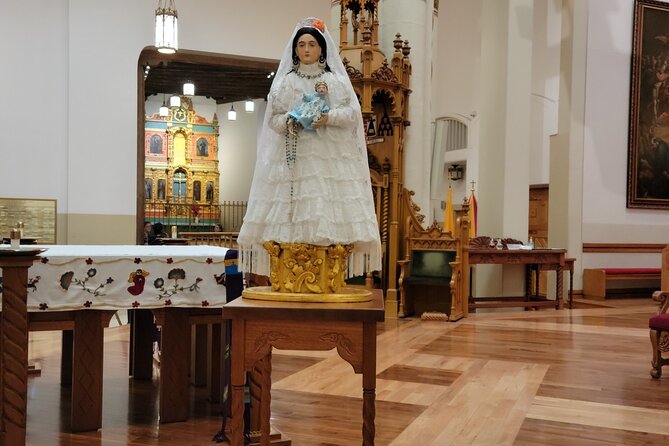
You finish with Burro Alley, a short street connecting Palace Avenue and San Francisco Street. This part of the plan is only about five minutes, but it’s the kind of stop that makes a tour feel human rather than textbook.
You’ll hear how, in the 19th and early 20th centuries, vendors who sold salt from the Galisteo Salt Basin and firewood from surrounding mountains would tie up their burros here to rest. While the animals recuperated, the vendors would head to nearby saloons and brothels.
Then the story takes a name drop that you can actually remember: the gambling hall run by María Gertrudis Barceló, known as Doña Tules, was at the corner near Palace Avenue.
Burro Alley is short. The lesson is not. It shows how commerce and community life ran alongside the grand civic and religious landmarks you started with. That contrast is a big part of why Santa Fe feels distinct.
What it feels like in the real world: walking, questions, and staying flexible
This is a walking tour. That sounds obvious, but Santa Fe’s downtown streets can still wear you down if you start the day unprepared. I’d bring comfortable shoes and treat it like an actual morning activity, not a casual stroll.
The tour is also described as having a flexible, customized feel. In practice, that usually means you can ask questions when something catches your attention, rather than feeling like you must keep pace without interruption.
One detail worth noting from past experiences is that Ana uses supporting visuals, including pictures in a binder. That helps when you hear about architecture, legends, or historical scenes you can’t fully picture just by looking at buildings. If you’re the type who likes to connect images to information, you’ll probably appreciate that.
If you’re visiting Santa Fe for the first time, this is a strong “start smart” tour. Doing it early in your trip helps you interpret what you see later without turning your schedule into a museum marathon.
Good value checklist: who should book this one
This tour fits best if you want:
- A guided explanation of Santa Fe’s layers, not a quick sightseeing loop
- A focus on the Plaza area and the stories attached to specific landmarks
- A guide who can handle both religious art and civic history, plus WWII-era material in one coherent narrative
- A small group experience that lets you ask questions
If your ideal vacation is mostly wide views, long hikes, and minimal talking, this might feel like too much story per minute. But if you enjoy history you can point to and compare, it’s a great match.
It also helps if you plan to visit other sites on your own. The tour gives you a mental framework so you can choose what to enter and what to just enjoy from outside.
Should you book Santa Fe Revisited?
I’d book it if you want the fast route to real understanding. For the price, you’re getting a longer-than-average walking experience, a small group, and a guide who treats the landmarks as evidence, not scenery.
I’d pause if you only care about a single “big” attraction. Loretto Chapel is the most ticket-dependent stop, and the tour includes admission ticket notes that mean some places are free and one is not. If you hate the idea of planning around entrances, you might prefer a tour that is fully all-inclusive with admissions.
If you’re deciding soon, book early. This one is often reserved about a month out on average, and downtown tours can fill when the weather cooperates.
If you’re going, show up ready to walk, bring a curious mindset, and let Ana turn the Plaza area into a story you can still follow after you leave the sidewalk.
FAQ
How long is the Santa Fe Revisited tour?
It runs for about 2 hours and 15 minutes.
How much does the tour cost, and is it offered in English?
The price is $80.00 per person, and it is offered in English.
Where does the tour start and what time does it begin?
It starts at the Cathedral Basilica of St. Francis of Assisi at 131 Cathedral Pl, Santa Fe, NM 87501, USA at 10:00 am, and it ends near San Miguel Chapel at 401 Old Santa Fe Trail, Santa Fe, NM 87501, USA.
Is this a small group tour?
Yes. The maximum group size is 10 travelers.
Which stops have admission tickets included?
The Cathedral Basilica of St. Francis of Assisi stop lists admission ticket free, 109 East Palace is listed free, and the Palace of the Governors is listed free. Loretto Chapel admission is not included.
Do I need to bring a ticket for entry?
You’ll have a mobile ticket for the tour itself. For sites where admission is not included, you may need to arrange entry separately.
Does the tour run in all weather?
This experience requires good weather. If it is canceled due to poor weather, you will be offered a different date or a full refund.
What is the cancellation policy?
Free cancellation is available. You can cancel up to 24 hours in advance for a full refund. If you cancel less than 24 hours before the start time, the amount paid will not be refunded.
Are service animals allowed?
Yes, service animals are allowed.
Reviewed most recently around Santa Fe
- New Mexican Flavors Food Tour of the Santa Fe Plaza★ 5.0 · 466 reviews
- Santa Fe Ultimate History Walking Tour★ 5.0 · 516 reviews