
Reviewed · MONUMENT VALLEY TOURS
Monument Valley: Backcountry Jeep Tour with Navajo Guide
This experience is interesting because you get the famous Monument Valley look, then go where most people do not, into restricted backcountry areas with a Navajo guide and live cultural music. I love the mix of big red-rock icons like the Mitten Buttes and the chance to hear Dineh stories tied to specific places. One real consideration is comfort and weather, since the tour uses an open-air safari vehicle in warm weather, and the terrain is rough.
You’re in for about 150 minutes of nonstop seeing and stopping, with a small group in either a max 12 passenger open-air vehicle (warm weather) or a max 7 enclosed SUV (cold or very hot weather). The best part is how the guide turns the view into meaning, not just photos. The main drawback to plan for is that it is not suitable for infants under 1 year or for women more than 5 months pregnant due to the bumpy route.
Key highlights worth showing up for
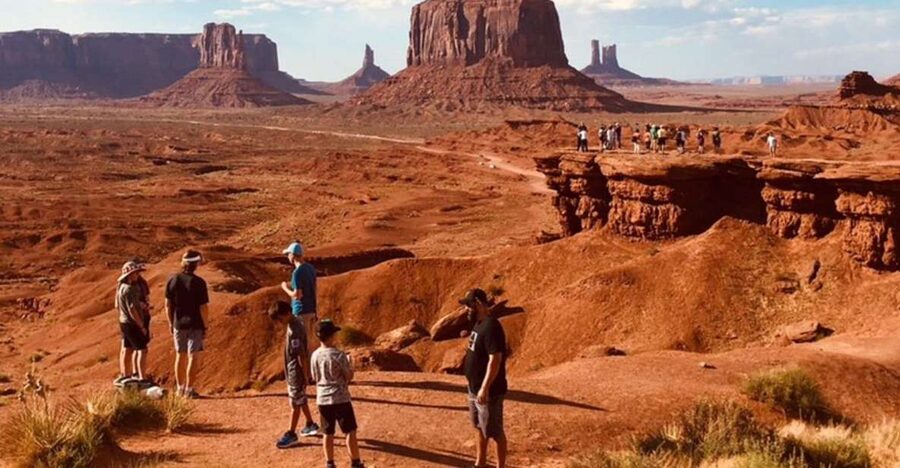
- Restricted backcountry access you cannot reach on your own, with a Navajo guide.
- Icon stops like the Totem Pole, Totem Pole area viewpoints, and West and East Mitten Buttes.
- “Movie-famous” landmarks such as John Ford Point and other well-known formations like Moccasin Arch and the 3 Sisters.
- A real cultural layer, including Navajo history, traditions, and a traditional musical performance.
- Small group pacing, where you can ask questions and take your time at viewpoints.
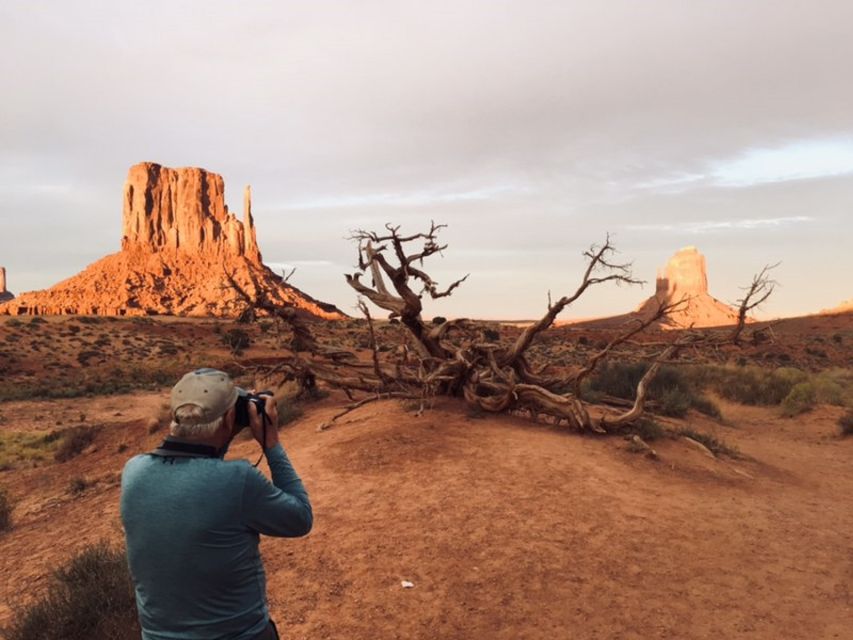
- Photo help from the guide, including tips for panoramic shots at key overlooks.
The backcountry access is the whole point of this tour
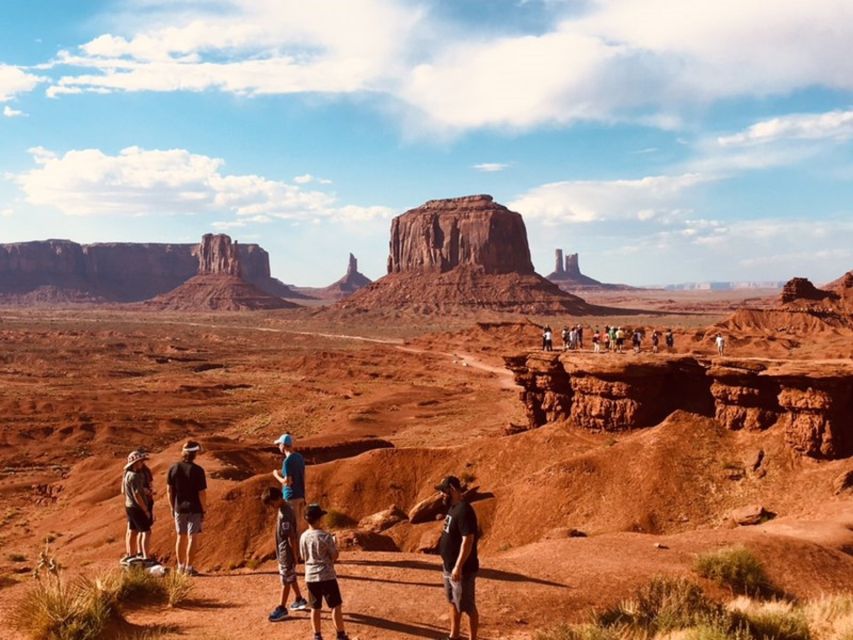
If you’ve only seen Monument Valley from the main road, you already know how dramatic it looks. What makes this tour different is that it takes you off that standard loop and into areas that are not generally accessible to the public. That matters because many of the best viewpoints are also the most sensitive, and your guide is what makes the access possible.
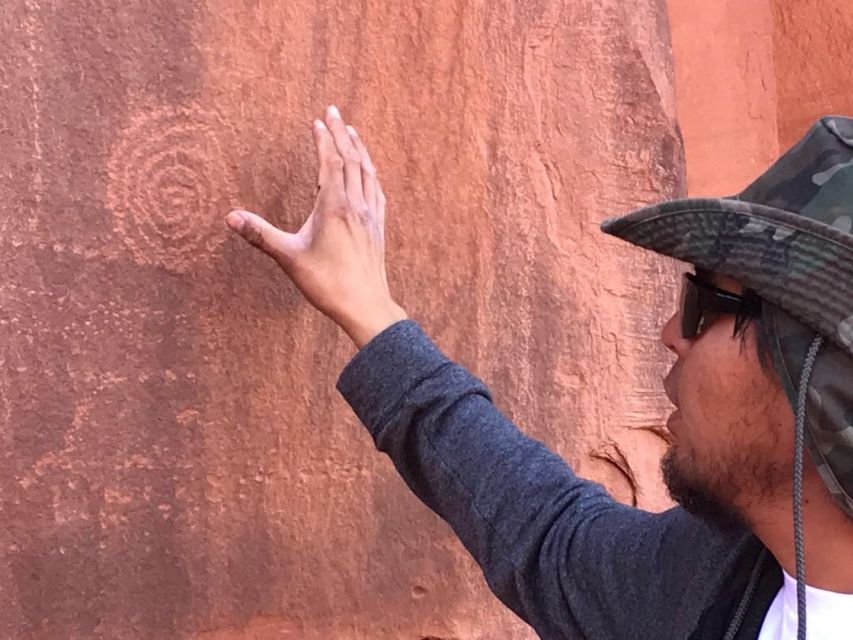
The tour also does a smart job of pairing the visual wow with context. You are not just hearing facts about rocks. You get stories about how people understand and relate to this land, plus cultural background that gives the formations a personal, place-based meaning. You’ll feel it most at the stops where the guide points out what to notice first, like a specific arch shape, a petroglyph setting, or a window-like rock feature.
And because it is a small group, you’re not stuck watching through a crowd. That intimacy is practical. You can actually ask a question, get a clear answer, and move your body to catch a better angle for a photo.
More of Monument Valley:
- 3 Hour Monument Valley Tour
★ 5.0 · 1,616 reviews - 2.5 Hours of Monument Valley’s Backcountry 4×4 Tour
★ 5.0 · 1,550 reviews - Monument Valley: Sunset Tour with Navajo Guide
★ 4.8 · 1,467 reviews
Meeting at The View Hotel, then off toward the quiet parts
Your meeting point is straightforward: wait outside The View Hotel at the Navajo loading area. That’s helpful because Monument Valley has multiple pull-offs and parking areas, and you do not want to waste your first hour sorting out directions.
From there you’ll head out in a safari-style vehicle. In warm weather, it’s open-air and holds up to 12 people. In cold or very hot conditions, it switches to an enclosed SUV and holds up to 7. Either way, you’ll be driving on rough terrain, which is part of why this trip is not recommended for infants under 1 year, or for women more than 5 months pregnant.
I’d treat this like a “dress for the ride” experience. Comfortable shoes really matter. You’ll likely be climbing short steps or stepping over uneven ground to get your best view. Also bring what the sun down here loves to do: sunglasses, hat, sunscreen, and a headscarf to cut glare and dust.
What you’ll see in the backcountry: arches, windows, and the famous movie sites
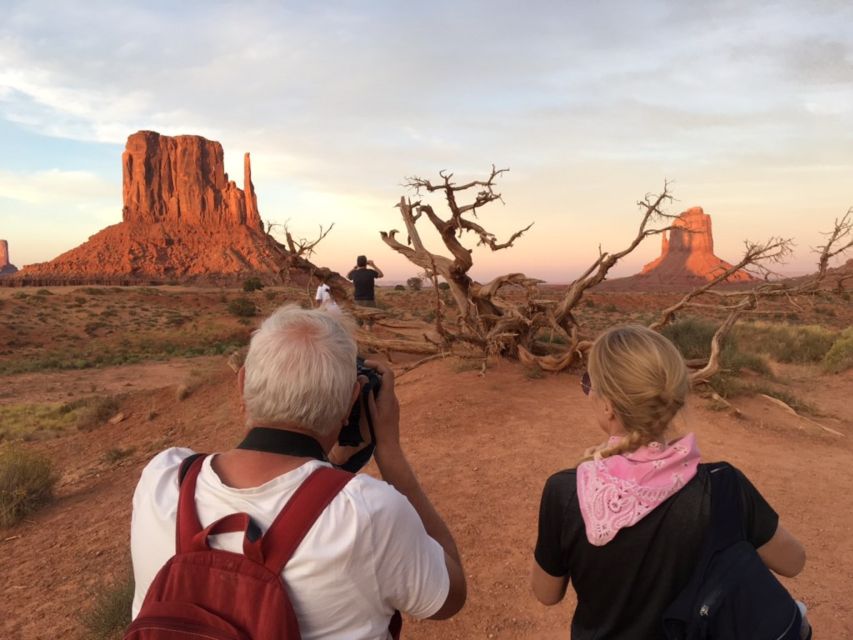
This tour is built around a route that strings together big-ticket formations and then adds the “how did we get here” stops in between. You can expect plenty of iconic names, plus smaller surprises when your guide chooses the best vantage for the light.
Here are the kind of stops that shape the whole experience:
- 3 Sisters: This is one of those Monument Valley visuals that can look similar from far away, but up close you notice how spacing and angles change the way the trio reads in photos.
- John Ford Point: This is one of those “you’ve seen it even if you didn’t know the name” locations. The value here is how your guide frames it, usually by pointing out what makes the view feel like a film set.
- Moccasin Arch: Arches in this region are rarely just an arch. From the right angle, you also see how the surrounding rock forms act like a frame.
- Petroglyph-related interpretation: Some of the most emotionally moving moments on this kind of tour come when the guide explains what you’re looking at on the rock surface, rather than treating it like a random carving.
- Wildlife sightings when conditions line up: One guide-led outing included wild horses, which is a reminder that this is a living place, not just a photo backdrop.
You should also expect to travel into restricted portions of the valley. That is the biggest reason this tour is worth booking instead of doing a self-drive. When you’re allowed beyond the public viewpoints, you see the valley in layers, from close rock texture to long-distance silhouettes.
One more thing I appreciate: the tour doesn’t rush every stop. The guide usually pauses to let you frame photos, ask questions, and just take in the scale. That matters because Monument Valley can trick your brain into thinking it is smaller than it is. Up close, it hits different.
Totem Pole, Big Hogan, and the photo moments you’ll plan around
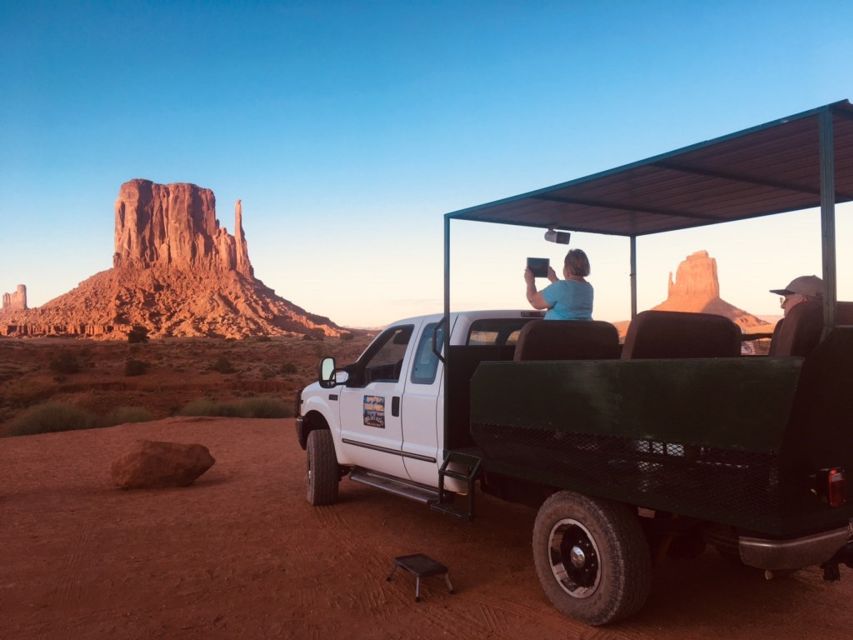
The most recognizable Monument Valley icons show up as the tour builds momentum. You’ll visit classic landmarks like the Totem Pole, the Big Hogan, Sun’s Eye, North Window, and Sleeping Dragon.
Why these spots matter for you:
- They are named because they have strong, readable shapes. That makes them excellent for photos, especially if the guide helps you pick the angle.
- Each one also connects to how local people interpret the land. Your guide can point out what to look at first, which is where the difference between a snapshot and a great shot happens.
The Totem Pole is one of those rock pillars where you can stand at different distances and get totally different lines. The value of a guided stop is that you can move to the spots that give you those lines without worrying about safety or access.
Sun’s Eye and North Window are especially good for late-day light, but even in other conditions, your guide can help you find the clearest view. Sleeping Dragon is another formation where the name nudges your brain to see a silhouette, and then you realize there’s more depth to it than you expected.
Then come the big iconic photo targets: the West and East Mitten Buttes. These buttes are the reason Monument Valley is Monument Valley. Plan to spend real time here. This is where a guide can turn a quick stop into a memory, by showing you which angle makes the mitten shape pop and how to align your foreground for scale.
More Jeep Tours in Monument Valley:
- Sonoran Desert Jeep Tour at Sunset
★ 5.0 · 2,650 reviews - Explore Sedona’s Vortexes: 2.5 Hour Jeep Tour of Mysticism
★ 5.0 · 1,834 reviews - Private Scottsdale Off-Road Jeep Tour
★ 5.0 · 1,247 reviews - Sonoran Desert Jeep Tour
★ 5.0 · 919 reviews
The Navajo culture and music part is not a side quest
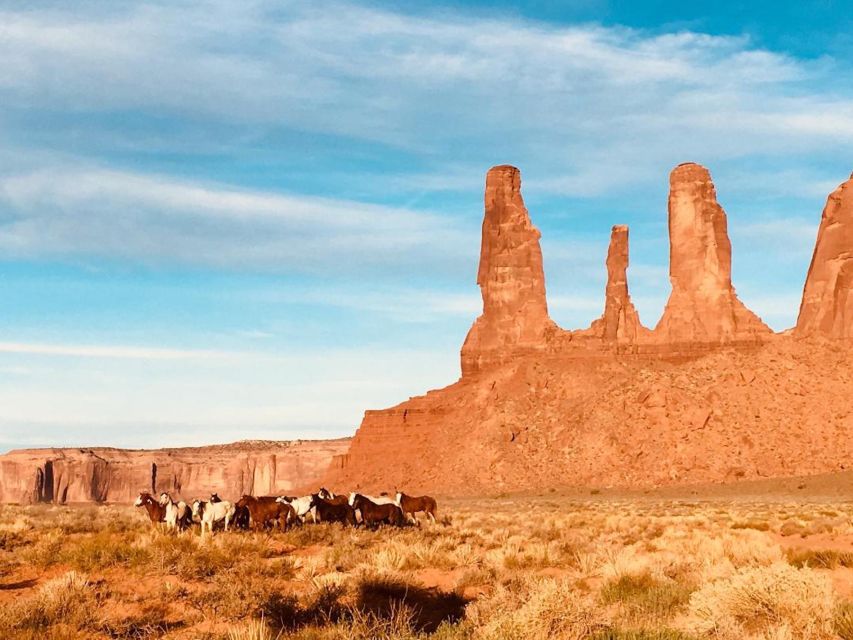
The cultural piece is one of the most highly praised parts of the tour, and it’s not tacked on. It’s built into the route and the pauses. You’ll learn about Navajo culture, history, and traditions, and you’ll also enjoy a traditional musical performance by your guide.
In the field, that performance can feel surprisingly intimate. People mention flute playing and drumming, and there are even accounts of music happening in rock settings where the sound carries. Even if you do not know what you are listening for, you’ll recognize that the guide treats music as more than entertainment.
Some guides also share personal ties. You might hear stories about family, teachings they were given, or how they see the land through their own Dineh identity. That personal layer is what makes it feel human, not like a lecture.
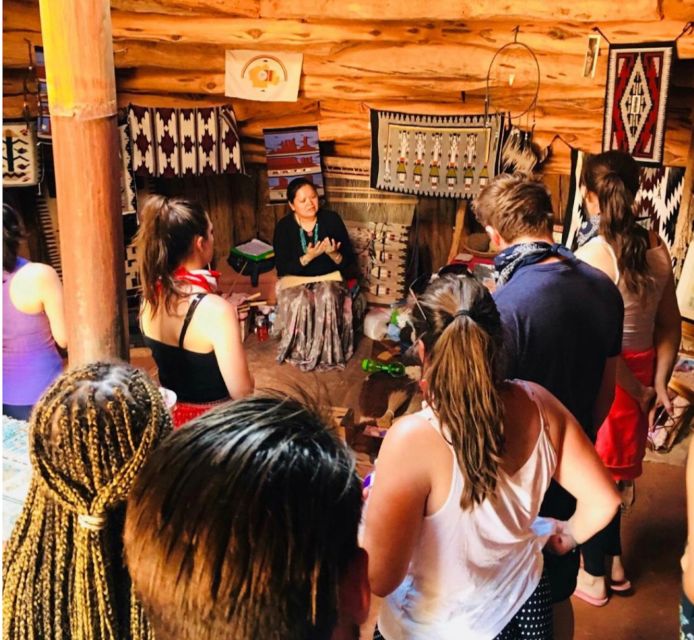
You may also have a stop connected to a Hogan, where someone explains daily living and traditions. One highlight from an outing described a woman speaking about her way of living after the group reached the Hogan area. You’ll also see mentions of a “blessing” type song for safe travel and family, which gives the tour a reflective tone.
One note for your expectations: food is not included as a listed part of the tour. That said, one guide-led experience included trying fry bread, so if you want to try it, keep in mind it may happen as part of a local moment, not as a guaranteed meal. Bring the mindset that you might snack, but you still need to plan your main meals yourself.
How the ride feels: time on bumpy roads, and why it’s still worth it
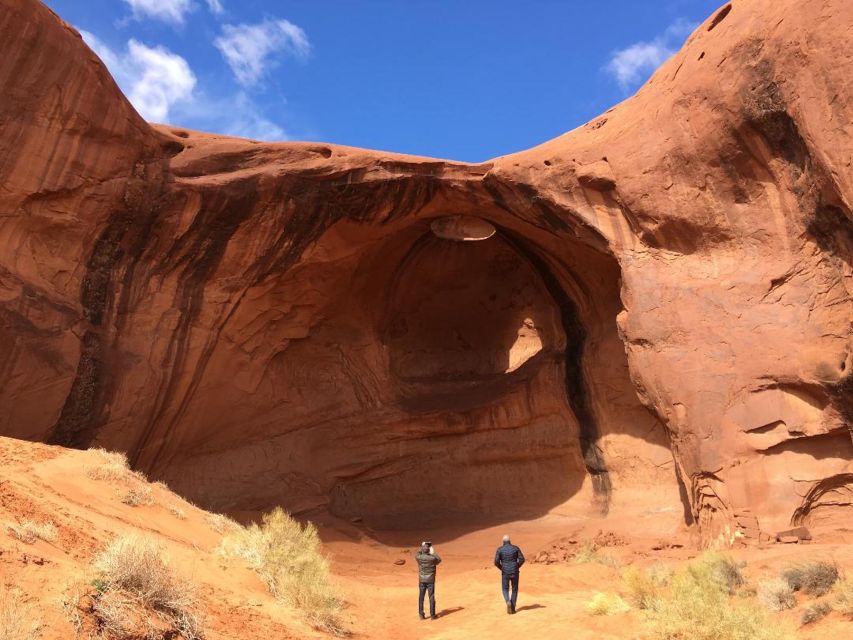
This is a Jeep style backcountry experience, and the terrain is part of the deal. Expect a jarring ride at times, because you’re going where the road is not smooth. That matters for two reasons.
First, it explains why the tour has limits for infants and later pregnancy. The second reason is photo and comfort. If you come in with good shoes and sun protection, you’re much happier when you need to shift positions quickly or step off the vehicle to get a better view.
The duration of 150 minutes is long enough to do more than just a quick “hit the highlights” loop. You’ll have time for multiple major formations, plus the smaller restricted stops. Since the group size is capped at 12 or 7, you’re not waiting around for long lines to move.
Also, because you’re traveling with a local Navajo guide, you get answers to the exact questions that pop up when you’re standing in the valley. People often ask why a formation is shaped a certain way, what a name means, or how petroglyph locations connect to time and tradition. The guide’s job is to connect those dots on the spot.
Guides you might meet, and why the guide can change your day
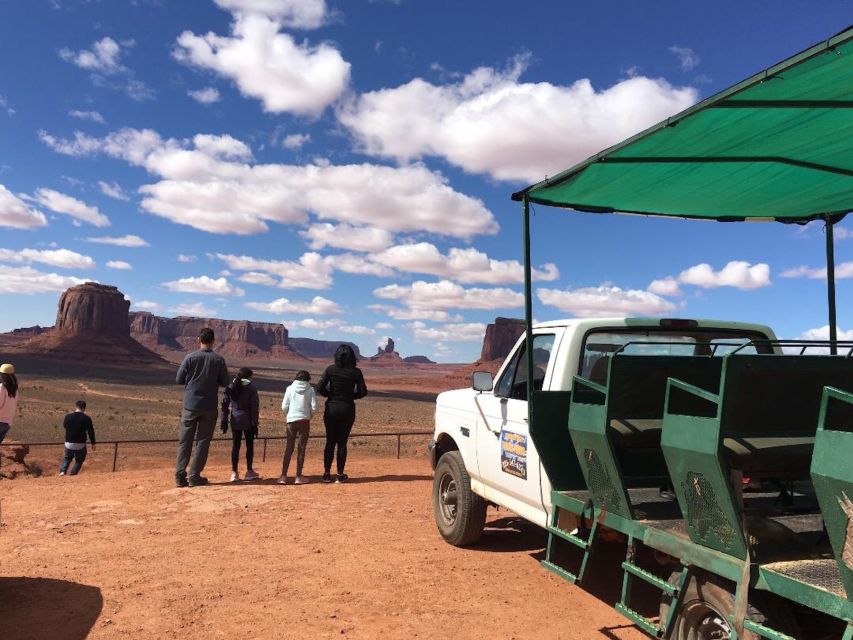
This is one of those tours where the guide can make a big difference. You’ll be in the vehicle with them for most of the time, you’ll stop with them, and you’ll hear their interpretation of the land. Based on names that have led this tour, you might meet guides such as Sandrea, Travis, Larry, Dark Sky, Donna, Comasheena, or Carole.
What you can count on, regardless of the name, is that the best tours keep a rhythm:
- Quick orientation when you’re about to see a major landmark
- Time for questions
- Photo guidance, especially for panoramic framing
- A cultural explanation that makes the sight feel connected to people, not just geology
If you’re the type who loves learning on the go, this is a great match. If you prefer silence and scenic only, you’ll still get a lot of time outside the vehicle, but you might want to come prepared with a few questions of your own so the guide can tailor what you care about.
Price and logistics: how to judge $80 value without overthinking it
At $80 per person for about 150 minutes, this is not the cheapest way to see Monument Valley. But it isn’t trying to be. It’s priced like a guided, restricted-access backcountry experience with cultural programming.
Here’s what the price includes:
- Local Navajo guide
- Access to restricted backcountry
- Traditional musical performance
- Bottled water
- 6% tax and 3% operational fees included
What is not included:
- Monument Valley Tribal Park entry pass for $8 per person
- Food
That $8 park entry can sting if you forget it, so build it into your budget early. Still, the value calculation stays solid because the restricted backcountry access is the main product. A self-drive may give you the iconic road stops, but it generally does not give you the off-limits areas that make this tour feel like more than a route recap.
Also, the small-group size matters for your money. You’re not paying just for the vehicle. You’re paying for time with a guide who can point out specific things, explain significance, and help you see the places the public route usually skips.
Weather, Utah time, and what to plan so the day runs smoothly
Two practical planning items can save you stress.
1) Utah time vs Arizona time
The tour operates on Utah time (Mountain Daylight Time), which is 1 hour ahead of Arizona from March to November. If you’re coming from Arizona, you should leave 1 hour early. This is the kind of detail that can make you late even when you did everything else right.
2) Open-air vs enclosed vehicle
Warm weather usually means open-air and up to 12 passengers. Cold or extreme heat usually means switching to an enclosed SUV with up to 7 passengers. Either way, you should bring sun protection. And if you tend to get cold easily, also pack a light layer, because the desert temperature swing can surprise you.
And if you’re counting on every cultural stop, keep one small flexible point in mind: on rare occasions, weaving may be canceled due to unforeseen circumstances. If that happens, the tour still focuses on the backcountry access, viewpoints, and Navajo cultural interpretation.
Should you book this backcountry Jeep tour?
If your goal is to see Monument Valley as more than a roadside photo stop, I’d book it. The reasons are direct: restricted backcountry access, small-group pacing, and live Navajo guide storytelling with music. For most people, those three pieces are exactly what turns a good day into a standout day.
Book it if:
- You want iconic landmarks and also want to go beyond the standard route
- You like cultural context and live music as part of the experience
- You appreciate photo help and structured stops
Maybe skip or choose a different option if:
- Rough terrain is a problem for your body or your travel party (infants under 1 year, or pregnancy past 5 months)
- You want a totally self-directed experience with no guiding or music
- You’d rather spend money on food and a long independent drive than on guided access
If you do book, the best way to get value is simple: arrive ready for the ride, bring the sun gear, plan for Utah time, and ask questions the moment your guide brings up a stop. That’s when the valley stops being just scenery, and starts being a place with meaning.
Reviewed most recently around Monument Valley
- Sunset Tour of Monument Valley★ 5.0 · 742 reviews
- 3.0 Hours of Monument Valley’s Sunrise or Sunset 4×4 Tour★ 5.0 · 811 reviews
- 2.5 Hours of Monument Valley’s Backcountry 4×4 Tour★ 5.0 · 1,550 reviews
- 3 Hour Monument Valley Tour★ 5.0 · 1,616 reviews
- Monument Valley: Scenic 2.5-Hour Guided Tour★ 4.9 · 714 reviews
- Monument Valley: Highlights Tour with Backcountry Access★ 4.8 · 470 reviews
- Monument Valley: Horseback Adventure Tour★ 4.4 · 715 reviews
- Monument Valley: Sunset Tour with Navajo Guide★ 4.8 · 1,467 reviews
Monument Valley Tours, compared.
2.5 Hours of Monument Valley’s Backcountry 4×4 Tour
Read our review →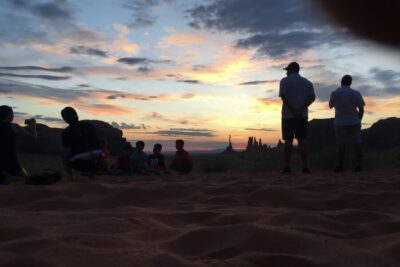
Monument Valley: Sunset Tour with Navajo Guide
Read our review →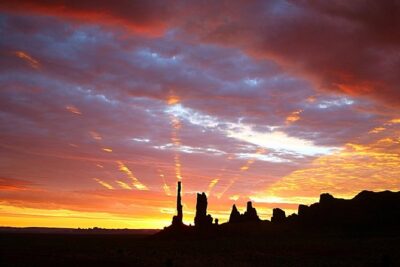
3.0 Hours of Monument Valley’s Sunrise or Sunset 4×4 Tour
Read our review →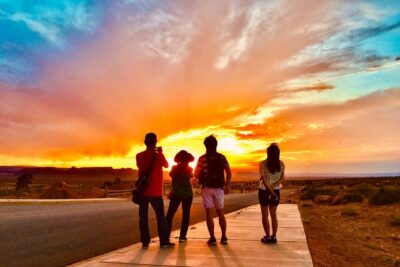
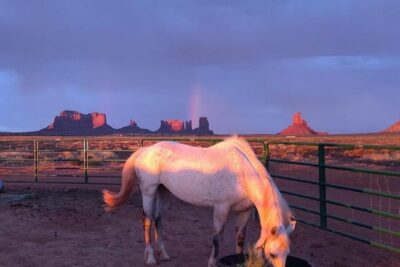
Monument Valley: Highlights Tour with Backcountry Access
Read our review →Browse the lists this tour appears in