
Reviewed · HOP-ON HOP-OFF BUS TOURS
Big Bus NYC: Hop-On Hop-Off Sightseeing Tour by Open-top Bus
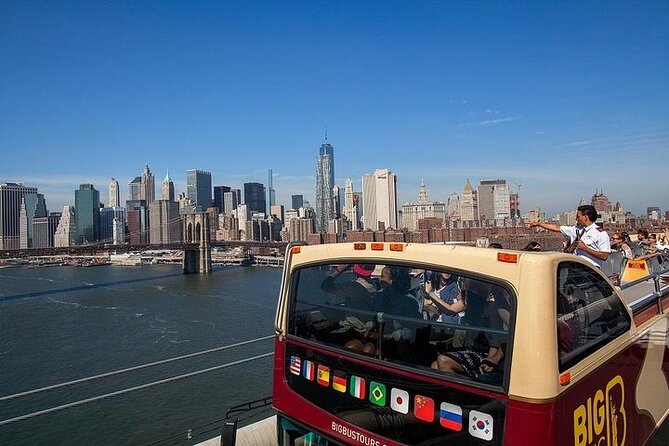
Big cities feel easier when you can move at your own speed, and that is the main draw here. I like having two loops so you can focus on midtown and downtown one day, and uptown the next, plus I like the hop-on, hop-off freedom when a stop catches your eye. One thing to keep in mind, though, is that service and timing can slip with traffic or bad weather, and some stops can be farther from the headline sight than you expect.
If you get a good driver-narrator, the ride can feel like a guided stroll with views. I especially liked reading about moments like Ms Copeland adding extra sparkle on a winter day, or Santana turning the second ride into something more interactive. Just don’t assume the audio always matches what you are looking at outside, because a few people ran into weak or missing sound and had to rely on the headphones.
Key things to know before you board
- Two route loops for a smart first pass: Downtown and Uptown, so you can stop where you care most.
- Hop-on any stop with a timed ticket window: 24, 48, or 72 hours, activated through the Big Bus app or staff.
- Audio in English using onboard headphones: You hear stories as the city moves past, as long as the audio is working on your specific bus.
- Live bus tracking in the Big Bus app: Helps you avoid wandering when you are cold, tired, or pressed for time.
- Full loop timing is around 90 minutes: Plan your day around a loop plus your walking and museum time.
Why This Hop-On Hop-Off Works for First-Time NYC Visits

This tour is built for people who want structure without a strict schedule. You get a route that hits the big-name sights, and you choose whether to stay on for the full circle or jump off to explore.
The biggest practical win is that it reduces guesswork. In Midtown and Lower Manhattan, you can feel like you are walking forever between landmarks. Here, you can float above that problem, then step off when something is worth your time.
You also get onboard context, not just scenery. The English audio commentary is there to connect what you see, like major neighborhoods and skyline landmarks, with the stories behind them.
More Hop-On Hop-Off Tours in New York City:
- New York: Hop-on Hop-off Sightseeing Tour by Open-top Bus
★ 4.2 · 5,863 reviews - Savannah Hop-On Hop-Off Trolley Tour
★ 4.5 · 6,527 reviews - Nashville Hop On Hop Off Trolley Tour
★ 4.5 · 5,643 reviews
Tickets and Timing: Choosing 24, 48, or 72 Hours
Price starts around $44 per person, and your best value depends on how you plan to use the ticket window. If you only want a quick overview of midtown plus downtown highlights, a 24-hour ticket can work. If you want breathing room to actually get off and roam, 48 hours tends to feel more realistic.
Here is the upgrade logic in plain terms:
- 24-hour route: Downtown only. Good for a classic first look and a single theme day like Midtown landmarks plus Lower Manhattan.
- 48-hour ticket: Adds Uptown access. This lets you cover more of Manhattan without rushing, and it helps if you want museums or Central Park area stops.
- 72-hour ticket: Adds Brooklyn tours and several self-guided tours. Choose this if you like a slower pace or you want more than the bus ride as your plan.
One scheduling rule matters: multi-day tickets must be used consecutively. If your itinerary has gaps, your money can get trapped behind the unused day.
Entering the Route: Stops, Loops, and How Not to Get Lost
You redeem your mobile or paper voucher at any stop, then hop on. The bus goes by route colors, and while you might see people trying to sell tickets, your job is to be in the correct line for the correct loop.
This is the part where a little prep saves headaches:
- Use the Big Bus app for live bus tracking and stop help.
- Confirm the exact stop location on the map, because several stops are named for major landmarks, even if you may need to walk a few minutes to reach the exact sight.
- If you feel like you are waiting a long time, look for your next bus on the app rather than guessing.
A few common pain points pop up in real-world use. Some people struggled with finding the correct stop when the app was hard to interpret or when pickups were confusing. Your best defense is checking the stop address before you bundle up and head out.
Downtown Loop: Midtown Landmarks to Lower Manhattan and the Bridge View

On the Downtown loop, you get a strong sampler of midtown skyline, shopping streets, and Lower Manhattan edges. The stops are spaced so you can get off, walk around, then rejoin without feeling like you must commit to one long day of nonstop transit.
Here is what each major stop is good for, plus what to watch out for:
Stack these New York City options against each other
- NYC: SUMMIT One Vanderbilt Experience Ticket
★ 4.7 · 37,985 reviews - NYC: 9/11 Memorial & Museum Timed-Entry Ticket
★ 4.8 · 31,428 reviews - NYC: Empire State Building Tickets – Observatory & Museum
★ 4.7 · 25,757 reviews - NYC: Empire State Building Observation Deck Tickets
★ 4.7 · 22,072 reviews
M&M’S New York (7th Ave and W 48th St)
This is an easy Midtown anchor. It is handy for starting your day because it is easy to locate in the theatre district area and it puts you right near the energy of Times Square.
If you are coming from elsewhere in Midtown, this stop can help you find your bearings fast.
Times Square (W 42nd St and Broadway)
You will see Times Square from above most clearly when you stay seated upstairs for the first loop. When you hop off, do it with a reason, because the area can eat time if you just wander.
Practical tip: if you want photos, aim for a time when crowds thin out, then hop back on before the next wave.
Empire State Building (5th Ave and W 32nd St)
Even if you do not go inside, this is the skyline moment you want. It also sets you up for exploring nearby blocks once you feel oriented.
Keep expectations flexible: you may be seeing the landmark from the street or a short walking radius, not from a front-row seat.
Flatiron District (5th Ave and W 23rd St, near Eisenberg’s Sandwich Shop)
This stop is great for anyone who wants New York street charm with a landmark shape. Flatiron is one of those areas where the architecture makes you stop even if you did not plan to.
If your time is tight, hop off for 30 to 45 minutes, snap photos, then head back for the next big transition.
SoHo (West Broadway and Spring St, near Nike Store)
SoHo is where the city shifts from landmark tourism into neighborhood browsing. On the bus, it looks like a fast ribbon of streets. On foot, it becomes shopping streets, side alleys, and that classic cast-iron vibe.
The main consideration is simple: you could easily lose an hour here, so set a reboarding plan in your head.
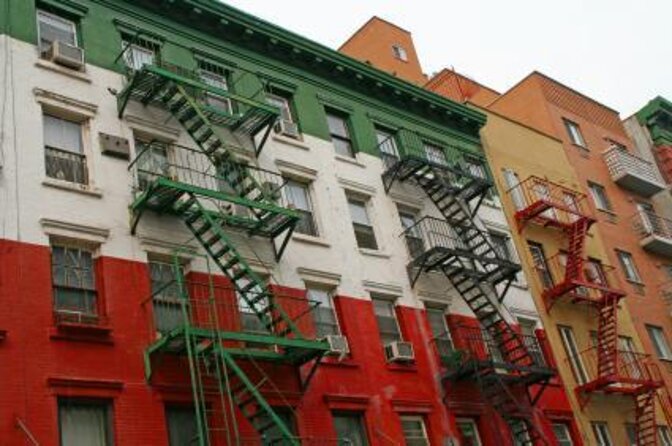
Chinatown and Little Italy (near Waker St, 100 Lafayette St)
This area is perfect if you like sensory New York, where the streets feel alive. The bus route helps you get the big picture, then you can choose what to do on foot.
If you plan to eat, leave time for the walk from the stop to where you want to go, because the exact distance can surprise you.
Brooklyn Bridge (Park Row and Beekman St)
This stop is your gateway to the bridge views. From the bus, you can get the bridge as part of the city composition. If you want to walk on the bridge itself, plan for real walking time after you hop off.
One heads-up: stop names and headline sights do not always match the closest footpath. Check the map, then decide whether walking the bridge is worth your effort that day.
Wall Street (Wall St area by the Statue of Liberty side)
This is the New York of stone towers and quick photos. It is also one of the most useful stops for connecting the neighborhoods with the deeper downtown vibe.
If you are short on time, consider hopping off, taking in a few photo points, then using your remaining minutes to get onto the next section toward the waterfront.
Trinity Church area (Trinity Place and Cedar St)
This stop pairs nicely with history and architecture, and it gives you a calm moment compared with the busiest blocks. It is also a good spot to orient yourself if you are heading toward the Lower Manhattan waterfront.
If you are chasing a specific view, check on foot. Some “Statue of Liberty” named areas may not put you directly across from the statue.
World Trade Center area (Church St and Vesey St)
If you want to see the skyline up close, this stop gives you the most direct access to that downtown core. It also makes it easy to build a day around memorial and museum time if that is your priority.
Give yourself time here. This is one of the places where you might want to linger rather than just peek.
Pier 57 (11th Ave between W 15th and W 16th St, across from Pier 57)
This stop helps you connect to the waterfront and nearby entertainment zones. It is especially useful if you want to pair your bus ride with another activity, like a cruise you can reach nearby.
Hudson Yards (12th Ave and 30th St)
Hudson Yards is where the city looks more futuristic. From the bus, it reads as a sharp contrast to older Manhattan blocks.
If you hop off, think about whether you want views from inside a building or just street-level exploring, then keep your return plan clear.
Circle Line Sightseeing Cruises link (12th Ave and 40th St, opposite Pier 81)
This is a smart stop if you want to turn your land day into a water day. It makes it easier to bridge from the city grid to river views without hunting for pier access.
Uptown Loop: Museums, Central Park Edges, and Theatre District Energy
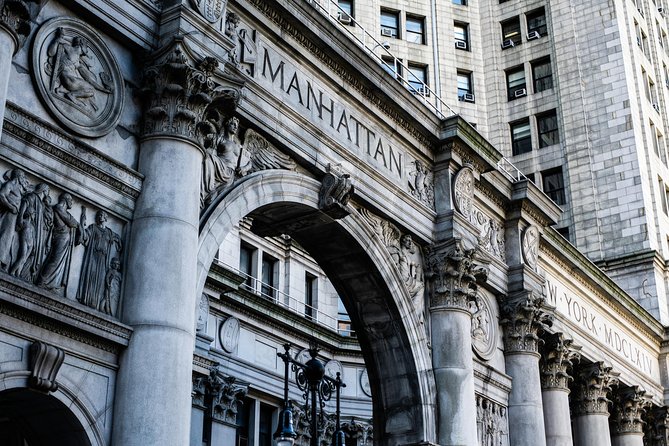
The Uptown loop takes you north with classic Manhattan highlights. If your goal is “see more than just downtown,” this route can be the difference between a quick peek and a satisfying day.
Hope Sculpture (7th Ave and W 53rd St)
This is a great transition point. It helps you reset from Midtown motion into a more walkable route where you can reposition for museum and park plans.
Times Square again (42nd and Broadway, in front of the Knickerbocker Hotel)
You can see this area from different angles depending on where you board. If you want a second look after your earlier loop, reboarding here can feel efficient.
The tradeoff is that Times Square can be time-consuming, so treat it as a photo and orientation stop more than a full destination.
Rockefeller Center (W 49th St and 5th Ave)
This stop is all about iconic buildings and great photo opportunities. Even if you do not go inside, the surrounding streets help you understand how Midtown is planned.
If you are traveling in colder months, you might appreciate this as a “hop off, quick look, hop back on” stop.
Metropolitan Museum of Art (5th Ave and E 83rd St, outside the museum)
If museums are your thing, this is one of the most valuable stops. The bus gets you close, and then you can choose your level of commitment once you are there.
Plan for a real visit. Even a short museum walk can turn into a bigger time block.
Central Park Zoo (5th Ave and E 66th St, opposite 845 5th Ave)
This is a solid stop for family-friendly plans and for anyone who likes the idea of pairing the park with a more specific point of interest.
If you are using this as a shortcut to the park, check where you will exit and what path makes sense for your direction.
Columbus Circle (Southwest corner of Central Park, next to Main Monument)
This is your park gateway. It is useful because it connects you to multiple routes into Central Park without you needing to figure out the subway.
From here, you can decide if you want an easy park stroll or a targeted stop, then return to the bus.
Carnegie Hall (7th Ave and W 57th St)
This stop works well if you want a theatre and performance area taste. The area has a more classic Manhattan feel than the rush near Times Square.
If you want to catch a show later, this is also a convenient reference point for planning your evening.
Onboard Audio, Headphones, and What You Actually Learn

The audio commentary is one of the main reasons this tour feels like more than just transportation. It is in English, and it is designed to share stories as you move between neighborhoods.
A key practical point: the audio experience depends on working sound and you having headphones. Some people noted missing audio on certain buses, and others said they did not realize they needed to pick up earphones. So if your first minute sounds faint, act fast.
On the content side, the commentary is best used as a guide for where to look. When it matches your view, it turns “I see a building” into “I know why it matters.” When it does not, you still get the city rhythm, you just need a bit more help from your own curiosity.
Real-World Comfort: Cold Weather, Open-Top Buses, and App Help

Open-top buses are great for views, but New York weather can be dramatic. Even in freezing conditions, people reported enjoying the upstairs seating, which suggests the tour can still work in winter if you dress like it is an outdoor event. Still, if you are cold easily, you should have a strong plan for layers.
Heating is another variable. Some riders said the bus was not heated, so do not assume comfort is automatic.
The app is your friend when you need timing. Live bus tracking helps you reduce guesswork when you are figuring out where the next bus is coming from. When the app is hard to use, or when stops are confusing, you can burn time standing around in the wrong place.
So your strategy is simple: check the app, confirm the stop address, then commit.
Value Check: Is $44 Worth It for Your NYC Day?
At roughly $44 per person, the question is not just whether you get a ride. It is whether the hop-on, hop-off format saves you more time than it costs.
This tour tends to be worth it when:
- You want a fast overview and you plan to get off at several stops.
- You are new to the city and you want help building a simple “where should I go next” plan.
- You prefer a viewpoint from an open-top bus for skyline and neighborhood context.
It can feel overpriced when:
- You only stay on for a short segment and never use the stops.
- You discover after the fact that a named stop is not right at the landmark entrance you imagined.
- Your loop is disrupted by traffic delays or a day cancellation due to weather.
If you are trying to compare to subways, remember this is not just transit. It is a guided route with major reference points, and you pay for that convenience.
Who Should Book This Bus Tour, and Who Should Skip It
This is a good fit for:
- First timers who want structure without committing to a full walking tour.
- Families who benefit from frequent hop-on choices and clear landmark sequencing.
- People who want to mix sightseeing with flexible rest breaks.
You might skip it if:
- You dislike audio-led experiences or you cannot rely on headphones working at the moment you are riding.
- You prefer independent planning with subway routes so you can control stops and walking distances tightly.
- You are very time-limited and you hate waiting for frequency.
If your style is active walking and you already know your neighborhood priorities, the subway plus a map might be cheaper. But if you want the “sit, look, choose” rhythm, this tour fits that vibe.
Should You Book Big Bus NYC?
If you are visiting for a short trip and you want the most efficient way to see the city’s major zones, this tour is a solid booking choice. Pick the ticket length that matches how many stops you actually want to use, and use the app to stay oriented.
My decision rule is simple: if you will hop off at multiple stops, you are buying back time and reducing stress. If you think you will mostly stay onboard and do little walking, consider other options.
FAQ
How do I redeem my Big Bus ticket for the NYC hop-on hop-off tour?
You can redeem your printed or electronic voucher at any of the listed bus stops by showing it to a staff member, then boarding the bus.
How long is a full loop if I stay on the bus?
A full rotation on each of the Downtown (Red) and Uptown (Blue) routes is approximately 90 minutes, and tour duration can fluctuate by season.
Which routes can I access with different ticket options?
A 24-hour ticket gives access to the Downtown route only. A 48-hour ticket adds access to both Downtown and Uptown loops. A 72-hour ticket also includes Brooklyn tours and several self-guided tours.
How often does a bus arrive at each stop?
Buses arrive approximately every hour on both the Downtown (Red) and Uptown (Blue) routes.
Can I use a mobile ticket, and can I activate it through an app?
Yes, the tour uses mobile tickets, and you may activate your ticket via the Big Bus app or in person with staff.
Is the tour wheelchair accessible?
Yes. The tour operates wheelchair-accessible vehicles with lifts that can accommodate up to 650 pounds.
Are pets allowed onboard?
No pets are allowed onboard the bus, except ADA service animals.
Is there food or alcohol allowed on the bus?
No food or alcohol is permitted onboard. Non-alcoholic drinks in screw-top bottles are permitted.
Is luggage allowed on the bus?
No, luggage is not permitted onboard at this time.
What languages are available for the onboard commentary?
The tour is offered in English.
Reviewed most recently around New York City
- The Museum of Modern Art Admission Ticket★ 4.5 · 735 reviews
- Philadelphia and Amish Country, 1-Day Tour from NYC★ 4.0 · 734 reviews
- Top Rated Brooklyn Half-Day Food, History & Culture Tour via bus★ 5.0 · 758 reviews
- NYC: Woodbury Common Premium Outlets Shopping Trip★ 4.2 · 761 reviews
- Madame Tussauds New York City Admission Ticket★ 4.5 · 766 reviews
- New York City: Private Walking Tour with a Local★ 4.6 · 771 reviews
- Central Park Guided Walking Tour★ 5.0 · 774 reviews
- NYC: Woodbury Common Premium Outlets Shopping Round Trip Service★ 4.0 · 784 reviews
Hop-On Hop-Off Bus Tours, compared.


New York: Hop-on Hop-off Sightseeing Tour by Open-top Bus
Read our review →

Boston Hop-On Hop-Off Trolley Tour with 13 Stops
Read our review →
New Orleans City Sightseeing Hop-On Hop-Off Bus Tour
Read our review →
Waikiki Trolley Hop-On Hop-Off Tour of Honolulu
Read our review →
Big Bus SF: Hop-on Hop-off Tour with 17 Stops and Sunset Option
Read our review →
Waikiki Trolley Blue Line Coastline & Local Grindz Hop-on Hop-off
Read our review →Browse the lists this tour appears in