

Reviewed · MUSEUMS
Metropolitan Museum Guided Group Tour
The Metropolitan Museum of Art can swallow a whole day, and the scale can feel intimidating fast. This guided group format is interesting because it turns the Met from a wandering maze into a planned set of stops. I like that you get a small-group guide to steer you through key galleries, and I like that the experience includes skip-the-line ticket entry so you lose less time to crowds and security lines.
The only real drawback is the trade-off you make for that efficiency. You’ll be moving through a lot of galleries in a short window, so if you want to sit with one painting for a long time, the walking pace may feel brisk.
Key highlights before you go
- Small group up to 18 people keeps the vibe conversational instead of chaotic.
- Skip-the-line entry helps you start viewing sooner.
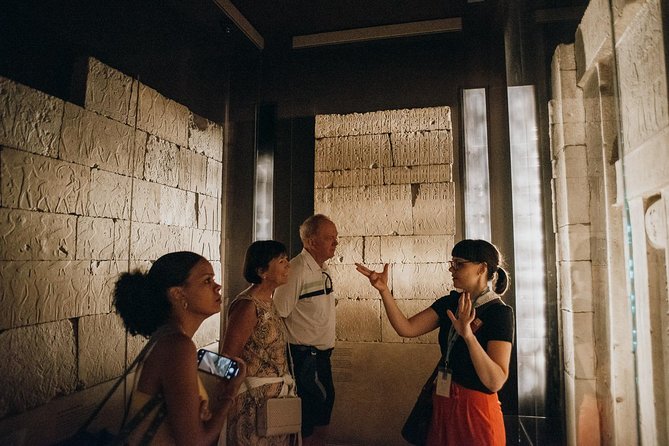
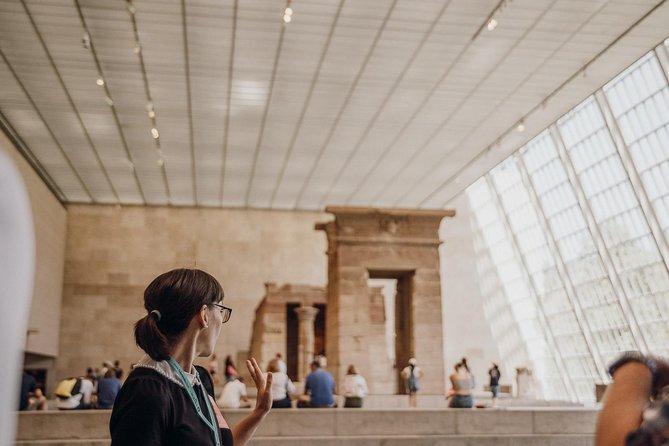
- A guided route built around major hits like Temple of Dendur and the Antioch Chalice.
- Real art-and-history stories, including the scandal behind Sargent’s Madame X.
- You can continue exploring after the tour, so it works as both an introduction and a launch point.
Why this Met highlight tour makes sense inside a museum that big
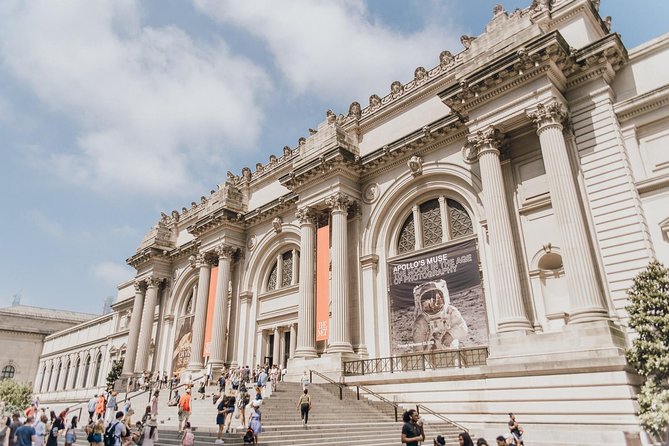
The Met is one of those places where the building is the first surprise. You step in expecting a few rooms and end up looking at art that spans thousands of years, from ancient monuments to later masterpieces. Even if you love museums, the Met can overwhelm your brain. You want context, a path, and a sense of what to look at first.
That is exactly what this tour is designed to do. It gives you a guided overview that helps you connect eras and themes instead of just collecting random sights. In my view, that is the main value here: the guide’s explanations turn the museum into something you can actually follow.
You also get something practical. The tour uses a timed route in about 2 to 3 hours, which is helpful when your New York City schedule is already packed. Many people try to do the Met alone and burn the first hour just figuring out where they are. A route you can trust saves energy for the fun part, which is actually looking.
More Museums in New York City
- NYC: 9/11 Memorial & Museum Timed-Entry Ticket
★ 4.8 · 31,428 reviews - NYC: Empire State Building Tickets – Observatory & Museum
★ 4.7 · 25,757 reviews - New York City: American Museum of Natural History Ticket
★ 4.5 · 15,447 reviews
The $65 price and what makes it feel like a good deal
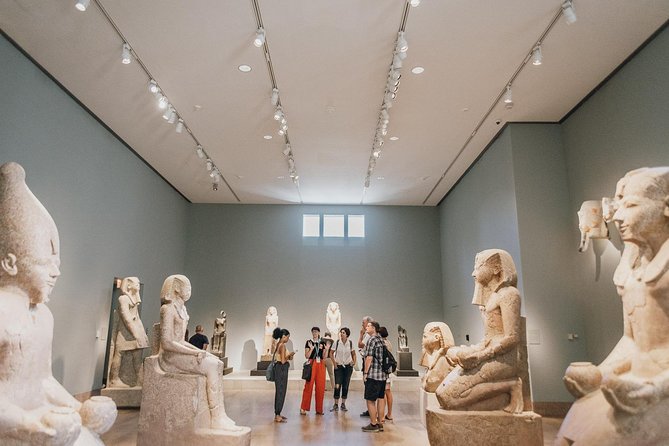
At $65 per person, you’re paying for three things: a local English-speaking guide, a guided walking experience, and a skip-the-line ticket to the Met. You’re not just buying a “stand-and-point” experience. You’re buying someone who knows how to move through the museum efficiently and how to explain what you’re seeing in a way that sticks.
Here’s the real value math. If you were to go on your own, you would still pay admission, and you’d still need to navigate the museum. The guide time is what you’re really getting for $65, and that’s often where the difference shows up. A good guide helps you avoid spending your limited time on galleries that do not fit your interests, and they point out details you would likely miss.
One small nuance: the information provided notes admission ticket included for the 3-hour option. If you pick the 2-hour option, double-check at booking what exactly is included in that chosen duration. Either way, the skip-the-line part is listed as included, which matters on busy days.
Meeting at 1000 5th Ave, then handling security without losing your day
The meeting point is the Met itself at 1000 5th Ave, New York, NY 10028, and the tour ends back where you started. You meet 15 minutes prior to the start time, and arriving late can mean you do not get a refund for late arrivals or no-shows. That is not to be dramatic, it’s just how timed museum tours work.
Plan around the Met’s security check, which can take up to 15 minutes. If you bring a bag, there is a bag check available, and that also takes time. My advice: arrive a little early even if you think you are “on time.” You want your head in museum mode, not stress mode.
A couple other practical notes that matter once you’re inside:
- It is a walking tour at a moderate pace.
- Non-flash photography is allowed, but it cannot be used inside the Museum. That means plan on looking more than shooting.
- Selfie sticks are prohibited.
- There can be gallery closures or absences on the day, and your guide may adjust the route.
If you are hoping for a perfectly static checklist, keep expectations flexible. The guide’s job is to make sure you still get a strong highlights mix even if one gallery is closed.
Temple of Dendur to the Antioch Chalice: what your 2 or 3 hours really looks like

The core experience is a guided walk through a set of iconic stops. The tour starts with the big, recognizable Met entrance mood, then moves into the museum with a guide who explains why each stop matters.
Your route includes major highlights such as:
- Temple of Dendur (15 BC), reached by walking past models of Egyptian tombs.
- King Henry VIII’s suit of armor, which takes you into Tudor-era England.
- The Antioch Chalice, a religious object that’s believed to be connected to the Holy Grail legend.
- Greek and Roman statuary, including emperors’ busts and ancient frescoes.
- A discussion of the scandal behind John Singer Sargent’s Madame X.
- A mix of famous pieces and what the tour description calls a few hidden gems, meaning your guide may point out lesser-noticed works that still fit the theme of the day.
Here’s why this structure works. Each stop is chosen not just for fame, but for storytelling power. Temple of Dendur is awe-inspiring because it is physically captivating and historically specific. Henry VIII’s armor is a clear pivot from ancient art to a different kind of cultural power, and it’s also the kind of object you can see immediately even if you are not a history scholar. The Antioch Chalice adds a fascinating bridge between art history and the way legends attach themselves to objects.
Then the tour shifts to a classical thread. Roman and Greek sculpture can look “similar” if you are glancing quickly. With a guide, you start to notice differences in style, symbolism, and what the objects were meant to communicate.
Another New York City day, played differently:
- NYC: SUMMIT One Vanderbilt Experience Ticket
★ 4.7 · 37,985 reviews - NYC: Empire State Building Observation Deck Tickets
★ 4.7 · 22,072 reviews - NYC: Edge Observation Deck Admission Ticket
★ 4.6 · 20,918 reviews - New York City: Statue of Liberty & Ellis Island with Ferry
★ 4.6 · 18,683 reviews
The art stories that make the Met feel smaller, not just bigger
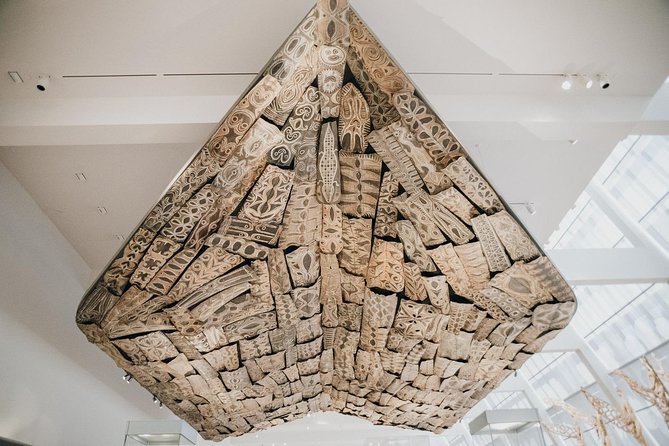
One of the most praised parts of the tour is how the guide turns art into something you can talk about after you leave. You get more than dates. You get connections. And that shows up in the guide styles people named in feedback.
For example, guides like Rob are singled out for great anecdotes and a blend of learning art and history through stories. Phil gets credit for being friendly and highly informed while still keeping it readable. Stephan is praised for moving at a pace that keeps things from turning into a blur, while still covering a lot. Katie and Cherie are both described as bringing heart and humor into the galleries, which is a big deal at the Met, where silence and scale can make the experience feel intimidating.
Another theme I’d pay attention to: guides adapting to the group’s interests. Jett is specifically mentioned as adapting quickly, which matters because the Met’s highlights can branch into different directions. If your group leans toward paintings, you will want more time in that zone. If your group loves ancient artifacts, you want more emphasis on those galleries. Having flexibility in a guided group tour is a real advantage.
Still, be aware of pace. Some people loved the tight, efficient format. A few people also said the tour felt fast-paced and that they would have liked more time to sit, especially in certain floors. That tells me the tour is built for getting oriented and seeing key works, not for slow looking sessions. If you know you need quiet time, you should plan to do that on your own after the tour.
Pace and crowds: how the 2-3 hour format can feel depending on your style
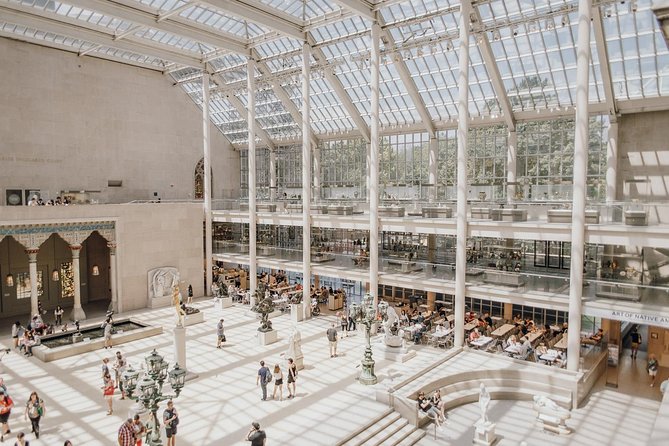
This is a walking tour through the museum, and the whole point is to cover enough ground to feel like you got a Met “starter kit.” That works best when you’re okay with standing in front of art, moving on, and taking in the next stop without long breaks.
If you’re touring during a busy period, it can feel tight. The Met can be crowded, and you’ll be walking through public spaces while other groups pass through too. One review notes the guide started late due to waiting for part of the group. That’s not something you should count on, but it’s a reminder that timed group tours are affected by human timing.
My practical take:
- If you love structure and hate decision fatigue, this pace is a feature.
- If you prefer slow museum time, do this tour early in your visit, then schedule extra independent time afterward for the pieces you want to linger on.
Also, you may end up modifying your expectations if a specific gallery is closed that day. The tour information says the guide may modify the route to handle closures. That usually means you still get the highlights, but the exact path can shift.
Is this the right fit for you? Who will enjoy it most
This is ideal if you are:
- Visiting the Met for the first time and want a guided overview that helps you choose where to go next.
- Short on time and want a “highlights plus context” experience.
- Someone who learns better when art has a story attached, like the Sargent scandal or the Holy Grail legend around the Antioch Chalice.
It can also work well for families. One feedback example mentions traveling with kids ages 8 and 10, and the guide kept the experience engaging for them. That suggests the tour is not just for serious art historians. It can be interactive and approachable, depending on the guide.
If you are an art specialist planning a very slow, deep study trip, this tour might feel limiting. The format is designed for highlights and orientation, not for long, focused observation.
After the tour ends: how to keep your Met visit going without losing the thread
A big plus is what happens after. The tour ends back at the meeting point, but you can keep exploring on your own. I love that structure because it turns the guide’s explanations into homework you can revisit.
Here’s how to make your follow-up time smarter:
- Pick one or two stops from the tour that really clicked, then return to those areas and look longer.
- If you learned a story you liked, search out other works connected by the same themes, like portraiture, imperial imagery, or objects tied to legend.
- Use your new mental map. Even if you do not go back to every stop, you will have a better sense of how the museum is organized.
If you only do one Met activity, do this. But if you have the time, treat this tour as the start of your own browsing session. The Met is massive. A guided highlight tour gives you direction, then you supply the wandering.
Should you book the Metropolitan Museum guided group tour?
Book it if you want your Met time to feel organized, meaningful, and efficient. With a group capped at 18, a local English-speaking guide, and skip-the-line entry, it’s a solid value for the amount of ground you cover in 2 to 3 hours. The best reviews consistently point to guides who tell stories well, keep the pace workable, and help people feel less overwhelmed.
Skip it or consider adding extra independent time if you:
- Need lots of sitting time for slow looking.
- Want a personal, unhurried museum day with no walking pressure.
- Are the type who gets irritated when timing slips, since group tours can be affected by late arrivals.
If you’re trying to decide between going alone and going guided, my advice is straightforward. For most first-time Met visits, this is a strong way to get oriented and see the highlights with context. Then you can come back later to slow down and go deeper on your own terms.
FAQ
How long is the Metropolitan Museum guided group tour?
The tour runs about 2 to 3 hours, depending on the option you choose.
How much does the tour cost?
The price is $65.00 per person.
Is the tour in English?
Yes, the tour is offered in English.
What is the group size limit?
This tour has a maximum of 18 travelers.
Where do we meet for the tour?
You meet at the Metropolitan Museum of Art, 1000 5th Ave, New York, NY 10028.
Does the tour include skip-the-line entry?
Yes. It includes a skip-the-line ticket to the Metropolitan Museum of Art.
Is admission included?
Admission ticket inclusion is explicitly noted for the 3-hour option. For the 2-hour option, confirm what is included for your chosen duration at booking.
Is it a lot of walking?
Yes, it is a walking tour. It is described as a moderate pace and most travelers can participate.
Are photos allowed?
Non-flash photography is allowed, but photography cannot be used inside the Museum.
Can I cancel, and when do I get a refund?
Cancellation is free up to 24 hours in advance for a full refund. If you cancel within 24 hours, the amount paid is not refunded.
Reviewed most recently around New York City
- The Museum of Modern Art Admission Ticket★ 4.5 · 735 reviews
- Philadelphia and Amish Country, 1-Day Tour from NYC★ 4.0 · 734 reviews
- Top Rated Brooklyn Half-Day Food, History & Culture Tour via bus★ 5.0 · 758 reviews
- NYC: Woodbury Common Premium Outlets Shopping Trip★ 4.2 · 761 reviews
- Madame Tussauds New York City Admission Ticket★ 4.5 · 766 reviews
- New York City: Private Walking Tour with a Local★ 4.6 · 771 reviews
- Central Park Guided Walking Tour★ 5.0 · 774 reviews
- NYC: Woodbury Common Premium Outlets Shopping Round Trip Service★ 4.0 · 784 reviews
Museums, compared.

Empire State Building Tickets – Observatory & Museum
Read our review →


9/11 Memorial, Ground Zero Tour with Optional 9/11 Museum Ticket
Read our review →

All-Access 9/11: Ground Zero Tour, Memorial and Museum, One World Observatory
Read our review →

Browse the lists this tour appears in