
Reviewed · MUSEUMS
Ground Zero Museum Workshop Tour
This experience is interesting because it turns the usual museum visit into a guided, up-close story of the recovery after 9/11, led through the photos and remnants captured by Ground Zero’s official photographer. The setting is small, controlled, and emotionally careful, which is part of why it often lands with both kids and adults.
I especially like two things. First, the tour is led around 100 images and specific artifacts from the recovery period, including the Frozen Clock stuck at 10:02am and other remarkable remnants like the charred Genesis 11: Tower of Babylon Bible page from the rubble. Second, you get a rare, sanctioned chance to hold and photograph World Trade Center steel and window glass, guided by the museum team.
One drawback to consider: this is not the 9/11 Memorial and Museum at the site downtown. It’s a separate workshop exhibit in the Meatpacking District, about a few subway stops away, so if what you want is the official memorial experience, you’ll need to plan that separately.
Key Things to Know Before You Go
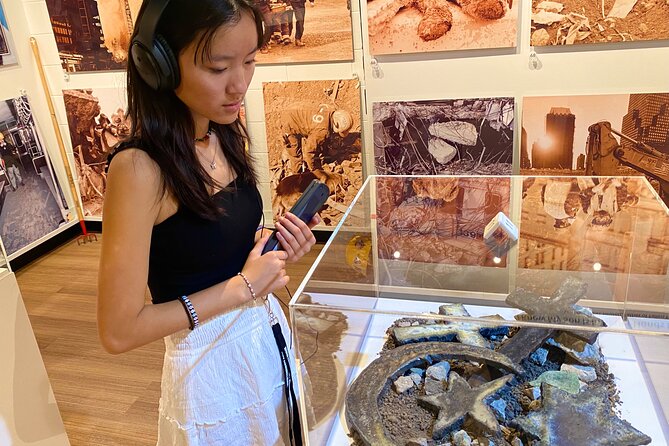
- Sanctioned artifacts only here: you’re allowed to pick up and photograph rare World Trade Center material.
- Gary Marlon Suson’s work drives the tour: the images and stories are tied to Ground Zero’s official photographer.
- A small, emotionally careful space: no graphic displays, and it’s designed to be kid-friendly.
- BOSE audio adds depth in multiple languages: you’ll get self-guided audio support as well as the guided walk-through.
- Limited groups: tours are capped at about 15 people, which helps the session feel personal.
Ground Zero Museum Workshop vs. the Memorial, What This Tour Actually Is
The biggest thing you should get clear upfront is location and purpose. The Ground Zero Museum Workshop is not the main 9/11 Memorial and Museum, and it is not at the memorial site itself. It’s a separate workshop exhibit in the Meatpacking District, near West 14th Street, with a guided program centered on the 9-month recovery dig and the artifacts that survived.
That difference matters because the experience feels different. The workshop focuses on the photography and the physical remnants from the recovery period, so you’re not walking through a large national museum. Instead, you’re in a small room that moves at a human pace, with a guide pointing out the stories behind each image and object.
If you want the memorial’s reflection pools and the larger museum exhibits, plan those on a different day or add time after this workshop. If what you want is an emotionally careful, family-friendly introduction to what recovery looked like, this is a strong choice.
More Museums in New York City
- NYC: 9/11 Memorial & Museum Timed-Entry Ticket
★ 4.8 · 31,428 reviews - NYC: Empire State Building Tickets – Observatory & Museum
★ 4.7 · 25,757 reviews - New York City: American Museum of Natural History Ticket
★ 4.5 · 15,447 reviews
Getting There From Midtown, Chelsea, and the High Line
The museum workshop sits around 420 W 14th St in the Meatpacking District. It’s about a short ride from the World Trade Center area, and it’s also convenient if you’re already thinking about the High Line and Chelsea Market.
A useful tip for planning: the easiest subway approach described is via the E train, with the workshop about 4 subway stops from the World Trade Center area and roughly a 5-minute ride once you’re on the right line. That makes it realistic even if your day is split between uptown and downtown.
Also plan for one practical challenge that shows up often: the place can be a little hard to locate, since signage outside can be limited and the exhibit may be on an upper level. Use the full address, arrive a bit early, and expect to spend a minute finding the right entrance. The museum asks that you store bags at the front during the tour, so you’ll want to travel light.
Your 90-Minute Schedule, What Happens Once You’re Inside
Tours run about 90 minutes. The pace works well because the visit is structured around a walkthrough of artifacts and images, with a powerful short video included as part of the program.
Even though the tour length is listed as about 90 minutes, I’d plan closer to about 2 hours total if you want to linger with the audio guide and take your time around each display. This is especially true if you’re traveling with kids, since the included BOSE audio can help them stick with the program.
Stop 1: Ground Zero Museum Workshop (the whole experience happens here)
This is the main event, and it’s where the workshop earns its reputation.
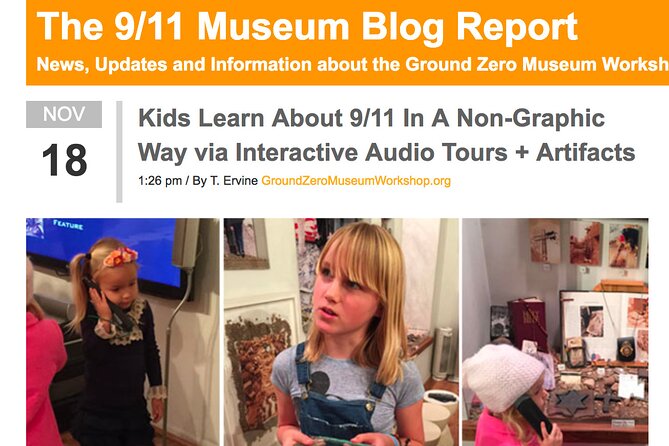
You’ll see stunning images and rare remnants from the recovery period, presented in an intimate setting. The exhibit highlights the work of Gary Marlon Suson, who is described as the only all-access, sanctioned photographer at Ground Zero. That matters because these displays are not generic 9/11 images. They are linked to one photographer’s access and one recovery timeline.
Some of the specific objects and photographs called out in the program include:
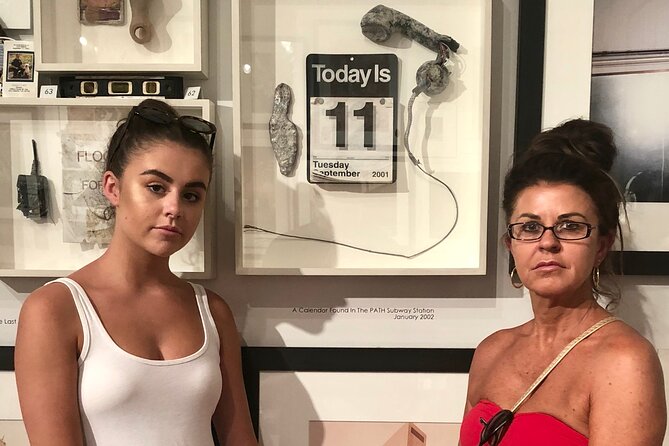
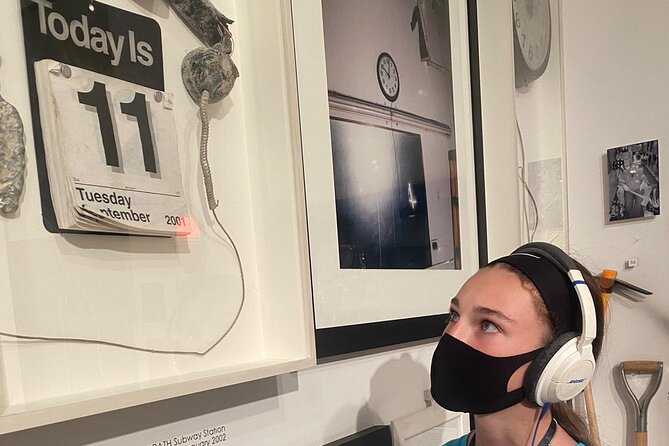
- The Frozen Clock stuck at 10:02am, marking the collapse of the South Tower
- The actual clock itself, displayed in the museum
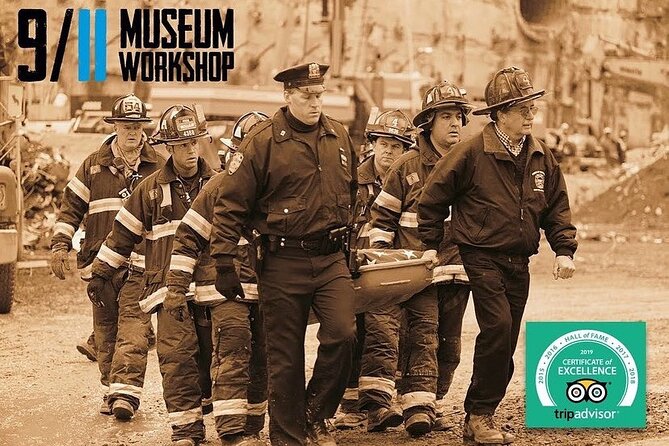
- FDNY-related images, including FDNY Honor Guard images
- The charred Genesis 11: Tower of Babylon Bible page found in World Trade Center rubble
There’s also a strong “story behind the image” approach. The tour includes a 15-minute video, and then the rest of the time is built around the guided walkthrough of the items and the meaning behind them.
The hands-on artifact moment (yes, you can hold them)
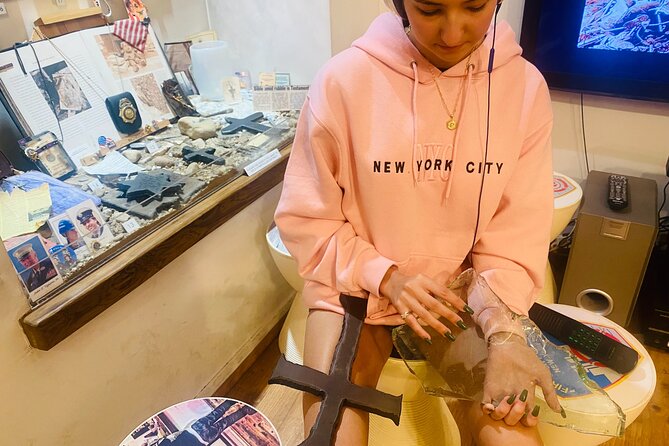
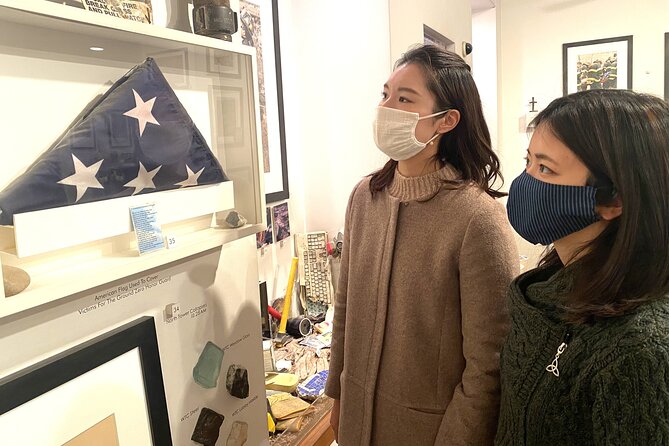
This is the standout feature if you’re looking for something beyond looking and reading. You’re allowed to pick up and hold World Trade Center steel and window glass, and you can photograph the artifacts.
That hands-on component is why some people leave feeling like they connected physically, not just emotionally. You’re not just looking at what survived, you’re holding a piece of the material history from the recovery period.
One practical note: the museum controls the space for safety. Backpacks and bags must be stored at the front during the tour, and the rules are strict about what you can bring into the viewing space. The goal is comfort, control, and respect for a sensitive exhibit.
Another New York City day, played differently:
- NYC: SUMMIT One Vanderbilt Experience Ticket
★ 4.7 · 37,985 reviews - NYC: Empire State Building Observation Deck Tickets
★ 4.7 · 22,072 reviews - NYC: Edge Observation Deck Admission Ticket
★ 4.6 · 20,918 reviews - New York City: Statue of Liberty & Ellis Island with Ferry
★ 4.6 · 18,683 reviews
The BOSE Audio Tour in Four Languages, How It Changes the Visit
A big part of the value here is that you’re not relying only on the guide’s live narration. You also get a BOSE self-guided audio tour in four languages, with options including Spanish, French, and Italian.
In practice, that means the experience can work for groups with different attention spans. If you have kids, the audio can help keep the pace from feeling too long. If you’re traveling with adults, the audio gives you a chance to slow down and process the details around specific photos and objects.
You also get seating and free water, which sounds basic, but it helps a lot in a small room with a lot of emotional content.
What Makes This Museum Workshop Work for Families
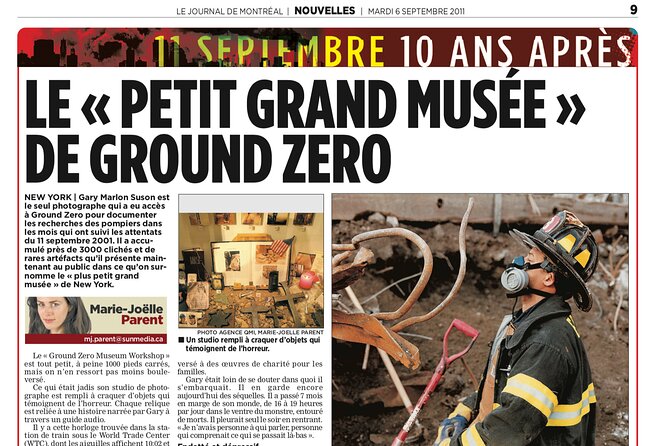
This workshop is specifically described as suitable for the whole family, including kids. Importantly, it’s also described as non-graphic, meaning you won’t see graphic or morbid imagery in the way some people fear when they hear the phrase Ground Zero.
The emotional tone can still be heavy, but the format is designed to stay human and careful. That’s why many families find it more approachable than a larger, busier museum.
If you’re bringing children, plan for the session to be attentive rather than passive. The BOSE audio guide is meant to hold attention, and the guide-led walkthrough keeps you from wandering without context.
The Main Tradeoff, Why Some People Feel Misled
If you’re wondering why reviews and opinions can split, it’s usually because of expectations.
The title can sound like it’s the site itself, but this workshop is a separate museum exhibit in the Meatpacking District. It does not include admission to the 9/11 Memorial and Museum. In other words, you can leave this workshop emotionally moved, and still be missing the memorial’s reflection pools and the official museum spaces downtown.
There’s no way around that, and you should not try to squeeze the memorial in if you need a calmer pace. If you truly want the full memorial day, use this workshop as a thoughtful add-on, not a replacement.
Price and Value, What You’re Paying For
At $34.50 per person, this isn’t the cheapest activity in New York, but it also isn’t trying to be. The price is supported by a few real, tangible elements:
- A small group size (the program caps at around 15 people)
- A guided walkthrough built around 100 images and specific artifacts
- Included BOSE audio support
- Seating and free water
- A rare chance to hold and photograph sanctioned artifacts
- A video component that sets the tone
If your goal is a quick stop to check photos, you may feel it’s not worth it. But if your goal is education plus remembrance, in a format that works for families and keeps the subject handled carefully, the value can make sense quickly.
Think of it as paying for access and interpretation, not just entry to a display room.
Rules That Affect Your Comfort, Cameras, Food, and Bags
The workshop is strict about how the space is used. Here’s what you should expect to affect your visit:
- Cameras and photography are allowed, but no videotaping.
- No phone calls during tours.
- No food or drink during the tour.
- Backpacks and bags must be stored at the front of the museum before you proceed.
- Service animals are allowed.
These rules help keep the area calm and respectful. They also affect how you pack for the visit, so bring only what you’ll genuinely need.
How Much Emotion to Expect, Without Graphic Content
Even though the exhibit is non-graphic, it still deals with a tragedy. Many people find it “moving,” “sobering,” and hard to shake.
The key is that the workshop uses a focused set of images and remnants, with short video and guided stories, which keeps you from feeling overwhelmed by too many things at once. It’s emotional work, but it’s organized emotional work.
A practical tip: bring tissues if you know you get teary easily. And give yourself time afterward to process. If you’re scheduling dinner right after, choose a place where you won’t feel rushed.
Should You Book This Workshop?
You should book if:
- You want a family-friendly, non-graphic introduction to the recovery period through powerful photography
- You value the rare opportunity to hold and photograph World Trade Center steel and window glass
- You like small-group tours with lots of direct object-focused storytelling
- You’re the kind of visitor who enjoys listening closely, not just skimming exhibits
You might skip it, or add it only after the main memorial, if:
- You expected the tour to be at the actual 9/11 Memorial and Museum site
- You want a huge national museum experience with lots of galleries and scale
- You dislike small rooms with dense content and a fixed program
FAQ
Is this tour the 9/11 Memorial and Museum in Lower Manhattan?
No. The Ground Zero Museum Workshop is a separate experience and does not include admission to the 9/11 Memorial and Museum.
Where does the tour start?
The tour starts at 420 W 14th St, New York, NY 10014, USA, and ends back at the meeting point.
How long is the tour?
The duration is about 1 hour 30 minutes.
What does the $34.50 price include?
It includes the BOSE self-guided audio tour in four languages, a guided walk-through of 9/11 artifacts, free water, seating, and the chance to hold and photograph rare artifacts.
What is not included in the ticket price?
It does not include souvenir photos (available to purchase), hotel pickup and drop-off, or admission to the 9/11 Memorial and Museum.
Is the tour kid-friendly?
Yes. It is suitable for the whole family and described as non-graphic and emotionally careful.
What languages are available?
The tour is offered in English. The included BOSE audio tour is in four languages, including Spanish, French, and Italian.
Can I take photos or videos?
You can take photos, but videotaping is not allowed. Phone calls are also not allowed on tours.
Are cameras allowed inside for the artifact holding part?
The experience includes holding and photographing rare artifacts, so photography is allowed under the tour rules.
What happens to backpacks and bags during the tour?
All backpacks and bags must be stored at the front of the museum during the tour.
Is the ticket refundable if plans change?
This experience is non-refundable and cannot be changed for any reason. If the tour is canceled due to poor weather, you’ll be offered a different date or a full refund.
Reviewed most recently around New York City
- New York City Dinner Cruise with Live Music★ 4.0 · 377 reviews
- Museum of Sex NYC Admission Ticket★ 4.5 · 380 reviews
- Central Park Private Pedicab Tour (60 mins)★ 5.0 · 382 reviews
- “The Met” Metropolitan Museum of Art Tour Semi-Private 8ppl Max★ 5.0 · 384 reviews
- Statue of Liberty, Ellis Island, and 9/11 Memorial Guided Tour★ 4.0 · 385 reviews
- 1-hour New York City Skyline Sightseeing Cruise★ 3.5 · 391 reviews
- Excursion to Washington from New York in 1 day★ 5.0 · 393 reviews
- NYC: Meet the Met – Extended 3hr Small-Group Tour★ 4.6 · 397 reviews
Museums, compared.

Empire State Building Tickets – Observatory & Museum
Read our review →

9/11 Memorial, Ground Zero Tour with Optional 9/11 Museum Ticket
Read our review →
All-Access 9/11: Ground Zero Tour, Memorial and Museum, One World Observatory
Read our review →
Browse the lists this tour appears in