
Reviewed · GETTYSBURG TOURS
Gettysburg Battlefield Self-Guided Driving Audio Tour
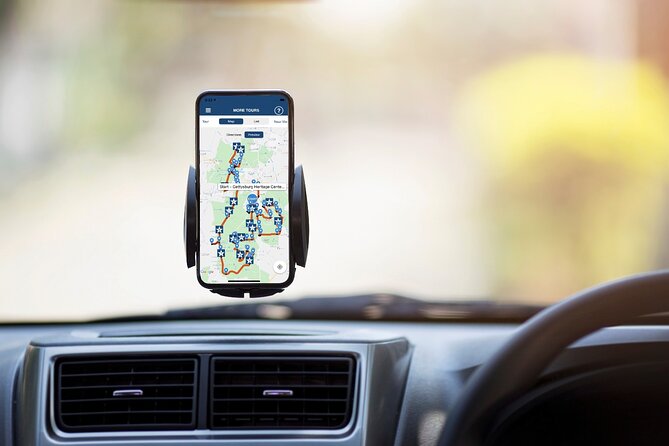
Gettysburg is one of those places where you feel history in your legs. This self-guided driving audio tour turns the long battlefield loop into a simple, story-led route, with hands-free audio that cues itself as you reach key points.
I really like the flexibility: you can pause, get out for photos, and spend extra time where you care. I also love the way the narration mixes big moments with small human details, so the stops feel connected instead of like random monuments.
The main drawback to plan for is occasional tech friction. A few people said the audio timing can drift if GPS location is inaccurate, or if you do not start it exactly at the right point on the route.
Quick Takeaways
- One download, offline-friendly: maps work without cell signal after you download the tour.
- 60+ audio stories across a roughly 19-mile driving route, timed by GPS.
- Per-car pricing: $16.99 per group up to 4 people, not per person.
- Narration with side stories that add meaning at monuments and viewpoints.
- Easy stop strategy: you control timing, can skip anything, and can still get the core battle thread.
- Best used with setup patience: start at the designated point, then let the app sync.
Why This Gettysburg Audio Drive Beats a Rushy Tour Stop List
Most Gettysburg tours try to cram everything into a tight schedule. This one is built for a slower rhythm. You drive your own pace, stop when your curiosity kicks in, and keep moving when you want to. That matters here, because some of the most powerful scenes are the ones you read slowly, not the ones you speed past.
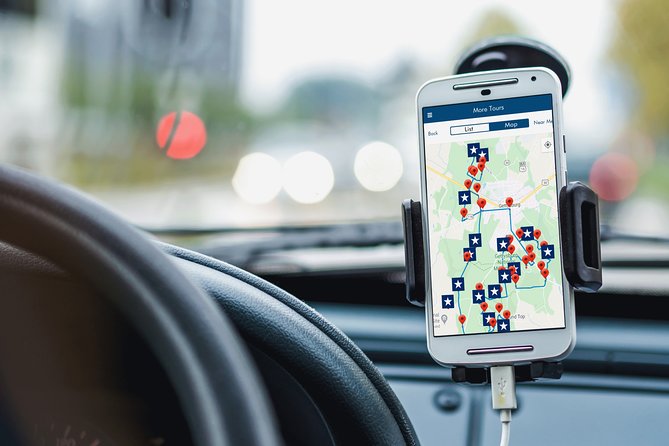
The big win is the format: audio stories play automatically based on your location. You are not constantly tapping your phone while trying to drive, line up parking, and check your map. I also like that it is hands-free in practice, so your “tour” part is mostly listening, not managing.
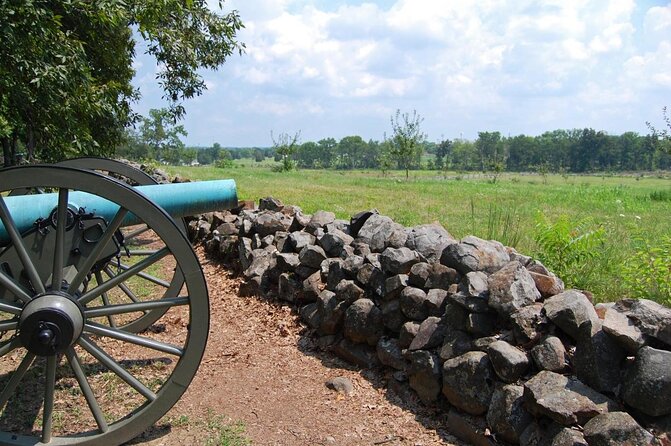
And yes, Gettysburg is a lot of walking and stairs when you go on foot. This driving version keeps you anchored to the best viewpoints, then gives you permission to step out when you want the full monument-and-cannon moment.
Stack these Gettysburg options against each other
- 2-Hour Gettysburg Battlefield Guided History Bus Tour with a National Park Guide
★ 4.5 · 2,201 reviews - Gettysburg: Horse-Drawn Carriage Battlefield Tour
★ 4.8 · 896 reviews - Gettysburg: Civil War Ghosts Walking Tour
★ 4.4 · 440 reviews
Price and Timing: What $16.99 Per Group Really Buys You
At $16.99 per group for up to 4 people, the value is straightforward. If you are traveling as a couple, family, or small group, your per-person cost drops fast compared to most guided options.
The other value lever is lifetime access with no expiry. You are not buying a one-time ticket. You can use the audio on another Gettysburg visit, or split it across different days if you want to revisit without starting over.
Time-wise, expect about 2 to 4 hours for the main route. The tour itself is roughly 19 miles long and includes 60+ audio stories. In real terms, that means you can do a solid “two-day” feel in one afternoon if you keep stops short, or stretch it into a slower, read-everything visit if you get out at towers and monuments.
Getting Started Fast: Download, Password, and Car Stereo Setup
This is a self-guided experience, so nobody waits for you at the start. You will get an email and text with instructions plus a password. Then you use Action’s Tour Guide App.
Two practical points make or break the experience:
- Download while you have strong Wi‑Fi or cellular. The instructions say you must download the tour before relying on offline mode.
- Start the tour in the right place, using the app. The audio triggers by GPS, so “sort of near the start” can cause timing problems.
Once you are set, audio runs through your phone connected to your car stereo using Bluetooth, USB, or AUX. If you are planning to get out and walk around small areas, headphones can help (the setup instructions suggest headphones for walking tours).
You also want to keep in mind how GPS story timing works. If you drift off the suggested route, or you move faster than the speed limit, you can lose location accuracy and the audio may stop matching your vehicle. That is why the people who had smooth experiences tended to stick to the route and driving pace.
The Route Basics: Heritage Center to National Cemetery

Most versions start at either:
- Gettysburg Heritage Center, or
- the National Park Visitor Center,
then follow the official Auto Tour route.
In the start-and-finish details provided, the meeting point is Gettysburg Heritage Center parking lot 297 on Steinwehr Ave, and the tour ends at 125 Taneytown Rd.
The stop design is smart. You get a steady chain of viewpoints, memorials, and battlefield locations tied to the battle’s three-day timeline. It is not just “here is a monument, here is a fact.” You get the story thread in order, so you can understand what you are seeing as the landscape changes from morning to evening to the final charge.
Another Gettysburg day, played differently:
- Gettysburg: Licensed Guided Battlefield Horseback Tour
★ 4.9 · 419 reviews - Gettysburg: Private Tour with Licensed Battlefield Guide
★ 5.0 · 362 reviews
Stop-by-Stop Day 1 Audio: McPherson’s Ridge to the First Night

Day 1 is where the tour sets the mental stage. It gets you looking at the ridges and approaches where decisions were made fast, and then it helps you picture troops moving into position.
Gettysburg Heritage Center (start)
You begin here because a battlefield visit is easier when you have context first. Note the practical detail: the stop includes an instruction that the Heritage Center admission ticket is not included. Plan a quick museum visit if you want the clearest start point.
Gettysburg Auto Tour Stop 1, McPherson’s Ridge
This is the “first day, first big clash” feeling. Union and Confederate forces clash on the ridge, and the narration frames what commanders are doing and why placement matters. Even if you do not know tactics, the audio makes the terrain feel relevant.
The Railroad Cut
Here you get strategy through contrast. The site supports the idea that early battles are often messy, full of surprise skirmishes and shifting plans. It also introduces more backstory on key players, so the battlefield does not feel like only uniforms.
Eternal Light Peace Memorial
This is a memorial pass, not a battle action scene. But it is still useful because it gives you a pause point to connect reunion and reconciliation to what this place became after the fighting ended. The description also highlights Maine granite and Alabama limestone as part of the symbolic unification.
Oak Ridge Observation Tower
You climb (or at least access) a tower viewpoint to see how the land controls movement. The tour shifts to afternoon timing here, so it helps you feel the day moving forward instead of staying stuck in “morning equals start.”
11th Pennsylvania Volunteer Infantry Monument and Battlefield Sallie
I like this stop because it is human. The narration calls out the dog sculpture that references Battlefield Sallie, the mascot who served with the regiment. It is a small detail, but it explains why drummers and military music mattered, so you understand not just what soldiers did, but how they communicated and stayed coordinated.
North Carolina Memorial and Virginia Monument area
The route continues with memorials that keep Day 1 in your head while you drive. The tour timing works well here because you are moving from viewpoint to viewpoint while the audio keeps the “what happened next” thread alive.
Day 1 continues into bunker-and-plans territory
As evening falls, the audio shifts to plans and strategies after the first day. This is one of the most useful parts of the experience, because it explains that battles are not only about the moment of impact. They are also about what leadership decides once casualties force changes.
Stop-by-Stop Day 2 Audio: Little Round Top, Devil’s Den, and the Peach Orchard
Day 2 is where Gettysburg fans usually get excited, and the audio matches that energy without turning it into chaos.
North Carolina Memorial to Day 2 kickoff
As you roll forward, the narrative shifts into the second day, with troops organizing and mobilizing. It gives you an “okay, now we are in the next act” feeling so you do not accidentally treat everything as one continuous blur.
Longstreet Observation Tower
This tower viewpoint helps you see why attacks were aimed where they were. It is not just a pretty view, it is a tactical one.
Warfield Ridge
This area frames assembly and approach. The audio describes Confederate troops ready to attack a Union outpost, and mentions specially trained Union marksmen defending. It sets up a sense of pressure, like you are arriving right as the stage is being lit.
Little Round Top and the Valley of Death
The narration identifies Little Round Top as a critical skirmish site. It also points out the “Valley of Death” crossing as you drive around the hill. That phrase can feel dramatic, but here it works because it forces you to visualize how close and deadly the terrain can be.
Devil’s Den (volcanic rocks, Confederate sharpshooters)
This is described as a rocky cover scenario where Confederate sharpshooters pick off Union soldiers from among volcanic rocks. The lesson is clear: cover is power, and the battlefield can change meaning within a few yards.
Wheat Fields and the JJ Purman story
You continue into the Wheat Fields area, where another major Day 2 skirmish took place. The narration also includes a specific story about a Union soldier named JJ Purman, which is the kind of personal detail that helps the battlefield stop feeling abstract.
The Peach Orchard
The audio keeps the tempo by marking this as an ongoing battle zone. You start seeing which strategies worked and which failed as the day progresses.
Abraham Trostle Farm
Here the narration includes a striking image: the Trostle family fled so quickly that dinner was still on the table. The stop works because it reminds you this battlefield happened on real property and real household schedules, not only on battlefield maps.
Plum Run to George Weikert Farm
These stops keep the story grounded in what people faced. You learn about soldiers who escaped skirmishes, then you get into the grim detail that the Weikert farm became a battlefield hospital. Even if you are not into Civil War medicine, the audio helps you connect the human consequences to the combat locations.
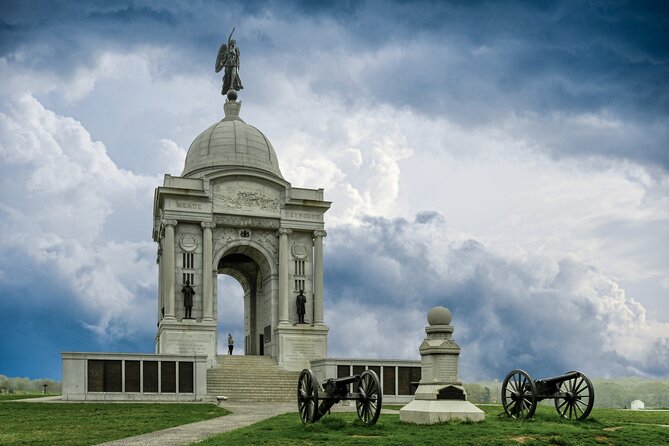
Pennsylvania State Monument
This one is a scale-and-stakes reminder. The narration says it commemorates nearly 35,000 Pennsylvanian soldiers. That number helps you understand why the battle felt personal to people from the state, not just to the nation.
Spangler’s Spring and Culp’s Hill Tower area
Deep in the woods, you get a “small site, big meaning” theme with Spangler’s Spring, then you continue toward Culp’s Hill Tower. The audio describes clashes over a strategic outpost and notes that Union defenders held until evening.
Stop-by-Stop Day 2 into Day 3: Culp’s Hill, East Cemetery Hill, and the Final Charge
Late Day 2 is where you get the sense of a fight that almost stops, then surges again.
East Cemetery Hill and the nighttime raid moment
The audio describes night falling normally meaning fighting would end, then explains why the Confederate failure to capture Culp’s Hill led to a nighttime raid. It frames this as the moment Union came closest to losing, with perseverance, skill, and luck bringing Union through.
Gettysburg National Military Park (the pivot point)
Then you reach the overall memorial context. The narration links the battle to Lee’s second invasion of the North and describes Gettysburg as the “High Water Mark of the Rebellion.” It also ties the battle to Abraham Lincoln’s Gettysburg Address.
Pickett’s Charge start, then the empty expanse viewpoint
The tour shifts to Day 3 dawn and the famous Confederate charge. The audio takes you to a viewpoint atop the hill and describes looking down at the final battlefield expanse. You also get the “high water mark” reference, the farthest advance toward Union defenses.
National Cemetery and Lincoln’s Address location
The last stop honors the Union graves and closes with the Lincoln story tied to the cemetery location. The narration includes why Lincoln chose a short, focused speech, because he believed the attention belonged to the soldiers who sacrificed their lives.
The ending works well for self-guided touring because it gives you a place to pause, not just a place to park and leave.
Optional Eisenhower Detour: When You Want the President View
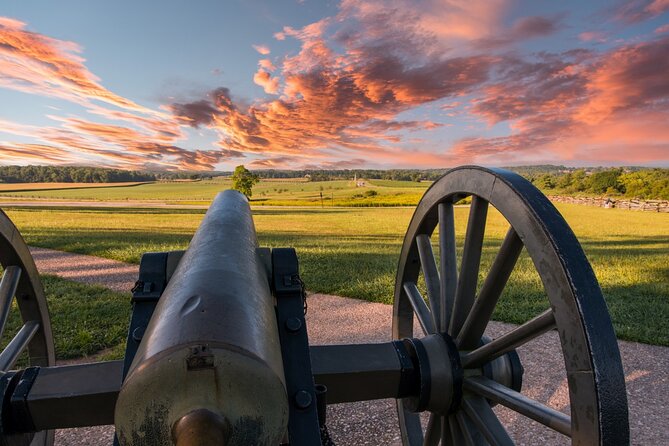
There is an optional detour listed for Eisenhower National Historic Site, described as an overlooking point where President Eisenhower often stayed. This is the kind of “if you have time, add this” stop that works well in a self-guided format.
The practical upside is that you can decide in the moment. If you are enjoying the driving pace, you take it. If you want to save energy for the big Day 3 finale, you skip it and still keep the core story thread intact.
Keeping Audio in Sync: The Tips That Prevent Frustration
This is the part I pay attention to, because a lot of “audio tour” problems are not about the content. They are about syncing.
Use these habits:
- Start at the designated starting point and launch the correct tour for your planned starting direction.
- Follow the recommended route and speed limit. GPS location accuracy depends on movement and routing.
- If you notice audio drift, do not immediately assume the tour is broken. Slow down, confirm you are aligned with the route, and restart only when needed.
From the overall rating trend, most people manage this easily. But a smaller group reported issues like having to restart audio, losing sync after moving forward, or the app being clunky if it does not match the roads. The fixes usually come down to starting correctly and driving within the intended guidance.
Also remember you will need strong Wi‑Fi or cellular to download the tour before relying on offline mode. That prevents the “works outside, fails inside” problem many people run into with maps and audio.
Who This Tour Fits Best (and Who Might Want a Guide)
This tour is a strong match for:
- Independent travelers who want control over time and stopping.
- Families with kids who do better with “do what interests you” pacing.
- People who like narration, but hate being rushed by a group schedule.
- Small groups in one car, since the per-car price makes the math easy.
You might want a traditional guided tour instead if:
- You need a live explanation with real-time Q&A.
- You know you will not manage an app setup or GPS triggering.
- You prefer deep tactical briefing beyond what audio provides.
That said, even among people who were new to self-driving audio tours, the overall feedback is that it works well once you get it going. A little patience at the start pays off fast.
Should You Book This Gettysburg Battlefield Self-Guided Driving Audio Tour?
Book it if you want a Gettysburg visit that feels personal and flexible, not schedule-driven. The value per car, the lifetime access, and the hands-free GPS-triggered storytelling make it a smart way to cover the key battle sites without feeling trapped.
Hold off or plan extra time if you expect a perfect tech experience on day one. If you are the type who gets annoyed by apps, do a quick test when you download, and give yourself a few minutes to get audio synced before you start trying to rush.
If you want Gettysburg in the car, with your own pace and a clear battle storyline, this is an easy yes.
FAQ
How much does the Gettysburg Battlefield Self-Guided Driving Audio Tour cost?
It costs $16.99 per group, up to 4 people.
How long is the tour and how much content is included?
The duration is listed as about 2 to 4 hours, and the route is about 19 miles long with 60+ audio stories.
Where does the tour start and where does it end?
The start is at Gettysburg Heritage Center’s parking lot (297 Steinwehr Ave). The end is at 125 Taneytown Rd.
Do I need cell service or Wi-Fi during the tour?
After downloading, it works offline, and it includes offline maps so you do not need signal during the experience.
How do I start the audio while I am at the battlefield?
After booking, use Action’s Tour Guide App once you are onsite, enter the password from your email or text, then launch the tour for your planned starting point. Audio begins automatically when you are at the first story point.
Can I pause the tour or explore side spots on my own schedule?
Yes. You can start and pause whenever you like, take breaks for snacks and photos, and you can skip stops you do not care about.
Are admissions or entry tickets included?
Admission ticket at the Gettysburg Heritage Center is not included. The other listed stops are described as free.
Is there an optional stop included for the Eisenhower National Historic Site?
Yes. There is an optional detour to Eisenhower National Historic Site while you are on the route.
What if the audio does not match my location well?
The tour uses GPS to trigger audio automatically, so staying on the suggested route and following the speed limit can help improve sync. If you still have issues, you can contact support for help.
Can I cancel and get a refund?
Yes. You can cancel up to 24 hours in advance for a full refund. If you cancel less than 24 hours before the start time, the amount paid is not refunded.
Reviewed most recently around Gettysburg
- 2-Hour Gettysburg Battlefield Guided History Bus Tour with a National Park Guide★ 4.5 · 2,201 reviews
- Gettysburg: Civil War Ghosts Walking Tour★ 4.4 · 440 reviews
- Gettysburg: Horse-Drawn Carriage Battlefield Tour★ 4.8 · 896 reviews
- Gettysburg: Licensed Guided Battlefield Horseback Tour★ 4.9 · 419 reviews
- Gettysburg: Private Tour with Licensed Battlefield Guide★ 5.0 · 362 reviews
Gettysburg Tours, compared.
2-Hour Gettysburg Battlefield Guided History Bus Tour with a National Park Guide
Read our review →

Civil War Ghosts: Echoes of the Fallen Gettysburg Ghost Tour
Read our review →

Private Tour with Licensed Battlefield Guide
Read our review →Browse the lists this tour appears in