
Reviewed · WHALE WATCHING
Seattle: Half-Day Wildlife and Whale Watching Cruise
A Seattle whale watching cruise is interesting because you leave the city fast and head into the Salish Sea, where whales and other wildlife show up on their schedule. This one starts right at Pier 69, so the whole day can be low-stress and water-focused.
I like two things a lot: the onboard naturalist guidance, which helps you identify what you’re seeing, and the chance to upgrade to window seats when space allows at check-in (people keep mentioning having a better view). Guides and crew names that have shown up in reports include Allison and Mark.
One drawback to plan for: the top deck announcements can be hard to hear because engine noise and wind make everything louder, so if you want the spoken details, you may hear them better lower on the boat.
Key Highlights You’ll Feel Fast
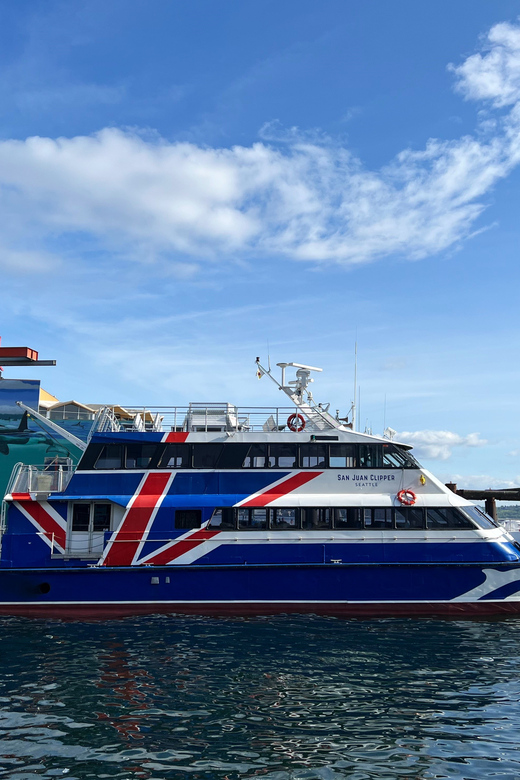
- Pier 69 location keeps this simple, with easy access from the waterfront area
- 97% whale sighting rating signals strong odds, plus a free trip if no whales are seen
- Pacific Whale Watch Association rules guide viewing so whales are not disturbed
- Salish Sea wildlife variety beyond whales, including seals, sea lions, porpoises, and seabirds
- Food and drinks for sale onboard, so you can stay out on the water instead of hunting lunch
From Pike Place Area to the Salish Sea: How the Start Works
The cruise meets at Seattle’s Pier 69 on the waterfront. The first real “Seattle” move is how close you are to the fun stuff on land, then you walk down to the boat without needing a car or complicated transfers. You’ll walk down the breezeway to the ticket office, then exchange your voucher at the ticket counter before the tour begins. Show up early, about 45 minutes before departure, because that time covers lineups, seat assignment, and getting everyone settled.
Once you’re on board, you’ll feel the shift immediately. The boat is built for time on the water, and you start moving through the Salish Sea while the onboard naturalist points out what matters, where you’re likely to find wildlife, and what to watch for. The cruise is designed as a half-day outing, but the sea does not care about your schedule. Duration can range from 3 to 5 hours, depending on where the whales are that day.
This is also where expectations should match reality. Your goal is not just to “see whales,” it’s to see behavior. That means time watching blows at the surface, changes in direction, and other signs that a whale is nearby, even if it spends only a short moment where you can spot it. It can feel like a normal city morning at first, then it turns into a patient kind of sightseeing, the best sort.
If you’re coming from nearby attractions, this is one of the easiest ways to spend the day on the water without giving up too much time in Seattle. It fits families, couples, and solo travelers who want a guided experience without turning it into a whole vacation project.
More Boat Trips in Seattle
- Seattle’s Original Guided Harbor Cruise
★ 4.5 · 2,077 reviews - Seattle: Harbor Cruise with Local Guide
★ 4.8 · 599 reviews - Evening Colors Sunset Sail Tour in Seattle
★ 5.0 · 593 reviews
What You Can See: Orcas, Humpbacks, Greys, and the Wildlife Mix
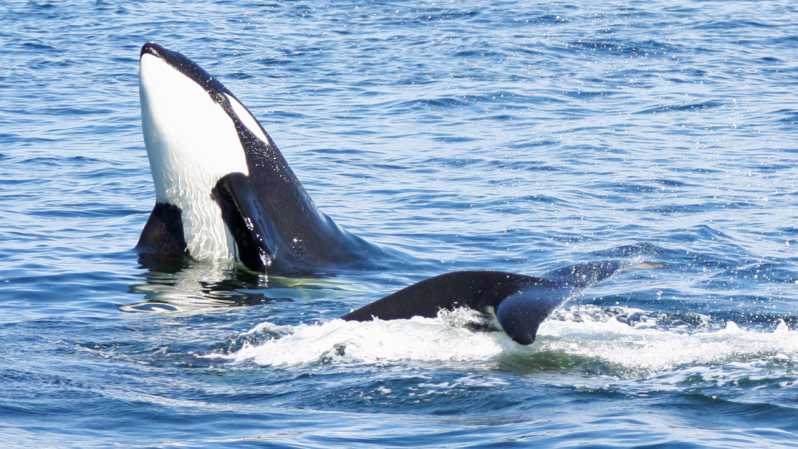
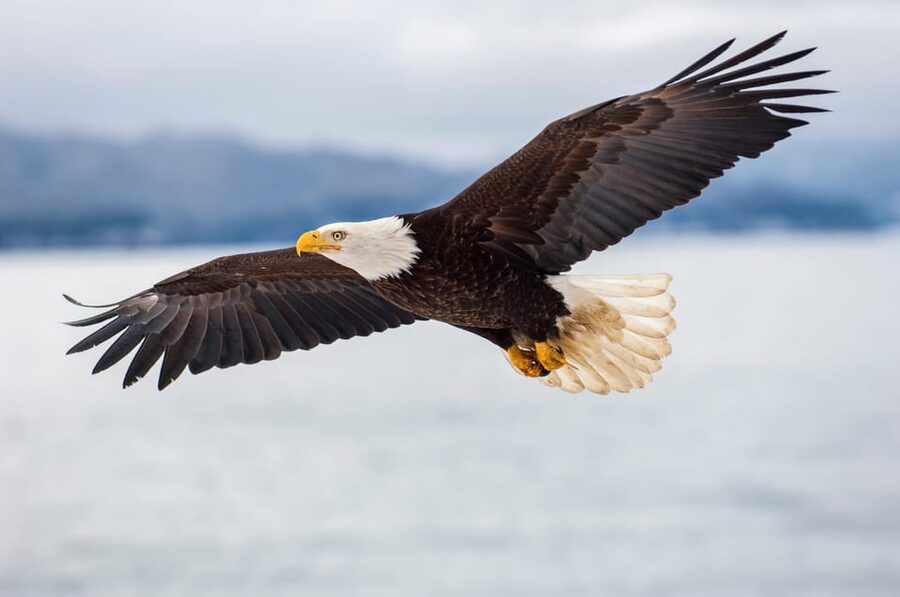
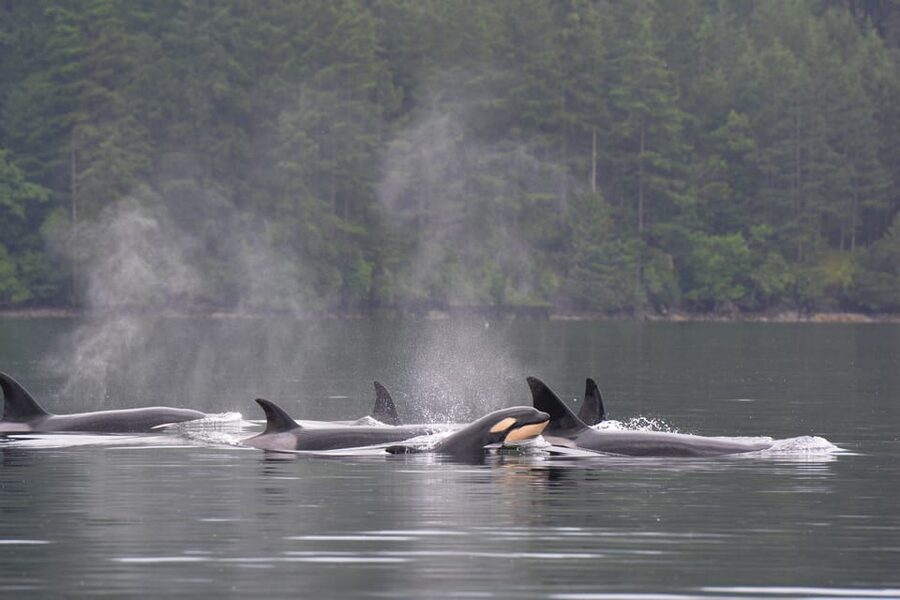
The big headline is whales, and the lineup is impressive. Your possible sightings include orca, gray, humpback, and minke whales. You may also see porpoises, seals, sea lions, and seabirds like bald eagles and herons. The point is simple: you are not just hunting one species, you’re scanning a living coastal ecosystem.
What makes this cruise especially fun is that whales rarely show up as an obvious, nonstop show. You’ll be looking for “tells.” Orcas can move through quickly, gray whales can be spotted when they surface, and humpbacks sometimes put on more dramatic behavior when they’re relaxed near the surface. In past departures, people have described memorable moments like a pod of orcas traveling together for a while, and humpbacks doing resting behavior at the surface where you can see the blow and then watch the animal go back under.
Also, some days feel different depending on weather. Fog can make it harder to spot distant movement at first, but visibility can improve as it burns off. Wind and clouds do not stop wildlife, they just change where you focus your attention. So I’d treat the forecast as helpful, not decisive.
One practical tip: don’t only watch for the full body. When whales submerge for longer periods, what you might see can be partial, like a tail or the back as it surfaces. It still counts. The cruise is run with regulations that protect the animals, so it’s not about getting extremely close, it’s about safe, responsible viewing at a respectful distance.
And yes, whales have their own smell. One common piece of humor in reports is that whale breath is noticeably stinky, especially when you’re close to where they surfaced. It’s not a reason to skip anything, it’s just a funny reminder you’re really on the whales’ turf.
The Naturalist Talks and Whale-Watching Rules You’ll Appreciate More Than You Think
The onboard naturalist is central to the value here. The naturalist does more than rattle off facts. They help you understand what you’re seeing in real time, which is how whale watching becomes more than random spotting. You’ll learn what local marine life does day to day, and you’ll hear about ongoing whale conservation efforts.
This cruise also follows viewing regulations through membership in the Pacific Whale Watch Association. That matters for two reasons. First, it keeps distance and behavior consistent, so whales are not pressured. Second, it builds trust in the process. You can relax, because the goal is not reckless chasing, it’s responsible observation.
Even with the best searching, the sea decides the script. That’s why a strong onboard narrative helps so much. When the wildlife is spread out or a whale goes under longer than expected, you’ll still feel like you’re getting meaning from the time on the water. The naturalist often shares what to look for when whales surface, why whales might be moving, and how conservation affects what you see in the Salish Sea.
One note for your planning brain: the boat can be loud. Multiple reports mention that announcements from the top deck can be hard to hear due to engine noise, air conditioning, and churning water. If you care about hearing every detail, sit where it’s easier to pick up the sound, often lower on the boat. Then you can still go outside at breaks in noise to watch.
The best “rule of thumb” is to balance viewing and listening. Spend some time on the deck when whales are nearby, then step back inside to catch the explanation so the next sighting makes more sense.
Seat Choices, Top Deck Sound, and How to Stay Comfortable
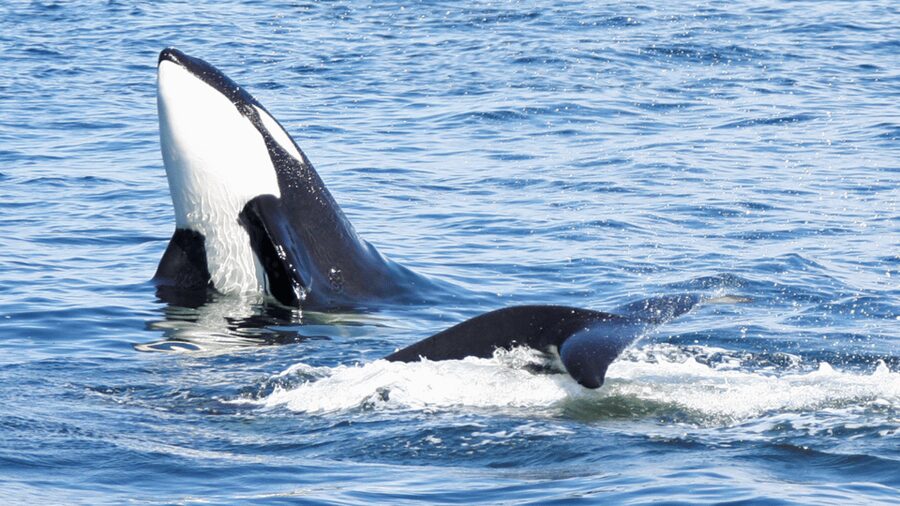
A lot of people worry about comfort on a 3 to 5 hour water ride, and that’s smart. The good news is the boat setup supports switching between vantage points. You can move between decks, and there are bathrooms onboard. Reports describe bathroom facilities available with little to no wait, which is one of those boring details that becomes a big deal once you’re out on the water.
More Whale Watching in Seattle:
- Juneau Wildlife Whale Watching
★ 5.0 · 7,379 reviews - Juneau Wildlife Whale Watching & Mendenhall Glacier
★ 5.0 · 6,236 reviews - Whale Watching Tour in Gloucester
★ 5.0 · 4,460 reviews - Boston: City Cruises Whale Watching Cruise
★ 4.5 · 3,646 reviews
Window seats can be worth it
Seats can be upgraded to window seats if space is available when checking in. If you like seeing wildlife through a stable view, window seating can help. Reports describe that people found the upgrade worthwhile, especially for long stretches when you want a clear sightline without having to constantly stand.
That said, pay attention to what window seating really offers. It’s not a guaranteed “front-row whale show.” Regulations and animal movement still control the distance. Windows can also be less useful if the whale is off-angle from your exact line of sight. So I treat window seats as a comfort upgrade, not a visibility magic trick.
Top deck sound can be tricky
If you’re planning to hear the narration, know that the top deck can be challenging. Reports often flag that it’s difficult to hear announcements up top when the engines are running and water is churning. If you want the story behind what you’re seeing, you may get better audio on lower levels and then step outside when whales are spotted.
Motion sickness help exists
If you’re even slightly prone to motion sickness, bring your usual strategy and also know that motion sickness medicine is available onboard. That small service can be the difference between enjoying the full half-day and spending your time focused on your stomach.
So my advice is simple: dress for wind and mist, grab layers, and use the boat like a tool. Don’t be stuck in one seat. Move to where you can see, then move back where you can hear.
Food, Drinks, and the Photo Options That Make It Easier to Focus
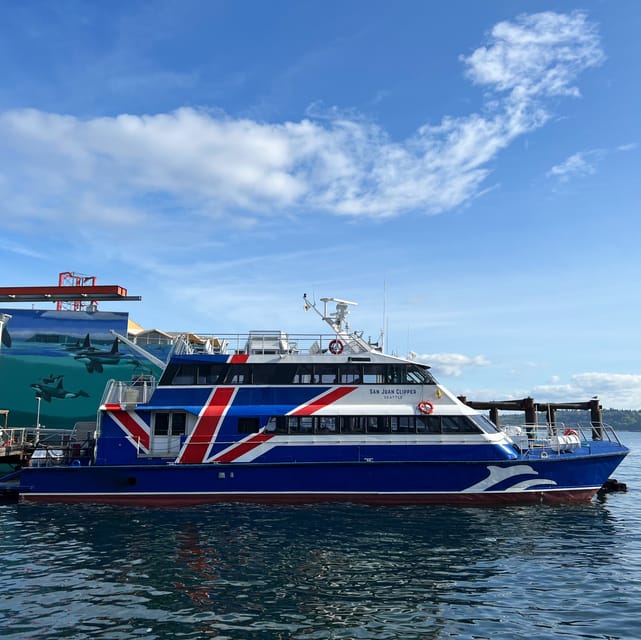
This cruise keeps you out on the water, which means they offer food and beverages to purchase onboard. If you’re used to grabbing lunch and then racing to the next stop, this is a relief. It’s one less schedule stress.
In past departures, people have described options like blueberry scones and also mentioned mimosas being available to buy. Prices aren’t listed here, so I’d treat food as a budget line rather than assume it’s cheap. For value, the key is that you’re not leaving the boat to get a snack, and you can eat without losing the action.
There’s also an optional photo add-on. Some reports describe an offer at the end of the trip for a USB drive containing professional photos. One report mentioned about 150 pictures for $30. If you care about capturing whales without worrying about your own camera settings, this can be a convenient way to get a clean set of images after you’ve spent the ride scanning for spouts and fins.
A smart focus tip
When you have food nearby and photo options available, you can stay mentally calm. That helps you actually watch. Whale watching is easier when you’re not juggling a sandwich in one hand and a phone in the other. Take a few snacks, drink some water, then commit to the next sighting window.
When the Trip Runs 3, 4, or 5 Hours: Timing and Weather Reality
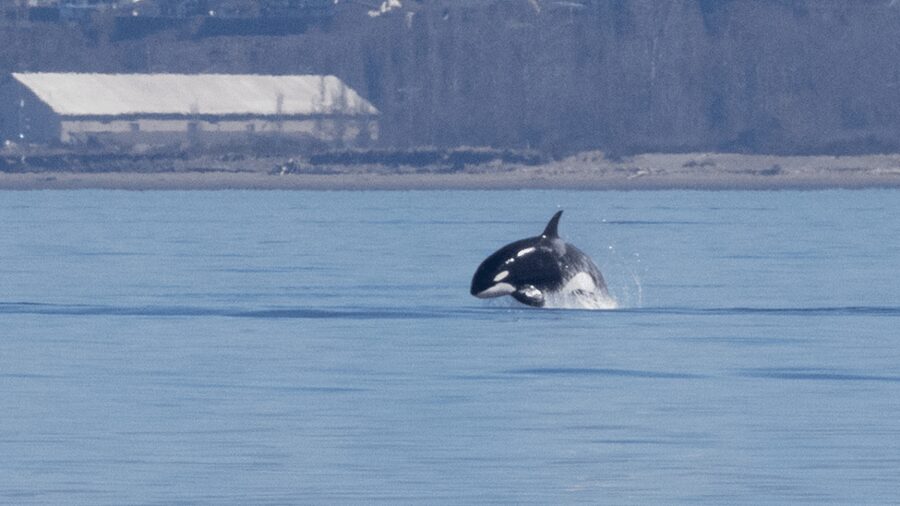
The cruise duration can vary from 3 to 5 hours. The reason is straightforward: whales move, and the crew follows the best chances of viewing. Sometimes that means shorter time on the water, sometimes it means running longer when the sightings are strong.
One big takeaway from past experiences is that the captain and crew adjust based on where the whales are. Reports include cases where the boat ran longer than expected because the day’s sightings were excellent. So if you book this as a “one-block free time” outing, plan for the sea to stretch the day a little.
Weather also plays a role in what you notice. Fog can reduce distance visibility early, then improve later. Wind can change the boat’s movement and can make spotting a little harder, but wildlife is still there if you can see it. The bigger your day plan on land, the more you should keep it flexible around this time.
If you want a practical strategy, here it is:
- arrive early for a calmer check-in
- dress for cool wind, even if the city forecast looks mild
- keep your expectations flexible about how much wildlife you’ll see in each hour
Your best mindset is “patient and observant.” That’s when you get the best sightings, even if the whale appears briefly.
Is It Worth $148? Value for Seattle Whale Watching
At $148 per person for a roughly half-day cruise, you should think of this as a guided wildlife experience, not a cheap sightseeing boat ride. The value comes from four things you actually feel on the water.
First, the odds. A whale sighting rating of 97% signals that most departures find whales. That doesn’t mean every trip will be identical, but it suggests the search process works.
Second, the naturalist. A trained guide turns “I saw something” into “I know what I saw and what it means.” That matters when a whale is only visible for moments and you need to recognize behavior, not just flashes of skin.
Third, safety and viewing rules. The association regulations keep viewing respectful. That means you are less likely to feel like you’re part of a chaotic chase, and more likely to enjoy steady watching.
Fourth, the overall package. You’re getting the cruise plus the naturalist guide, and you can buy food, drinks, and photo media onboard. Binoculars aren’t included, but you can rent them. If you were planning to spend money on equipment, that rental helps keep your prep light.
The main reason this might not feel worth it to some people is expectation mismatch. If you want guaranteed close-up whale contact like a theme park encounter, regulations prevent that. If you accept responsible viewing and focus on sightings and behavior, the price starts to make sense.
In other words, it’s not just paying to ride a boat. You’re paying for a guided search in a real marine environment where whales decide the timing.
Should You Book This Seattle Whale Watching Cruise?
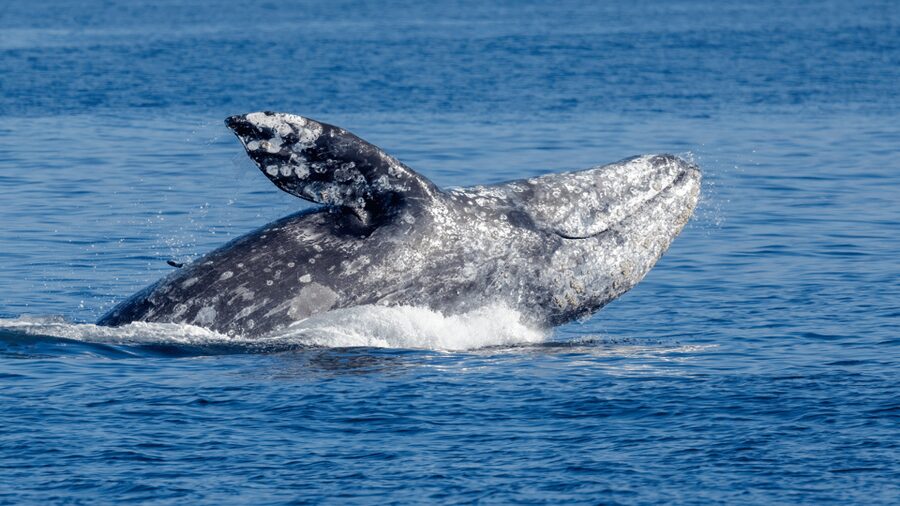
I’d book it if you want a structured, guided whale-watching experience that starts at Pier 69 and gives you strong odds of seeing whales in the Salish Sea. It’s a smart choice for first-timers who want the narration and for repeat Seattle visitors who still want to see wildlife up close without handling the logistics.
I’d hesitate only if you’re extremely sensitive to not hearing spoken information from the top deck, or if you require nonstop action for the whole 3 to 5 hours. The ride can be quieter at times, and the best whale moments can be brief. Plan to switch between listening where it’s easier and stepping out when you’re told the whales are nearby.
If you’re flexible, dress for wind, and bring patience, this is one of the more dependable ways to experience Seattle’s marine life in half a day.
Reviewed most recently around Seattle
- Seattle Locks Cruise★ 5.0 · 381 reviews
- Seattle: City Highlights Tour★ 4.7 · 416 reviews
- Seattle Sailing Harbor Tour★ 4.5 · 473 reviews
- The Museum of Flight Entrance Ticket★ 5.0 · 477 reviews
- From Seattle: Round Trip by High Speed Ferry to Victoria, BC★ 4.0 · 479 reviews
- Seattle Coffee Tour: Capitol Hill Cafes, Tastings & Local Stories★ 5.0 · 489 reviews
- Leavenworth Exclusive Tour from Seattle★ 4.5 · 492 reviews
- One-Way Transfer: Pier 91 to Airport★ 4.5 · 522 reviews
Whale Watching, compared.
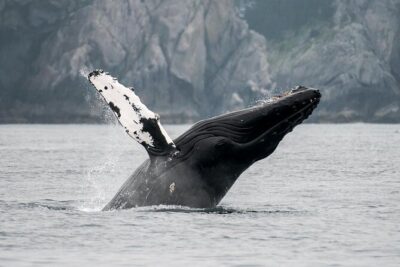
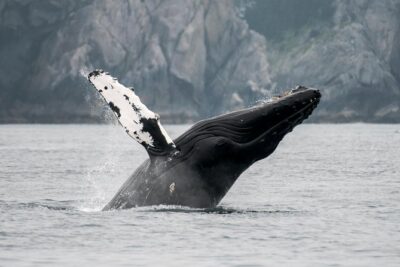
Juneau Wildlife Whale Watching & Mendenhall Glacier
Read our review →
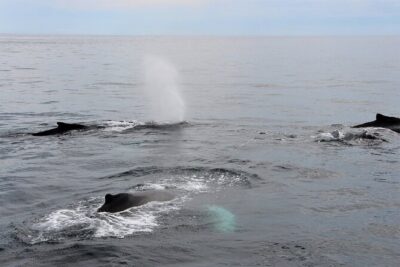
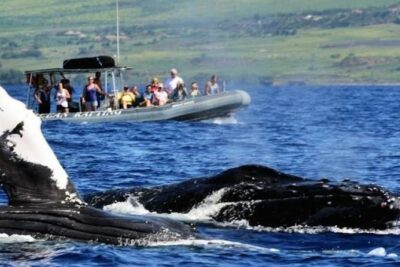
Maui Eco-Raft Tour: Eye-Level Whale or Dolphin Watching – Lahaina
Read our review →
Whale Watching Trips to Stellwagen Bank Marine Sanctuary. Guaranteed sightings!
Read our review →Browse the lists this tour appears in